
How Much Does a Google Knowledge Panel Cost? DIY vs Done for You
Google doesn't sell panels, so every price you see is for the work around one. Here's what that work costs by route, with real published prices, what each tier includes and what to walk away from.

A Google Knowledge Panel costs nothing from Google: it's generated automatically, and Google doesn't sell panels or take payment for them. What you can pay for is the work that helps Google understand who you are. On 17 November 2026, providers' own published prices for that work ran from $25 for a marketplace gig to $12,000 and up for a premium specialist, while one PR firm listed retainers of $3,000 to $10,000 a month.
Does Google charge for a Knowledge Panel?
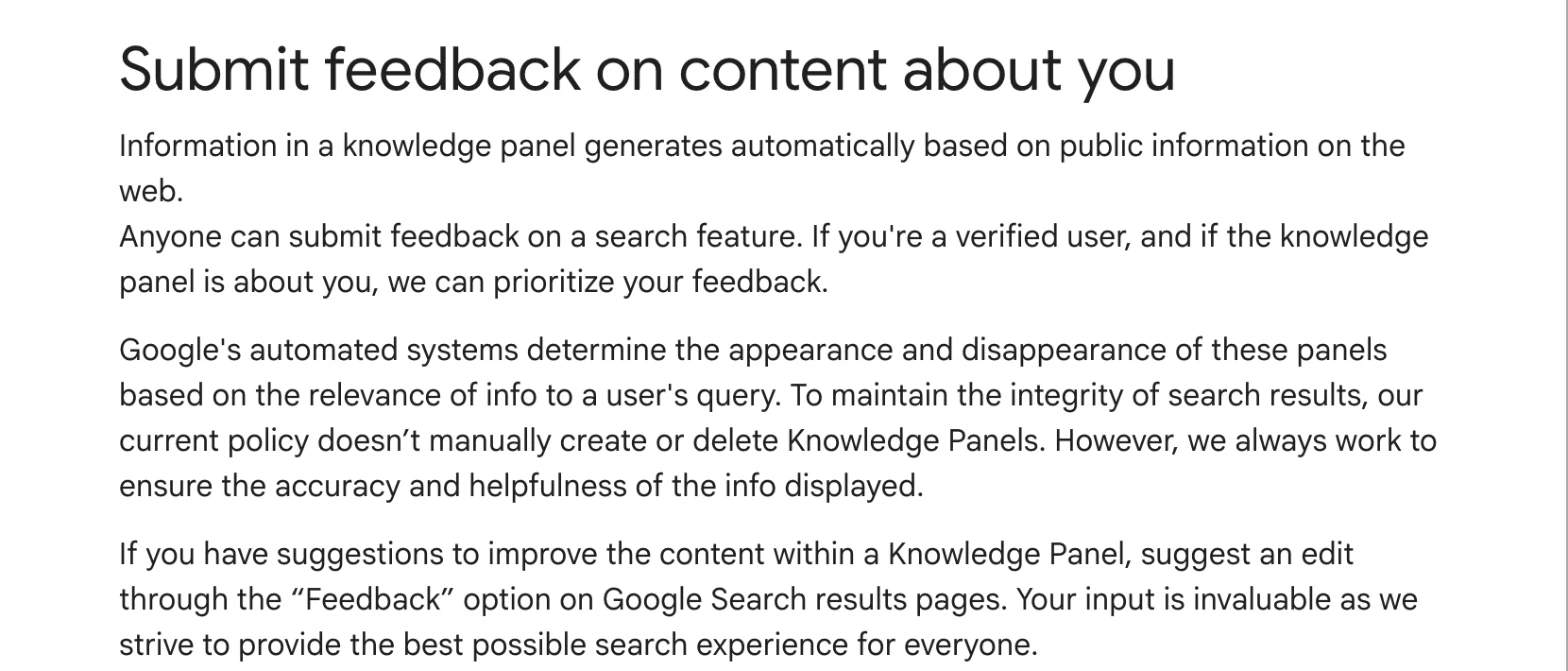
No. Google builds panels itself from public information on the web1. Its help pages say automated systems decide when panels appear and disappear, and that under its current policy Google doesn't manually create or delete them2. Its Search documentation adds that Google doesn't accept payment to crawl a site more often or rank it higher3.
Claiming a panel once you have one doesn't cost anything either. Google's verification steps are to sign in, find your panel, click "Claim this knowledge panel" and sign in to an official profile such as YouTube, Search Console, X or Facebook, with no payment step anywhere4. Kalicube, a paid specialist in this field, states on its pricing page that a panel on Google is free5.
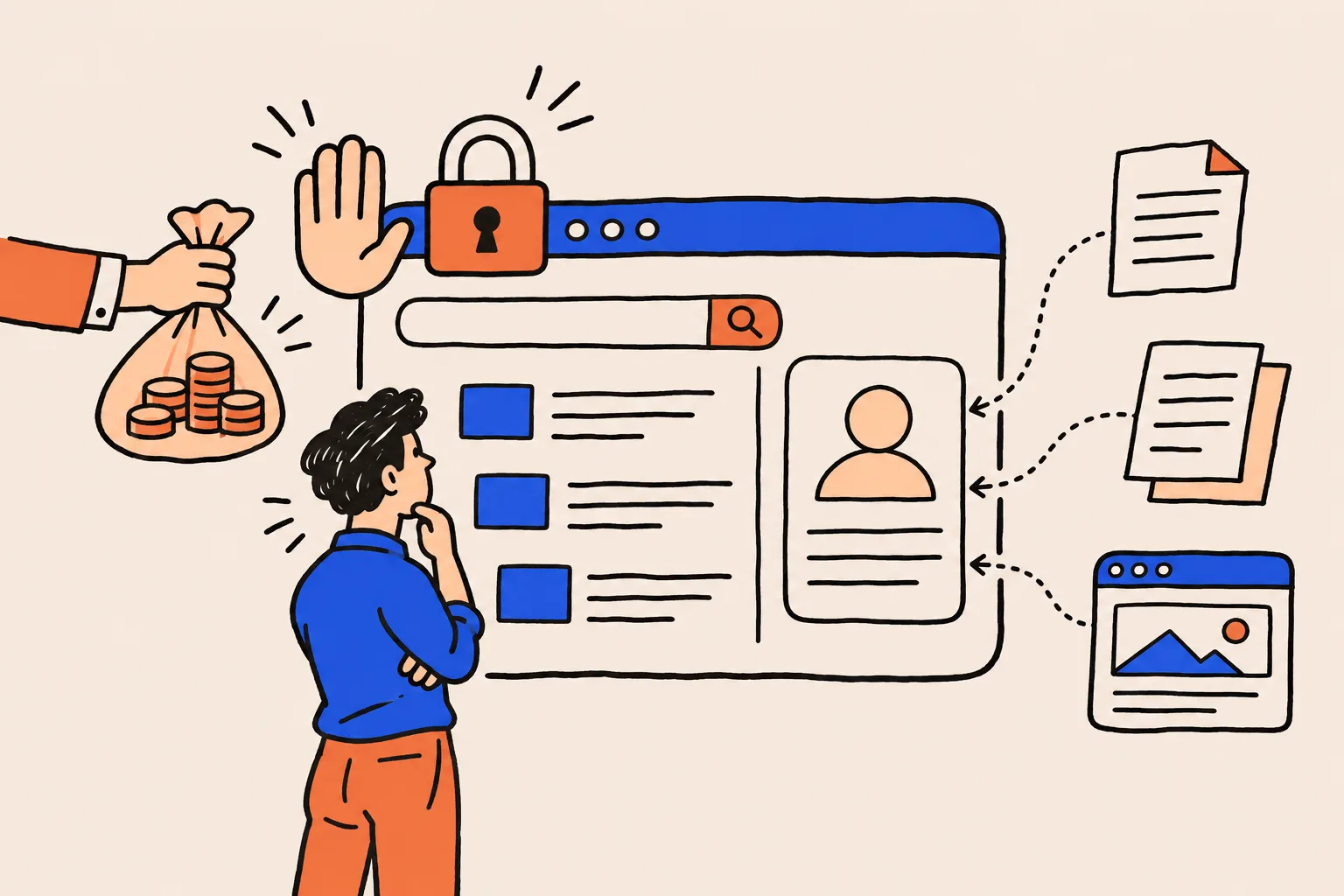
So when a provider quotes you a price, they're quoting for their time and their method, not for access to Google. That's a perfectly reasonable thing to pay for, as long as you know which one you're buying.
What are you actually paying for?
You're paying for someone to make you easy for Google to understand. If you've read what a Google Knowledge Panel is and why some people get one, you'll recognise the work. Whoever does it, the job breaks down into roughly the same pieces.
An audit of what Google sees today
Searching your name, checking which profiles and pages describe you, and spotting contradictions or a namesake.
One home page for your identity
A clear About page or personal site that states who you are, what you do and where else you appear.
Consistent profiles
The same name, role, photo and short bio across LinkedIn, X, YouTube, speaker pages and directories in your field.
Structured data
Person markup with sameAs links on your home page, so machines can read who you are.
Independent corroboration
Pages written by other people that agree with what you say about yourself: interviews, podcast pages, association listings, press.
Claiming and upkeep
Verifying the panel once it appears, then correcting facts and keeping sources in step.
Much of the price difference between providers comes from steps five and six. Profiles and markup are bounded jobs. Earning independent coverage takes longer and costs more, and it's where cheap offers usually cut corners.
How much does the DIY route cost?
Doing it yourself costs mostly time. The only cash item many people need is a website, and if you already have one, the cash cost can be zero.
If you need a site, mainstream builders are a modest monthly cost. Squarespace's cheapest website plan, for example, (Basic) showed $19 and $25 a month on 17 Nov 2026, the lower figure for annual billing, and annual plans include one year of free domain registration6. Google doesn't charge to claim the panel when it appears4.
The rest is hours. Writing one factual bio, updating every profile to match, adding Person structured data and pitching yourself to a few podcasts or association pages is spread over weeks. Structured data in plain English explains the markup step from the beginning, and how to get a Google Knowledge Panel walks through the full process.
DIY suits you if
- You already have a website you control
- You've had some press, podcast or speaking coverage
- You're comfortable editing your own profiles and site
- You'd rather spend hours than dollars
DIY gets hard when
- You share your name with someone more prominent
- Your profiles contradict each other and you can't see why
- Almost nothing independent has been written about you
- You have a launch or round coming and no time to learn
What do specialists charge?
Listed prices for a person's panel ranged from $25 to $12,000 and up. We checked providers' own public pages on 17 Nov 2026 and recorded the lowest listed price for a person (not a company). Many firms publish no price at all.
| Item | Value |
|---|---|
| Fiverr (lowest of first gigs shown) | 25 USD |
| The Knowledge Graphs | 500 USD |
| Essentras | 650 USD |
| Stay Digital Marketers | 899 USD |
| S99 PR | 1,497 USD |
| Local Service Spotlight | 7,500 USD |
| Kalicube (starting price) | 12,000 USD |
Source: Providers' own pages, accessed 17 Nov 202678910111213
The headline price is only half the story. What each one includes, and what happens if no panel appears, differs just as much.
| Provider | Listed price (person) | What the page says is included | If no panel appears |
|---|---|---|---|
| Fiverr gig listings | From $25, $360, $400 (first listings shown) | Varies by seller | Varies by seller |
| The Knowledge Graphs | $500 consulting; $600 with claiming help; $850 with wiki publishing support | Guidance on panel details and social links, digital presence review, ongoing support | No guarantee; says Google decides independently |
| Essentras | $650 | Entity audit, source building, structured data, Wikidata where eligible, claim help | "100% back" if the panel isn't landed |
| Stay Digital Marketers | From $899 | Audit, Wikidata, schema, 15+ citations, claim help, 30 days of monitoring | No guarantee; says none can be given |
| S99 PR | $1,497 | Onboarding, information prepared for Google, submission, claim walkthrough | Money back if the panel doesn't go live |
| Local Service Spotlight | $7,500 | Personal brand website, schema, connected profiles, claim help, content repurposing, "Dollar a Day" ads on your best content | No guarantee stated; says 6 to 12 months is usual |
| Kalicube | From $12,000 | Entity audits, schema, Entity Home setup, corroboration across your ecosystem | No guarantee terms stated |
How to read the gap
At the low end you're usually buying a fixed checklist: a set of profiles, submissions and some markup, done quickly. That can be enough if you already have independent coverage and only need the pieces tied together. It does little if Google has nothing to corroborate.
In the middle, prices from about $500 to $1,500 tend to add an audit, structured data, Wikidata where you qualify, and help with claiming. Several pages state turnaround in weeks rather than months: Essentras says 4 to 10 weeks for people with some existing coverage9, and Stay Digital Marketers says 2 to 6 weeks10.
At the top, the price buys strategy, content and people. Local Service Spotlight's $7,500 program includes a personal website and content repurposing, and it says a panel usually takes 6 to 12 months12. Kalicube describes its $12,000+ service as fixed-price with no hidden costs13, and says it will publish new pricing in January 20275.
What about PR agencies?
PR firms sell coverage, not panels. That matters for one reason: independent pages about you are what Google cross-checks your own claims against. If almost nothing has been written about you by anyone else, coverage can fill that gap.
Published PR pricing on 17 Nov 2026 fell into two shapes. InstantPress listed single placements from $49 for a mid-tier outlet, top-tier outlets quoted per article, and retainers of $3,000 to $10,000 a month14. Press Farm listed one-time campaigns at $280, $480 and $1,080, built around press releases, media lists and, on the two higher tiers, journalist pitching15. Neither promises a panel, and neither would be expected to.
PR makes the most sense when you have a genuine story and a gap in independent coverage. It makes the least sense as a substitute for the basics. If your own profiles contradict each other, a feature in a big outlet won't settle which version is right.
What does each route include?
Here's the honest summary of what each route usually covers, set against what you'd need for a person's panel.
DIY
- Cost: your time, plus a website if needed
- You write the bio and fix every profile
- You add structured data yourself
- You pitch podcasts and associations
- You claim the panel when it appears
Specialist
- Cost: about $500 to $12,000+ one-time (published, Nov 2026)
- Audit of what Google sees now
- Profiles, markup and Wikidata done for you
- Claim help, sometimes a refund promise
- Coverage-building varies a lot by price
PR agency
- Cost: per placement, per campaign or a monthly retainer
- Independent coverage about you
- Usually no entity or markup work
- No panel promise
- Best paired with the basics done first
DotVisible sits in the specialist column. Its done-for-you service comes with a 150-day guarantee: if no panel appears within 150 days of onboarding, you choose between a deposit refund and free continued work. Google still decides whether a panel shows. You'll find what's included on our services page and the steps on how it works.
Are guarantees worth anything?
A guarantee is worth exactly what happens if no panel appears. Since Google alone decides2, no provider controls the outcome, and the providers we checked handle that in three ways.
- No guarantee, stated openly. The Knowledge Graphs says it can't guarantee any outcome8. Stay Digital Marketers says no agency can legally guarantee a panel10. Local Service Spotlight states no guarantee and says a panel usually takes 6 to 12 months12.
- Money back. Essentras offers "100% back" if it doesn't land your panel9, and S99 PR offers your money back if the panel doesn't go live11.
- A deadline with a choice. Some providers, DotVisible among them, set a window and let you choose a refund or continued work if it passes.
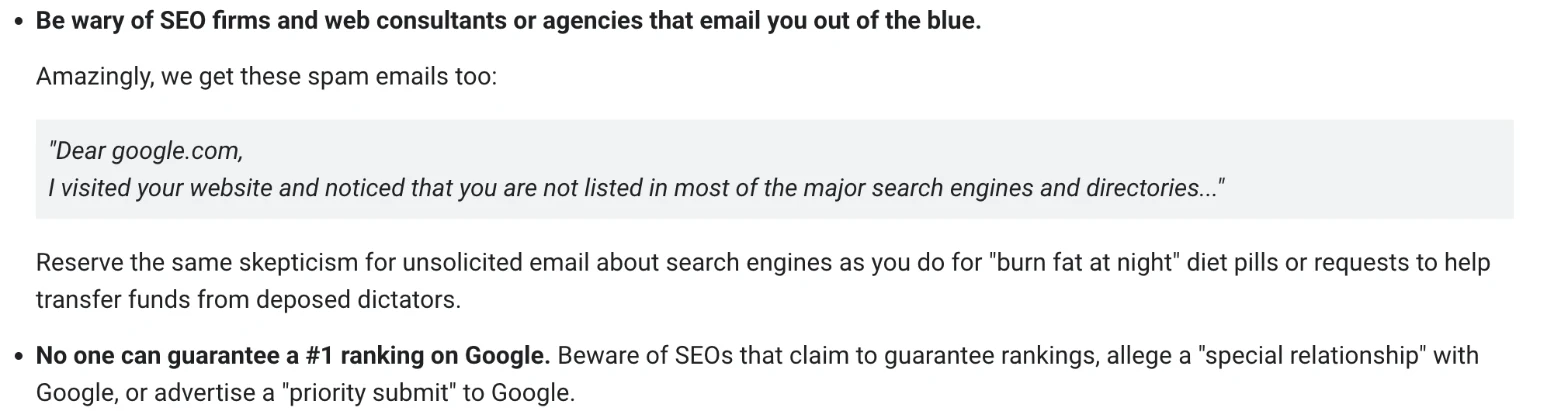
None of these models is wrong. What matters is that the terms are written down, say when the clock starts, and define what "live" means. Google's own advice on hiring help is blunt: no one can guarantee a #1 ranking, and you should be wary of anyone claiming a special relationship with Google17. The same logic applies to panels.
What are the warning signs?
Most bad offers give themselves away before you pay. Watch for these.

- A claimed line to Google. Google says its automated systems decide panels and that it doesn't create them by hand2. Anyone implying an inside track is misdescribing how this works.
- No explanation of the work. If you can't get a plain list of what will be built and where, you can't judge the price.
- A guarantee with no terms. "Guaranteed panel" with nothing on refunds, timing or what counts as live is a slogan, not a guarantee.
- Fake or self-written "independent" sources. Mass directory profiles and pseudo-wikis tend to add noise rather than trust. Google needs other people agreeing about you, not more pages you wrote.
- A Wikipedia page as the promised deliverable. Wikipedia's editors decide who gets an article, under their own rules, so no outside provider controls that outcome either.
- Paid links sold as ranking boosts. Google treats unmarked paid links as spam16.
- Pressure to pay everything upfront for an outcome no one controls. Paying in full for a promise with no refund terms puts all the risk on you.
A higher price means a better chance of a panel.
Price tracks the amount of work, not access to Google. A $500 job that fixes a clear gap can beat a $10,000 program aimed at the wrong problem.
Questions worth asking any provider, adapted from Google's own list for hiring search help17: Can you show examples of past work? What results do you expect, and in what timeframe? What's your experience with people in my field?
Which route fits you?
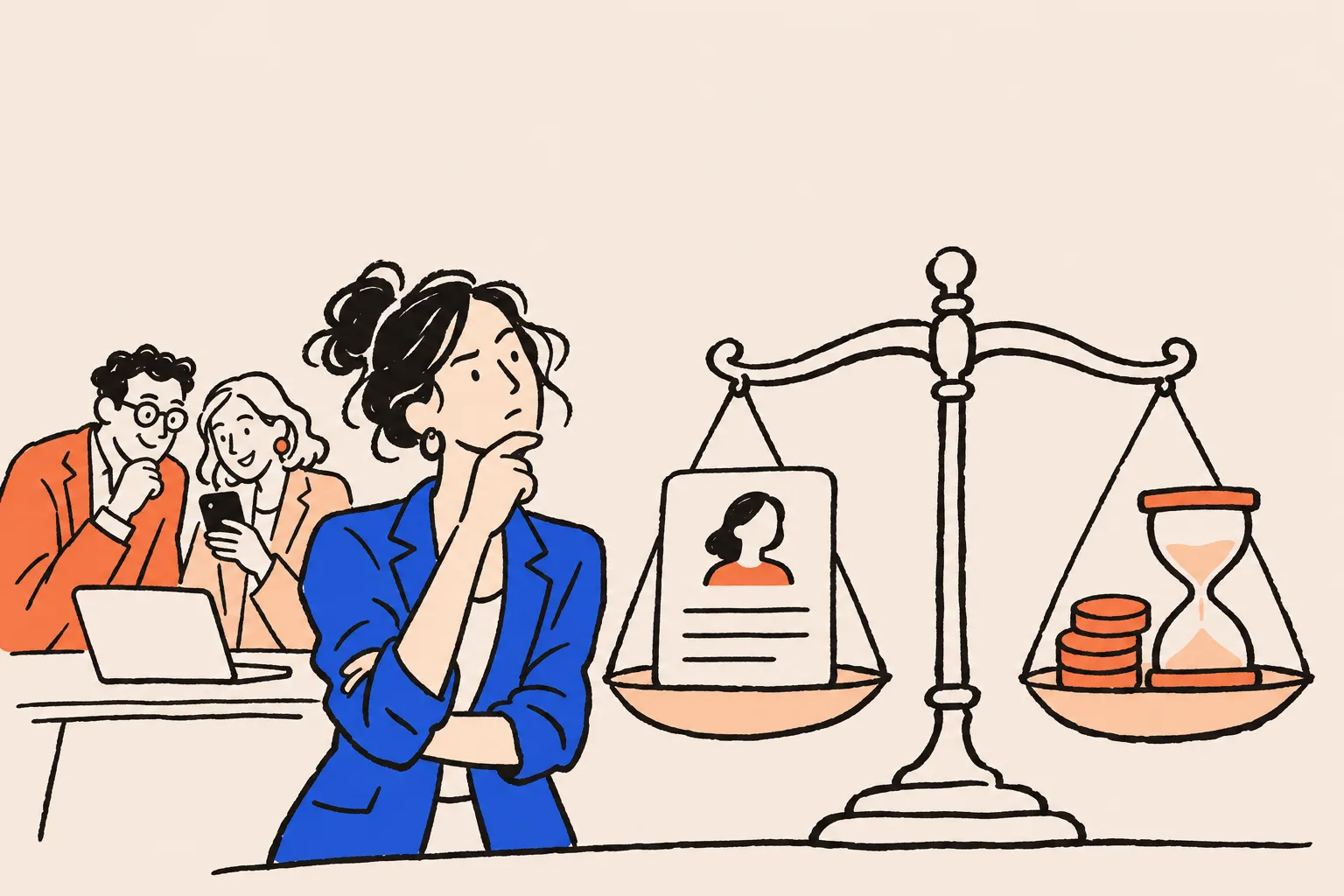
Match the spend to the gap. If you're still deciding whether to spend anything at all, start with whether a Google Knowledge Panel is worth it for someone in your position. Most people's problem is one of three, and each points to a different route.
- Your information exists but disagrees with itself. DIY or a lower-cost specialist. The fix is consistency, and you can often do it in a few weekends.
- You're consistent but nothing independent describes you. A specialist who builds corroboration, or a modest PR spend, is worth considering.
- You share a name, have been mixed up with someone, or have a deadline. Paying for experience usually saves time here.
Whatever you choose, start by looking at what Google sees today. Search your name in a private window on desktop and mobile, then with your profession and your city. Run it through the free Knowledge Panel Checker to see whether Google's Knowledge Graph already holds an entity for you. The name search checklist gives you a structured way to record what you find. If a panel already exists, claiming and editing it costs nothing.
Pay for the work you can't or won't do yourself, and never for access to Google, because nobody sells that.
For more on how panels work and who gets one, browse the Knowledge Panels topic hub. And if you'd like a second opinion on where your gaps are before you spend anything, book a free audit.
Frequently asked questions
How much does a Google Knowledge Panel cost?
Google charges nothing. It generates panels automatically and doesn't accept payment for them. What costs money is the work that helps Google understand you: on 17 Nov 2026, published prices for that work ran from about $25 for a marketplace gig to $12,000 and up for a premium specialist, and one PR firm listed retainers of $3,000 to $10,000 a month.
Can I get a Google Knowledge Panel for free?
Yes, if you do the work yourself. Building a clear About page, making your profiles consistent, adding Person structured data and earning a few independent mentions costs time rather than money. Claiming a panel once it appears is also free.
Can I pay Google directly for a knowledge panel?
No. Google says its automated systems decide when panels appear and disappear, that it doesn't create or delete them manually under its current policy, and that it doesn't accept payment to rank anything higher.
Is a guaranteed Google Knowledge Panel a scam?
Not always, but read the guarantee closely. Google alone decides whether a panel shows, so an honest guarantee is a refund or continued-work promise, not a promise of control. Be wary of anyone who claims a special relationship with Google or won't explain what they will actually build.
Why do knowledge panel services vary so much in price?
They sell different things. Cheap offers are usually a fixed checklist of profiles and submissions. Mid-priced specialists add an audit, structured data and claiming help. Premium firms and PR agencies add strategy, content and earned media, which takes more people and more months.
Do I need to pay for press coverage to get a knowledge panel?
No. Independent mentions help Google corroborate who you are, but they don't have to be paid. If you do buy placements, Google's spam policies say paid links must be marked as sponsored or nofollow.
How much should I budget for ongoing knowledge panel work?
Many people need nothing ongoing beyond keeping their bio and profiles consistent and checking their panel every few months. Ongoing fees make sense when there is real ongoing work, such as regular press or AI visibility work, and that work should be spelled out.
Sources
- 1About knowledge panelsGoogle Knowledge Panel Help · Accessed 17 Nov 2026↩
- 2Submit feedback on content about youGoogle Knowledge Panel Help · Accessed 17 Nov 2026↩
- 3In-depth guide to how Google Search worksGoogle Search Central · Updated 18 Dec 2025, accessed 17 Nov 2026↩
- 4Get verified on GoogleGoogle Knowledge Panel Help · Accessed 17 Nov 2026↩
- 5Knowledge Panel in Google: PricingKalicube · Modified 5 Nov 2026, accessed 17 Nov 2026↩
- 6PricingSquarespace · Accessed 17 Nov 2026↩
- 7Knowledge panel gigsFiverr · Accessed 17 Nov 2026↩
- 8Knowledge panel consulting packagesThe Knowledge Graphs · Accessed 17 Nov 2026↩
- 9Google Knowledge Panel creation serviceEssentras · Accessed 17 Nov 2026↩
- 10Google Knowledge Panel creation serviceStay Digital Marketers · Accessed 17 Nov 2026↩
- 11Google Knowledge PanelS99 PR · Accessed 17 Nov 2026↩
- 12Google Knowledge Panel packageLocal Service Spotlight · Accessed 17 Nov 2026↩
- 13How much does a knowledge panel with Kalicube costKalicube · Accessed 17 Nov 2026↩
- 14Digital PR agencyInstantPress · Accessed 17 Nov 2026↩
- 15PricingPress Farm · Accessed 17 Nov 2026↩
- 16Spam policies for Google web searchGoogle Search Central · Updated 28 Aug 2026, accessed 17 Nov 2026↩
- 17Do you need an SEO?Google Search Central · Updated 5 Jun 2026, accessed 17 Nov 2026↩
Keep reading
 Knowledge PanelsIs a Google Knowledge Panel Worth It for a Founder?Shobin K Jose · 18 Nov 2026 · 11 min read
 Knowledge PanelsCan Anyone Get a Google Knowledge Panel? How Google DecidesShobin K Jose · 17 Nov 2026 · 16 min read
 Knowledge PanelsCan't Claim Your Knowledge Panel? Fixes for Every ErrorShobin K Jose · 17 Nov 2026 · 18 min read