Can Anyone Get a Google Knowledge Panel? How Google Decides
Google publishes no eligibility list, so most advice on this question is guesswork. This guide sets out what Google has actually said, what it looks for in a person, why some experts are still too early, and how its new creator Search profiles change the picture.
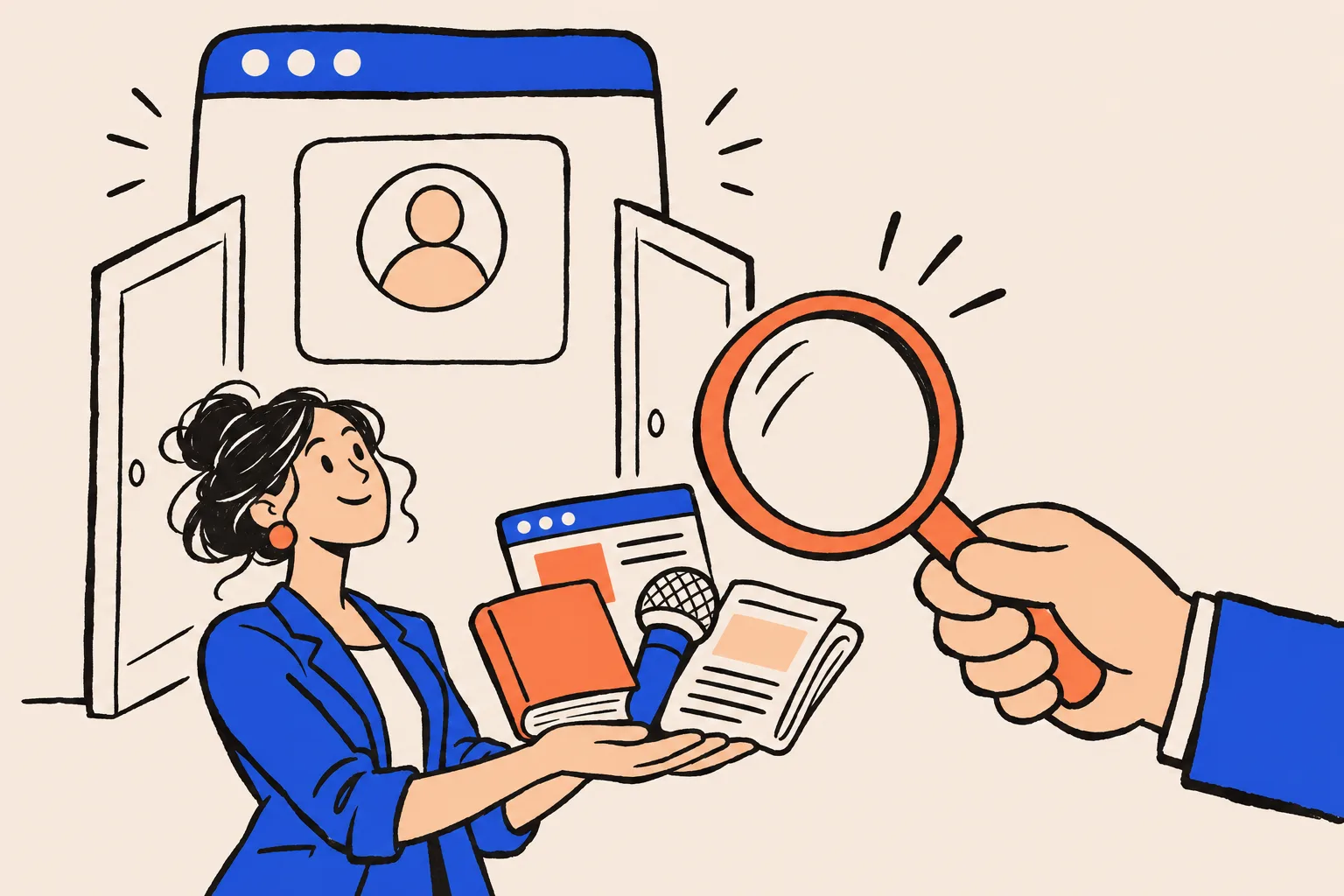
Yes, in principle almost anyone can get a Google Knowledge Panel. Google publishes no fame test, no follower count and no application form for panels. What decides it is whether Google holds you as a distinct entity, can confirm facts about you from more than one source, and is confident that someone searching your name means you.
Can anyone get a Google Knowledge Panel?
Anyone Google can identify with confidence can get one. Google describes a knowledge panel as the information box it shows for an entity in its Knowledge Graph, such as a person, place, organisation or thing, and says panels are generated automatically and updated as information on the web changes1.
That definition matters. It means a panel isn't an award handed to the famous. It's a by-product of Google holding a clear record about you. If you need the basics first, our guide to what a Google Knowledge Panel is covers the anatomy of a panel and where each part comes from.
Google has never published an eligibility list for panels. When it explained its approach in 2020, it said its systems aim to show the most relevant and popular information for a topic, drawn from hundreds of sources, of which Wikipedia is one2. It also says, in its help pages, that its current policy is not to create or delete knowledge panels manually3, and its Search documentation states that it doesn't accept payment to rank anything higher4.
So the honest answer to "can anyone get one?" has two halves. Nothing in Google's rules shuts an ordinary professional out. And nobody can apply, pay or ask nicely, so the only way in is for Google to become sure about you.
What does Google actually look at when it decides?
Google looks at whether it can recognise you, confirm what it knows and match a search to you. It doesn't publish the mechanics, but its own statements and long-running practitioner work line up well enough to describe the process.
You exist as an entity in the Knowledge Graph
Panels belong to Knowledge Graph entities. If Google hasn't recognised you as a distinct person, there is nothing for a panel to describe.
Facts about you come from many places
Your own site, profiles, press, open databases, licensed data and structured markup can all feed in. Wikipedia is one source among hundreds.
Those mentions are matched to one person
Google has to work out that your website, your LinkedIn, a podcast page and a news story all describe the same individual.
Google is confident in the facts
Contradictions lower confidence. Independent sources that agree raise it.
The search is clearly about you
Whether a panel shows for a given search also depends on how likely it is that the searcher means you, and that can vary by place.
The first two steps come straight from Google: panels are tied to Knowledge Graph entities1, and Google names sources from across the web, open and licensed databases and structured markup alongside Wikipedia2.
The rest is practitioner explanation. Jason Barnard of Kalicube, who has written about personal panels for years, argues that the Knowledge Graph has no notability guidelines. In his account, a panel depends on how well Google understands the person, how confident it is in that understanding, and how likely it thinks the searcher means that person, which is often sensitive to location6. He also separates two things people tend to blur: being in the Knowledge Graph, and having a panel show for a particular search6.
That distinction explains a lot of confusion. You can be in Google's graph and still see no panel when you search your own name, because Google isn't sure your name means you.
Google isn't asking whether you matter. It's asking whether it's sure who you are.
Why corroboration carries so much weight
Kalicube's later guidance puts it plainly: any person can have a personal knowledge panel, and Wikipedia helps but isn't required7. The same piece says contradictory information can make a panel inaccurate, shrink it or remove it, and that stability comes from several trusted sources confirming the same facts7.
That matches how Google talks about its own sources. A fact you state about yourself is a claim. The same fact on a conference speaker page, a professional register and an interview is something Google can believe.
Who usually qualifies, and who is still too early?
There's no official list, so treat this as a practical reading of the mechanism above rather than a rule from Google. The pattern is about evidence, not status.
Usually close to a panel
- One page you own that says clearly who you are and what you do
- The same name, role and photo on every profile
- Several pages about you written by other people: interviews, speaker pages, bylines, directory listings
- Profiles that link back to your own page, and the other way round
- A name that is distinctive, or distinctive once your profession or city is added
Usually still too early
- Your best description of yourself lives on an employer's team page or a social profile
- Old bios that disagree on job title or firm
- Almost everything about you was written by you
- No links between your profiles and your site
- A far more prominent person shares your name
Notice what's missing from the left column: a bestseller, a Wikipedia article, a TED talk or a million followers. Those help because they create lots of independent, consistent mentions. They aren't the test themselves.
That's why a mid-career consultant with a tidy, well-corroborated footprint can have a panel while a better-known peer with a messy one doesn't. It also means "too early" is a stage, not a verdict. Most of what keeps you there is fixable.
Why do some established experts never get one?
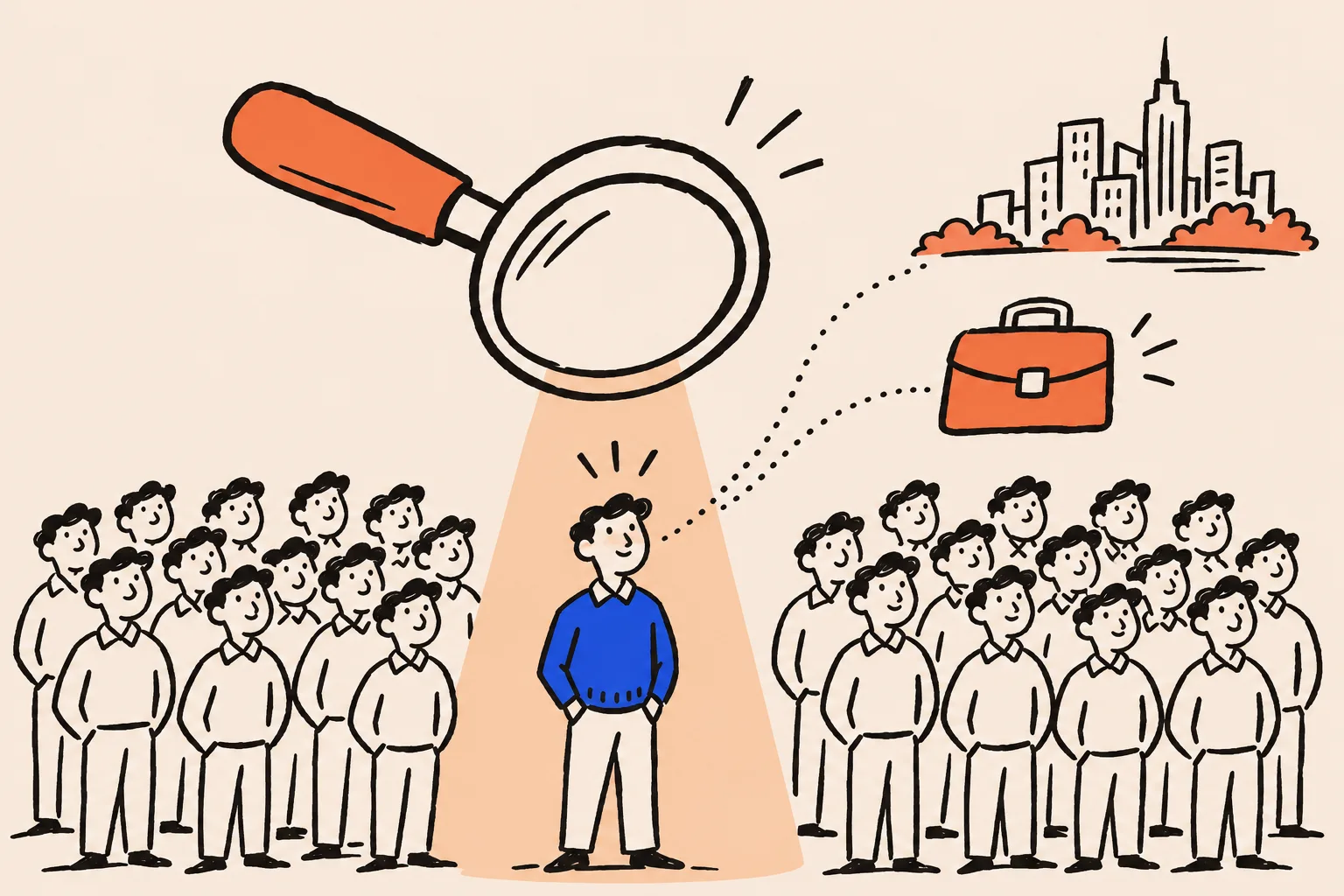
Most experts without a panel are well known to their clients and barely legible to Google. These are the reasons that come up again and again.
There's no single page that speaks for you
Barnard calls this page the Entity Home: the place where Google finds information about you, from you. He ranks the options in order of preference, starting with the About page on your own site, then your own homepage, then an About page on a company site, and last a social profile6. If your clearest bio sits on a firm's team page that could change when you move, Google has nothing stable to anchor to.
Your details disagree
One profile says "founder", another says "managing partner", a 2019 speaker bio lists a firm you left. Each of those is a small contradiction, and contradictions are what lower Google's confidence7.
Nobody else is vouching for you
If every page describing you is one you wrote, there's nothing for Google to check those claims against. Barnard's process treats third-party confirmation as weightier than self-confirmation6.
You share a name
"Sarah Chen" could be thousands of people. Barnard notes that a common name makes Google's job harder and can lengthen the wait6. Google says something similar about its Search profiles: if you have a common name, Search may not immediately display your profile8. If this is you, the name search checklist shows how to see what Google sees today.
You're looking for a claim button that isn't there
Verification only applies to panels that already exist, and Google says not all panels can be claimed yet9. If there's no panel, there's nothing to claim, and no route to request one.
Is it about fame, followers or Wikipedia?
None of the three is the test, though each can help. These are the beliefs that put most professionals off before they start.
You have to be famous.
Google sets no fame threshold for panels. It needs to be confident about who you are.
Google's own language is about entities, relevance and sources, not celebrity12.
You need a big social following.
Knowledge panels have no follower requirement. Follower counts apply to Google's separate creator Search profiles.
This is the newest source of confusion, and the next two sections deal with it in detail.
You need a Wikipedia article.
Wikipedia is one of hundreds of sources Google uses. It helps when it exists, but it isn't required.
Google said so directly in 20202, and Kalicube's guidance agrees that people without Wikipedia articles can and do get panels7.
Adding schema markup gets you a panel.
Structured data helps Google read your page. Google doesn't guarantee it will change what appears.
Google's structured data policies say outright that it doesn't guarantee your structured data will show up in search results10. Markup is a clear signal, not a switch.
What is Google's new Search profile, and who is eligible?
A Search profile is a page on Google that a creator or publisher can set up and manage, bringing together their social accounts, posts and links. Google launched it on 4 June 2026, describing it as a way for creators to own their official presence on Google Search11. The official hub is creators.google, which says setup only takes a few minutes and links to Google's claim page12.
Unlike a knowledge panel, a Search profile has written eligibility rules. As of Google's help page on 17 November 2026, you need all of the following8:
| Requirement | What Google's help page says |
|---|---|
| Country | Canada, India or the United States |
| Age | At least 18 |
| Following | At least 10,000 subscribers or followers on at least one of YouTube, Instagram, X or TikTok |
| Content | Your content must meet Google's policy guidelines |
| Accounts | Sign in with a Google Account and at least one qualifying platform account; Google may ask for a selfie with ID |
| Limits | Only one Google Account can claim a given profile |
10,000
Followers needed on at least one of YouTube, Instagram, X or TikTok
18
Minimum age to claim a Search profile
3
Countries where profiles are available: Canada, India and the US
The bar has dropped fast
The threshold came down twice in about three and a half months. At launch it was 100,000 followers on YouTube, Instagram or X, or 300,000 on TikTok, in the US only14. By mid-August it had fallen to 35,000 on YouTube, Instagram and X, and 100,000 on TikTok20. On 16 September Google cut it to 10,00015, and its own post that day confirmed the figure across YouTube, Instagram, X or TikTok16. India and Canada followed on 6 October, with Brazil described as coming soon17.
11 August 2020
An earlier try: people cards
Google launches self-made public profile cards for people in India.18
4 June 2026
Search profiles launch in the US
Creators need 100,000 followers on YouTube, Instagram or X, or 300,000 on TikTok.14
August 2026
First cut
The threshold drops to 35,000 followers on YouTube, Instagram and X.2015
16 September 2026
Second cut
Google lowers the bar to 10,000 followers on any one of the four platforms.16
6 October 2026
India and Canada
Profiles expand beyond the US, with Brazil announced as coming soon.17
| Item | Value |
|---|---|
| At launch, 4 Jun 2026 | 100,000 |
| From August 2026 | 35,000 |
| Since 16 Sep 2026 | 10,000 |
Source: Search Engine Journal, Android Authority and Google14201516
Rules that change this quickly will change again. Check Google's help page before you plan around any figure here.
Does a Search profile get you a panel?
It can help, but Google doesn't promise it. When it launched Search profiles, Google said that setting one up can trigger or enhance a knowledge panel11. "Can" is doing a lot of work in that sentence.
Here's how the two relate, according to Google's help pages:
- If you already have a panel and meet the requirements, Google may have created a Search profile for you automatically. You reach it from the View Search Profile link on your panel and can claim it rather than start from scratch813.
- If you don't have a panel, Google only generates profiles automatically for people who do. You can still create one yourself if you meet the follower threshold13.
- Profile details may flow into your panel. Google says it may use your name, bio and social links from the profile in your knowledge panel8.
- Claiming one doesn't claim the other. A verified panel doesn't give you a claimed profile, though Google verifies your identity automatically if you've already claimed your panel13.
- It isn't a ranking boost. Google says creating a profile doesn't directly affect how your content ranks8.
Knowledge panel
- Generated by Google from its Knowledge Graph
- No published eligibility rules, no follower count
- Shown only when Google is confident about the entity
- You can claim it and suggest edits once it exists
- Google writes the description and subtitle
Search profile
- Set up and managed by you
- 10,000 followers on one platform, age 18+
- Canada, India and the US (as of 17 Nov 2026)
- Pin up to 8 posts and add up to 8 links
- You can suggest edits to your name and bio
The details in the right-hand column come from Google's help pages813. What the left-hand column says about editing is covered in our guide to claiming and editing your knowledge panel.
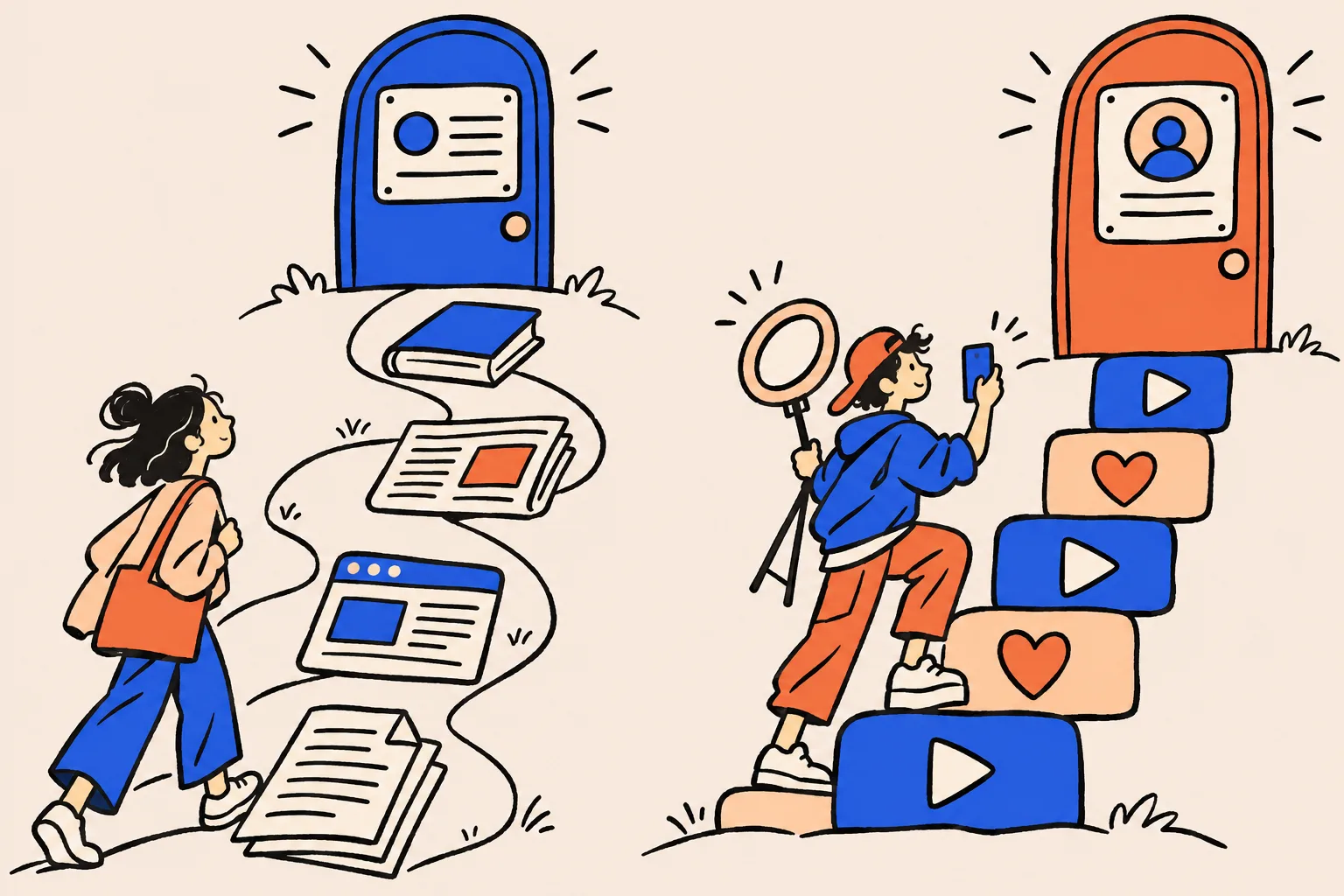
What if you're a professional without a big following?
Then the knowledge panel route is the one that matters, and it's open to you. Plenty of coaches, consultants, lawyers, advisors and doctors don't have 10,000 followers on YouTube, Instagram, X or TikTok, and they don't need them for a panel.
For a professional whose work comes through referrals, the evidence Google can use usually already exists in pieces. There's a firm bio, a LinkedIn profile, a podcast guest page, a conference listing, a professional directory entry and perhaps a book page. The job is to make those pieces agree, point them at one page you own, and add a few more pages written by other people.
If you do run a channel or a large account, a Search profile is worth checking for. Just treat it as one more consistent signal, not the main event. It sits alongside the panel; it doesn't replace the work that earns one.
How can you tell whether you're too early?
Search your name in a private window, then your name with your profession, then your name with your city. Check desktop and mobile. You're looking for four things: a panel, a panel that is actually you, someone else's panel, or nothing at all.
Then look under the bonnet. Google's public Knowledge Graph Search API returns the entities Google holds that match a name, with their types. Google warns that the API isn't suitable as a production-critical service19, so read it as a useful signal rather than the last word. Our Knowledge Panel Checker runs that check for you.
Here's an honest way to read the results:
A panel shows, and it's you
You qualify. Claim it, check every fact, and keep your sources consistent so it stays accurate.
You're in the graph but no panel shows
Google knows you exist but isn't confident a search for your name means you. Focus on consistency and independent mentions.
Someone else's panel shows
You share a name with a more prominent entity. Distinguish yourself with profession, location and a clear page about you.
Nothing at all
You're early. Start with one authoritative page about you and make every profile agree with it.
Being early isn't a judgement on your career. It means the web hasn't yet described you clearly enough for a machine to be sure. The full method for fixing that is in our step-by-step guide on how to get a Google Knowledge Panel.
Where to start
Almost anyone can get a Google Knowledge Panel, but not on demand. Google decides, from what the web says about you, whether it is sure enough to show one. Your part is making that easy: one clear page about you, the same details everywhere, and other people's pages that confirm them. If you're a creator with a following in Canada, India or the US, a Search profile is a second door worth trying, with no guarantee it leads to a panel.
If you'd rather have this done for you, DotVisible builds personal Knowledge Panels for professionals and guarantees one within 150 days of onboarding, or you choose between a deposit refund and free continued work. Google alone decides whether a panel shows, which is why the guarantee is written the way it is. The Authority Magnet sets out how it works, our FAQ covers the common questions, and you can book a free audit to see where you stand today. More guides on this topic are in Knowledge Panels.
Frequently asked questions
Can anyone get a Google Knowledge Panel?
In principle, yes. Google publishes no fame or notability threshold for panels. It shows one when it holds a person as a distinct entity in its Knowledge Graph, can confirm facts about them from several sources, and judges that a search is about that person. In practice, some people are simply too early because the web doesn't yet describe them clearly.
How does Google decide who gets a knowledge panel?
Google generates panels automatically from its Knowledge Graph, drawing on hundreds of sources, and says it doesn't create or delete them by hand. Practitioners describe the decision as a mix of how well Google understands you, how confident it is in those facts, and how likely it is that someone searching your name means you.
Do I need a certain number of followers to get a knowledge panel?
No. Google sets no follower count for knowledge panels. Follower counts apply to Google's separate Search profiles for creators, which currently require at least 10,000 followers on YouTube, Instagram, X or TikTok, and are available in Canada, India and the United States.
What is a Google Search profile?
A Search profile is a page on Google that a creator or publisher can set up and manage, bringing together their social accounts, posts and links. Google launched it in June 2026. If you already have a knowledge panel, Google may have created a profile for you, reached from the View Search Profile link on the panel.
Will a Search profile give me a knowledge panel?
It might help, but it isn't guaranteed. Google's announcement said setting up a profile can trigger or enhance a knowledge panel. Google also says creating a profile doesn't directly affect your ranking, and a profile for a common name may not show up straight away for a name search.
Why don't I have a knowledge panel when people less established than me do?
Usually because Google is less certain about you, not because you matter less. Common causes are no single authoritative page about you, details that disagree across profiles, too few independent sources, and a name shared with someone more prominent.
Can I pay Google for a knowledge panel?
No. Google says panels are generated automatically, that its current policy is not to create or delete them manually, and that it doesn't accept payment to rank anything higher. Anyone who says they can buy one from Google is wrong.
Sources
- 1About knowledge panelsGoogle Knowledge Panel Help · Accessed 17 Nov 2026↩
- 2A reintroduction to our Knowledge Graph and knowledge panels (Danny Sullivan)Google blog · 20 May 2020↩
- 3Submit feedback on content about youGoogle Knowledge Panel Help · Accessed 17 Nov 2026↩
- 4In-depth guide to how Google Search worksGoogle Search Central · Updated 18 Dec 2025↩
- 5Get verified to manage your presence on Google (Lauren Clark)Google blog · 22 Jun 2018↩
- 6How to Trigger a Personal Knowledge Panel in Google (Jason Barnard)Search Engine Journal · 28 Jun 2021↩
- 7Personal Knowledge Panel on Google: What You Need To Know (Jason Barnard)Kalicube · 17 Mar 2023, updated 31 Jul 2024↩
- 8Create a new Search profileGoogle Search Help · Accessed 17 Nov 2026↩
- 9Get verified on GoogleGoogle Knowledge Panel Help · Accessed 17 Nov 2026↩
- 10Structured data general guidelinesGoogle Search Central · Updated 10 Jul 2026↩
- 11Google Search profiles for creatorsYouTube Official Blog · 4 Jun 2026↩
- 12Google for Creators: Search profileGoogle · Accessed 17 Nov 2026↩
- 13Claim an existing Search profileGoogle Search Help · Accessed 17 Nov 2026↩
- 14Google launches Search profiles for creators with 100K followers (Matt G. Southern)Search Engine Journal · 4 Jun 2026↩
- 15Google Search profiles now need 10,000 followers (Matt G. Southern)Search Engine Journal · 16 Sep 2026↩
- 163 new ways we're improving Search profiles for publishers (Ibrahim Badr)Google blog · 16 Sep 2026↩
- 17Google Search Profiles expand to India and Canada, with Brazil coming soon (Barry Schwartz)Search Engine Roundtable · 6 Oct 2026↩
- 18Google experiments with public search profile cardsSearch Engine Land · 2020↩
- 19Knowledge Graph Search APIGoogle for Developers · Updated 26 Apr 2024↩
- 20You may now qualify for Google's new Search profile, here's how to checkAndroid Authority · 13 Aug 2026↩
Keep reading
 Knowledge PanelsIs a Google Knowledge Panel Worth It for a Founder?Shobin K Jose · 18 Nov 2026 · 11 min read
 Knowledge PanelsCan't Claim Your Knowledge Panel? Fixes for Every ErrorShobin K Jose · 17 Nov 2026 · 18 min read
 Knowledge PanelsHow Much Does a Google Knowledge Panel Cost? DIY vs Done for YouShobin K Jose · 17 Nov 2026 · 13 min read