Is a Google Knowledge Panel Worth It for a Founder?
Google charges nothing for a panel, so the real question is whether the work behind one pays back. Here is an honest cost and benefit check for founders, with the cases where it isn't worth it yet.
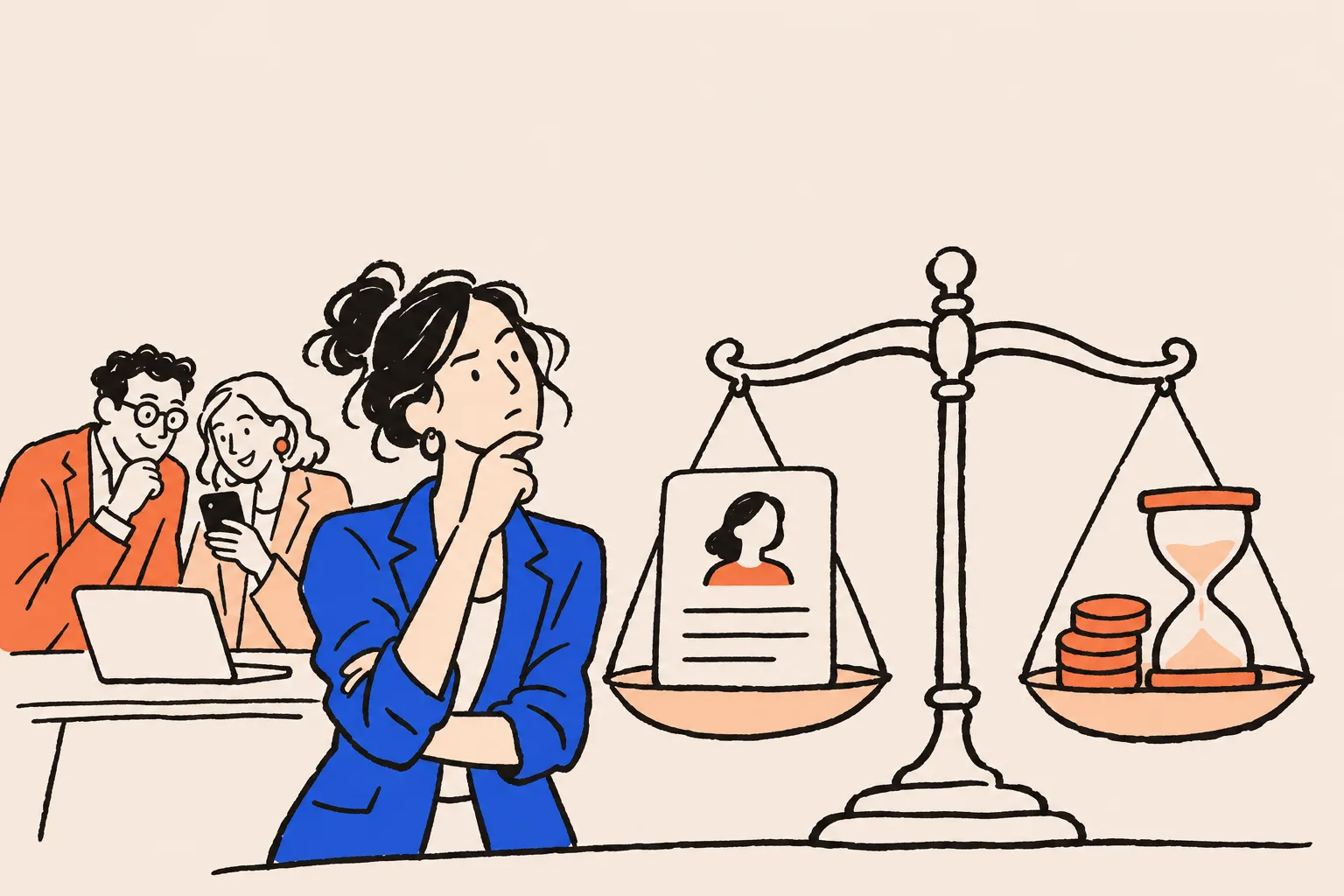
For most founders, a Google Knowledge Panel is worth it, because the people deciding whether to back you, join you or quote you search your name first, and a panel gives them a clear, Google-confirmed summary of who you are. Google charges nothing for one, so the real cost is the work behind it, and that work (one clear bio page, consistent profiles, independent sources that agree) improves your name search even before a panel appears. It isn't worth chasing yet if almost nothing has been written about you, or if someone is selling you a promise only Google could keep.
Is a Google Knowledge Panel worth it for a founder?
Yes, if three things are true: people search your name before important decisions, you already have some public record (a company, talks, interviews, a track record), and you're willing to spend a few weekends, or pay someone, to make that record consistent. Most funded or revenue-stage founders meet all three.
The reason the answer leans yes is that the downside is small. Google says panels are generated automatically from information on the web1, so there's nothing to buy from Google and nothing to lose if one doesn't appear straight away. The work that earns a panel is the same work that fixes a messy name search, so even an unsuccessful attempt leaves you with a better bio page and profiles that agree.
The answer leans no when the work has nothing to build on, or when the price you're quoted is for something no one can deliver. We cover both cases below.
What does a panel actually do when someone searches you?
A Google Knowledge Panel is the information box Google shows for people, places, organisations and things in its Knowledge Graph1. Google says a panel typically includes a title and short summary, a longer description, photos, notable facts and links to official websites and social profiles2.
That box does three useful things for a founder.
- It answers "is this the right person?" The panel only appears when Google's systems have matched the search to one entity. If you share a name with an athlete or a politician, that matters more than anything else on the page.
- It puts a summary you can influence above the fold. Once you claim a panel, you can suggest changes to it3, and Google says verified subjects can suggest things like a preferred photo2.
- It confirms you exist in the Knowledge Graph. In 2020 Google said the Knowledge Graph held over 500 billion facts about five billion entities2. Having a panel tells you that you're one of them, with your own entry.
If you haven't seen one up close, what a Google Knowledge Panel is walks through each part.
Who searches a founder's name, and when?
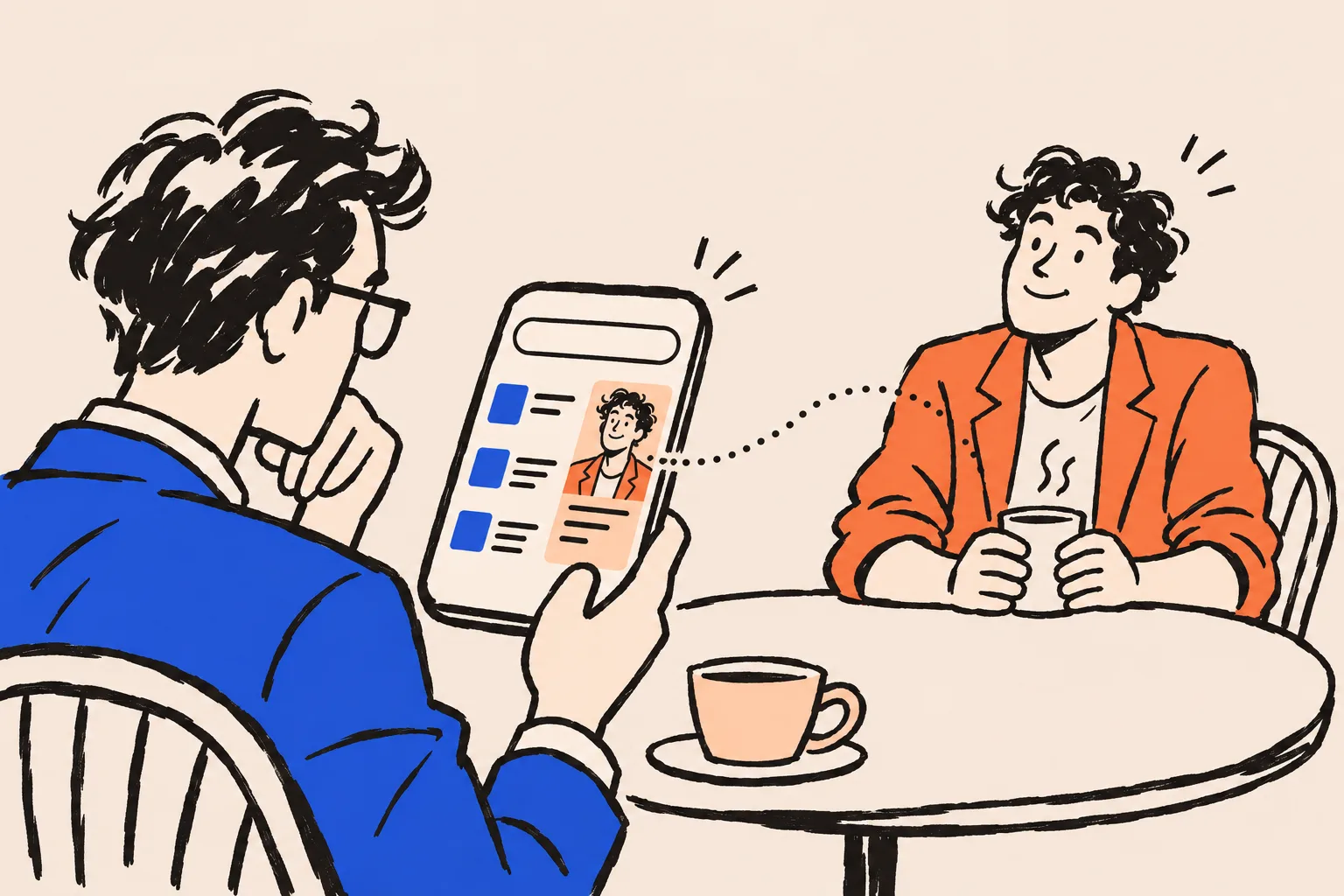
Almost everyone who's about to commit time or money to you. Over 99% of potential clients check out a professional services provider before hiring, and over 80% visit the website to inform the decision, according to Hinge Research Institute's 2014 study of buyers4. That study was about firms, not founders, but the habit it describes is the same one an investor or a senior candidate has.
For fundraising, the team carries the most weight. 47% of venture capital firms named the management team as the most important factor in their investment decisions, in a survey of almost 900 VCs summarised in August 20195. No study we know of measures how often investors search a founder's name, so we won't put a number on it. It's still the obvious first step for anyone judging a team.
The searches cluster around moments you can see coming:
- A raise. Partners look you up before the first call and again before the partner meeting.
- A senior hire. Candidates check the founder before accepting, especially at an early-stage company with little else to read.
- Press and speaking. Journalists and event organisers confirm who you are and what you've done.
- Enterprise sales. A buyer's procurement or security team checks who is behind a young vendor.
Our guide to personal branding for executives covers what each of these people looks for in more detail.
What does it cost you?
Mostly time. Google generates panels automatically1, so there's nothing to buy from Google, and the claim process has no payment step: you sign in, find your panel and verify through an official profile such as YouTube, Search Console, Twitter (now X) or Facebook3. What you spend is the effort to make Google confident about you.
| Cost | What it involves | Can you skip it? |
|---|---|---|
| A bio page you control | One page on your company site or a personal site that says who you are, with Person structured data | No. It's the page Google treats as the source about you |
| Consistent profiles | The same name, title, photo and short bio on LinkedIn, Crunchbase, your company's team page and directories | No. Profiles that disagree make it harder for Google to be sure they're all you |
| Independent mentions | Interviews, podcasts, talks and articles written by other people | Partly. You may already have enough |
| Upkeep | Updating everything when your title or company changes, and checking the panel every few months | No, but it's an hour a quarter |
| Outside help | A specialist or PR firm doing some of the above | Yes, if you have the time |
Source: Google Knowledge Panel Help (accessed 18 Nov 2026); DotVisible's own view of the work
If you're comparing paid options, how much a Google Knowledge Panel costs sets out the DIY, specialist and PR routes side by side, using providers' own published prices.
What do you get back?
You get back a clearer answer to "who is this person?" at the moment someone asks it. That's the main return, and it shows up whether or not Google ever displays a panel, because the bio page and consistent profiles are what people click on anyway.
If a panel does appear, you get a few things on top:
- A summary you can correct. Claim it and you can suggest edits to wrong facts and suggest a preferred photo23.
- Separation from namesakes. A panel is attached to a single entity, so searchers stop mixing you up with someone who shares your name.
- A foothold in Google's AI answers. Google says AI Mode can tap into fresh sources such as the Knowledge Graph6. Being a clear entity there gives Google's AI one more reliable fact source about you.
You're not buying a box on Google. You're buying a name search that tells the same true story wherever someone looks.
What won't a panel do?
A panel won't rank your website higher, bring in leads on its own or guarantee that any AI assistant mentions you. Be careful with anyone who sells it as any of those.
A Google Knowledge Panel makes ChatGPT recommend you.
There's no documented link. OpenAI's crawler documentation says OAI-SearchBot surfaces websites in ChatGPT's search features and says nothing about Google's Knowledge Graph.
The pages that earn a panel, such as your bio page and independent coverage, are the kind of pages AI search reads too. That's the real overlap, and it's indirect.7
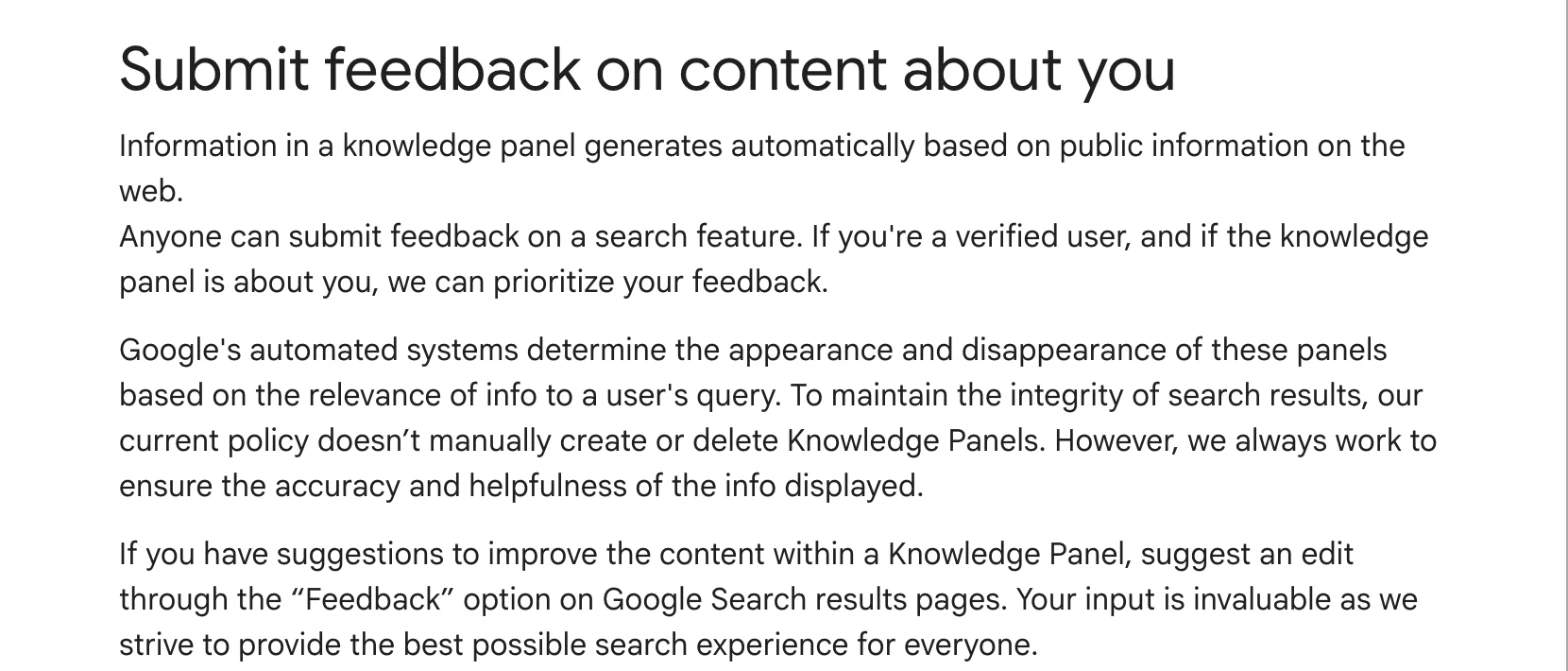
It also isn't permanent. Google says its automated systems decide when panels appear and disappear, and that its current policy is not to create or delete panels by hand8. A panel can drop out after a change on Google's side or after your own details start to disagree. What happened to Google Knowledge Panels covers the recent changes.
When is a panel not worth it yet?
It's not worth chasing in four situations.
- You're in stealth. If you want to be hard to find until launch, a panel works against you. Get the bio page ready and publish it on launch day.
- There's almost nothing independent about you. Google needs other sources to agree with yours. If you have no interviews, talks or coverage yet, spend the effort there first. Can anyone get a Google Knowledge Panel? explains how to tell whether you're too early.
- Your company is the story, and you're happy with that. Some founders prefer the company to be the only name people know. That's a fair choice, and a company panel is a separate project.
- Someone wants a lot of money for a promise. If an offer only makes sense because it "guarantees" a panel with no terms behind it, the panel isn't the problem. The offer is.
How do you decide in ten minutes?
Answer these five questions honestly. If you say yes to three or more, the work is worth doing now.
| Question | Why it matters |
|---|---|
| Do you have a raise, a senior hire, a launch or a keynote in the next six months? | Those are the moments people search you |
| Does a private-window search of your name show someone else, or old information, on page one? | That's the problem a panel and its groundwork fix |
| Have at least three people outside your company written about you, interviewed you or listed you as a speaker? | Google needs independent sources to agree |
| Do your LinkedIn, company team page and Crunchbase show different titles or bios? | Inconsistency is the most fixable gap |
| Would a wrong fact about you in an AI answer cost you a deal or a hire? | Google's AI features and other AI assistants read the same web pages |
Source: DotVisible
Should you do it yourself or get help?
Do it yourself if you have a website you can edit, a clear title and a few hours a month. Every step is documented in how to get a Google Knowledge Panel, and none of it requires paying Google or anyone else.
Get help if you share your name with someone better known, if years of job changes have left your profiles contradicting each other, or if a round or launch gives you a deadline. In those cases experience mostly buys you time.
Whoever you hire, ask what they'll build, what they need from you, and what happens if no panel appears. At DotVisible, Shobin K Jose's team builds personal Google Knowledge Panels for founders and other professionals. If your panel isn't live within 150 days of onboarding, you choose a refund of your deposit or continued work for free. Google still makes the final call, and we say so up front. The CEOs and founders page explains how that works for leaders, and How It Works shows each step.
What should you check on your own name this week?
Start with what a stranger sees today.
Search yourself signed out
Use a private window on desktop and on mobile. Try your name alone, then with your company and with your city. Note whether page one is clearly you and clearly current.
Look yourself up in the Knowledge Graph
Run your name through the free Knowledge Panel Checker. If an entity already exists, you may be closer to a panel than you think.
Line up your top five profiles
Put your website bio, LinkedIn, your company's team page, Crunchbase and one speaker or podcast page side by side. Make the name, title, photo and first sentence identical.
Count your independent sources
List every interview, talk, podcast and article written by someone else in the last three years. Fewer than three means that's where to spend your next month.
Ask the AI assistants
Ask ChatGPT, Gemini and Perplexity who you are. Where they're wrong, trace the mistake to the page it came from and fix that page.
The name search checklist gives you a structured way to record what you find, and the Knowledge Panels topic hub collects every guide on panels. If you'd like a second opinion first, book a free audit and we'll show you what Google and AI tools see when they look you up.
Frequently asked questions
Is a Google Knowledge Panel worth it for a founder?
For most founders whose name gets searched before money changes hands, yes. Google charges nothing for a panel, and the work that earns one (a clear bio page, consistent profiles and independent sources that agree) is the same work that makes your name search hold up for investors, hires and press. It isn't worth chasing yet if almost nothing public exists about you, or if you'd be paying for a promise nobody can keep.
What are the benefits of a Google Knowledge Panel?
A panel gives searchers a summary of who you are, with a description, photos, key facts and links to your profiles, beside the results for your name. Once you claim it, you can suggest corrections and a preferred photo. It also tells you that Google's Knowledge Graph holds a distinct entry for you, which helps separate you from people who share your name.
Does a Google Knowledge Panel help with ChatGPT?
Not directly, as far as anyone can show. Google says its AI Mode can draw on the Knowledge Graph, but OpenAI's documentation for ChatGPT's search crawler says nothing about Google's Knowledge Graph. The sources that earn a panel, such as your own bio page and independent coverage, are the kind of pages AI search tools read too.
Can a Google Knowledge Panel disappear?
Yes. Google says its automated systems decide when panels appear and disappear, and that its current policy is not to create or delete panels by hand. Keeping your bio page and profiles current and consistent is the best protection you have.
How much does a Google Knowledge Panel cost?
Google charges nothing for one, and the claim process has no payment step. What costs money or time is the work around it. Our separate guide to Google Knowledge Panel cost compares the DIY, specialist and PR routes with providers' own published prices.
When is a Google Knowledge Panel not worth it?
When you're in stealth and want to stay hard to find, when almost nothing independent has been written about you yet, or when the money would be better spent on the product or a first round of coverage. In those cases, fix your bio page and profiles first and revisit the panel later.
Will a Google Knowledge Panel get me more leads or investors?
No study we could find measures that, and we wouldn't promise it. A panel makes your name search clearer and more trustworthy at the moment someone checks you out. Whether they then invest, accept the job or buy still depends on you and your company.
Sources
- 1About knowledge panelsGoogle Knowledge Panel Help · Accessed 18 Nov 2026↩
- 2A reintroduction to our Knowledge Graph and knowledge panels (Danny Sullivan)Google, The Keyword · 20 May 2020, accessed 18 Nov 2026↩
- 3Get verified on GoogleGoogle Knowledge Panel Help · Accessed 18 Nov 2026↩
- 4New Research Study: How Professional Services Buyers Check You Out (Lee Frederiksen)Hinge Research Institute · 17 Feb 2014, accessed 18 Nov 2026↩
- 5How Do Venture Capitalists Make Decisions? (Gornall, Gompers, Kaplan and Strebulaev)Harvard Law School Forum on Corporate Governance · 20 Aug 2019, accessed 18 Nov 2026↩
- 6Expanding AI Overviews and introducing AI Mode (Robby Stein)Google, The Keyword · 5 Mar 2025, accessed 18 Nov 2026↩
- 7Overview of OpenAI crawlersOpenAI · Accessed 18 Nov 2026↩
- 8Submit feedback on content about youGoogle Knowledge Panel Help · Accessed 18 Nov 2026↩
Keep reading
 Knowledge PanelsHow Much Does a Google Knowledge Panel Cost? DIY vs Done for YouShobin K Jose · 17 Nov 2026 · 13 min read
 Name searchExecutive Personal Branding: What Investors and Hires FindShobin K Jose · 17 Nov 2026 · 15 min read
 Knowledge PanelsHow to Get a Google Knowledge Panel as a Person, Step by StepShobin K Jose · 17 Nov 2026 · 16 min read