What Happened to Google Knowledge Panels? (2026 update)
Panels haven’t been switched off. The Knowledge Graph behind them was cut back hard, AI Overviews started taking their spot on some searches, and creators got a new profile layer. Here’s every documented change, with dates, and which ones Google actually confirmed.
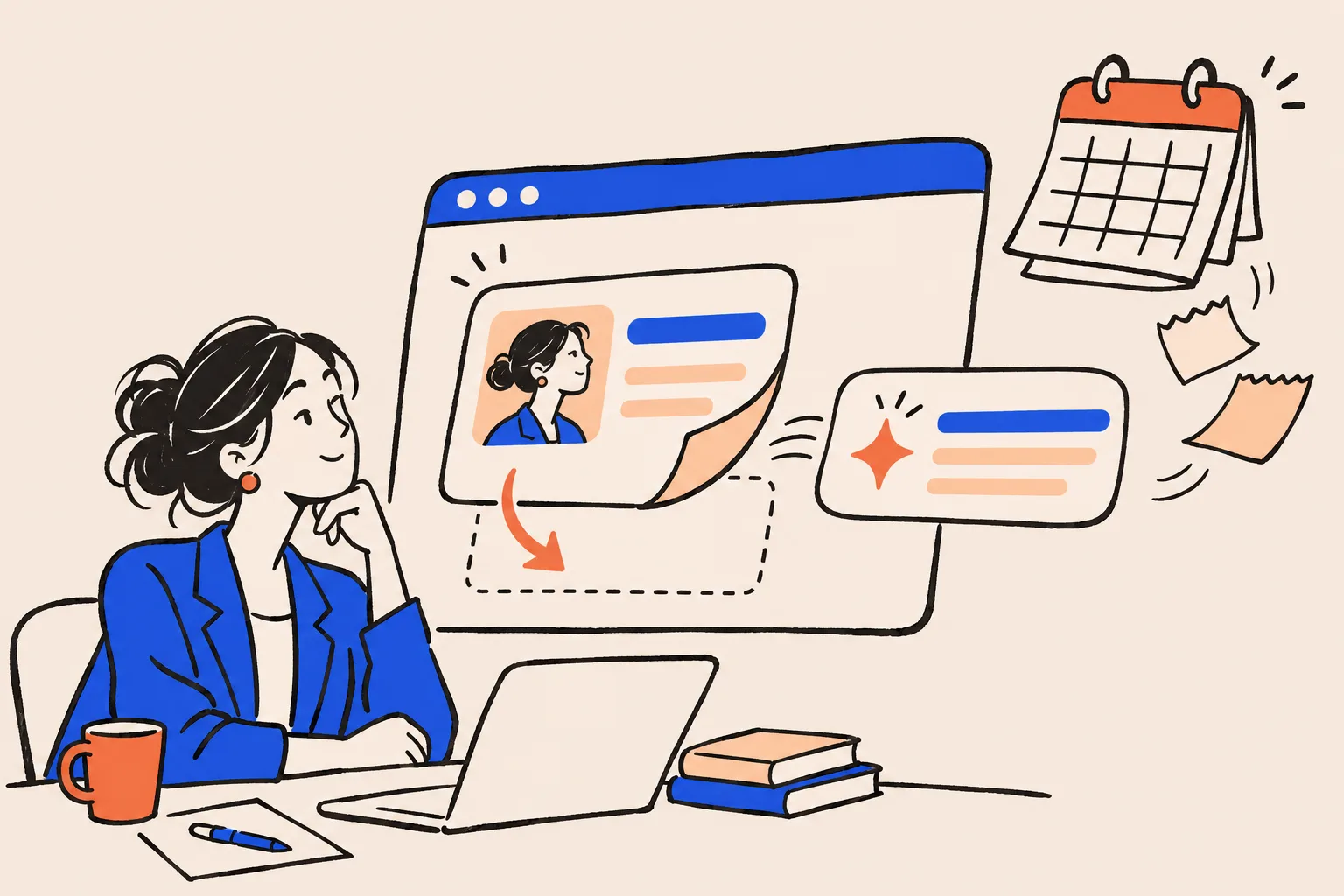
Google Knowledge Panels haven’t gone anywhere: Google still generates them for people, places and organisations in its Knowledge Graph, and you can still claim yours. What changed is everything around them. Since mid-2025 the Knowledge Graph has been cut back by billions of entities, AI Overviews have started taking the panel’s spot on many brand searches, and Google launched Search profiles that sit on top of panels for creators.
If your panel vanished, a shutdown isn’t the explanation. A Knowledge Graph update or a drop in Google’s confidence about who you are is far more likely. This page lists every documented change with its date and source, and marks which ones Google confirmed and which ones outside trackers observed.
Are Google Knowledge Panels gone?
No. As of 17 November 2026, Google’s Knowledge Panel Help still describes panels as information boxes that appear when you search for people, places, organisations and things in the Knowledge Graph1. It says they’re generated automatically, update as information on the web changes, and can be claimed by the person they describe1.
The question keeps coming up because panels feel less stable than they used to, and for good reason. Three things have happened at once.
- The database got smaller. The Knowledge Graph, which every panel draws on, went through the largest contraction Kalicube has recorded since it began tracking in 20152.
- A new layer arrived. Search profiles, launched in June 2026, give creators a profile page that connects to their panel3.
- AI is moving into the panel’s space. On many brand searches, an AI Overview now sits in the right-hand column where the knowledge panel used to be4.
If you’re new to the topic, What Is a Google Knowledge Panel? explains what a panel is and how Google decides who gets one. This page is the change log.
The timeline: every documented change since 2012
Here is the full sequence, oldest first. Each entry links to the source it came from.
16 May 2012
Confirmed: the Knowledge Graph launches
Google introduces “things, not strings” with more than 500 million objects and 3.5 billion facts, drawn partly from Freebase, Wikipedia and the CIA World Factbook.5
22 June 2018
Confirmed: verification opens up
Google updates the process for claiming a panel and extends verification to more kinds of entities.6
20 May 2020
Confirmed: Google’s last official size figure
More than 500 billion facts about 5 billion entities. On mobile, panel information is split into several cards among the results.7
14–18 July 2023
Observed: the big update for people
Kalicube’s tracking shows Person entities tripling in four days, and the share of person entities with a subtitle falling from 57.1% to 16.58%.8
14 May 2024
Confirmed: AI Overviews reach everyone in the US
In the launch post, Google points to its knowledge base of billions of facts about people, places and things.9
5 March 2025
Confirmed: AI Mode announced
Google says AI Mode taps “fresh, real-time sources like the Knowledge Graph”.10
20 May 2025
Confirmed: AI Mode rolls out across the US
No Labs sign-up needed. A new AI Mode tab appears in Search.11
13 and 20 June 2025
Observed: the clarity cleanup
Kalicube records the Knowledge Graph shrinking by 6.26%, with more than 3 billion entities deleted in one week.2
11 August 2025
Observed: a second cleanup
A one-day update, this time focused on company, organisation and brand entities.2
4 February 2026
Reported: the CIA World Factbook closes
The CIA discontinues the Factbook, one of the Knowledge Graph’s original named sources. The effect on panels is unknown.12
2–3 March 2026
Observed: a new desktop panel design
Coloured sections and table elements start appearing in US knowledge panels.13
4 June 2026
Confirmed: Search profiles launch
Creators and publishers get a profile page. Claiming one may trigger a knowledge panel, and existing panels get a profile link.3 The first bar was 100,000 followers.14
16 September 2026
Confirmed: the follower bar drops to 10,000
More US publishers and creators become eligible for Search profiles.15
17 September 2026
Observed: a local panel shown as an AI Overview
A local Business Profile panel appears with an AI Overview label and a “Show more” button that opens an AI Mode-style chat.16
31 Oct – 2 Nov 2026
Observed: AI Overviews move into the panel’s column
On many brand searches, an AI Overview appears in the right-hand column where the knowledge panel sat. Google hasn’t commented.4
Which changes has Google confirmed?
Google has confirmed the launch, the verification update, the size figure, both AI features and Search profiles. Nearly everything about how panels for people have shifted since 2023 comes from outside observers. That split matters when you read anything on this topic, including this page.
| Change | When | Who says so | Status |
|---|---|---|---|
| Knowledge Graph launches | May 2012 | Confirmed | |
| Verification extended to more entities | June 2018 | Confirmed | |
| 500 billion facts, 5 billion entities | May 2020 | Confirmed | |
| Person entities triple, subtitles cut | July 2023 | Kalicube | Observed |
| AI Overviews in the US | May 2024 | Confirmed | |
| AI Mode, drawing on the Knowledge Graph | March and May 2025 | Confirmed | |
| Graph shrinks 6.26%, 3 billion+ entities deleted | June 2025 | Kalicube | Observed |
| Second cleanup, brand entities | August 2025 | Kalicube | Observed |
| Coloured desktop panel sections | March 2026 | Search Engine Roundtable | Observed |
| Search profiles launch | June 2026 | Confirmed | |
| Search profile bar lowered to 10,000 followers | September 2026 | Google, via Search Engine Journal | Confirmed |
| Local panel as an AI Overview | September 2026 | Search Engine Roundtable | Observed |
| AI Overviews in the panel’s column for brands | November 2026 | Search Engine Roundtable | Observed |
Source: Google blog and Help, Search Engine Land, Search Engine Roundtable, Search Engine Journal23415
A pattern stands out. Google announces new features loudly and changes to the Knowledge Graph quietly. It has never published a note saying “we removed 3 billion entities this week”. So if your panel changed and you can’t find an announcement, that doesn’t mean nothing happened.
What did the 2025 clarity cleanup actually do?
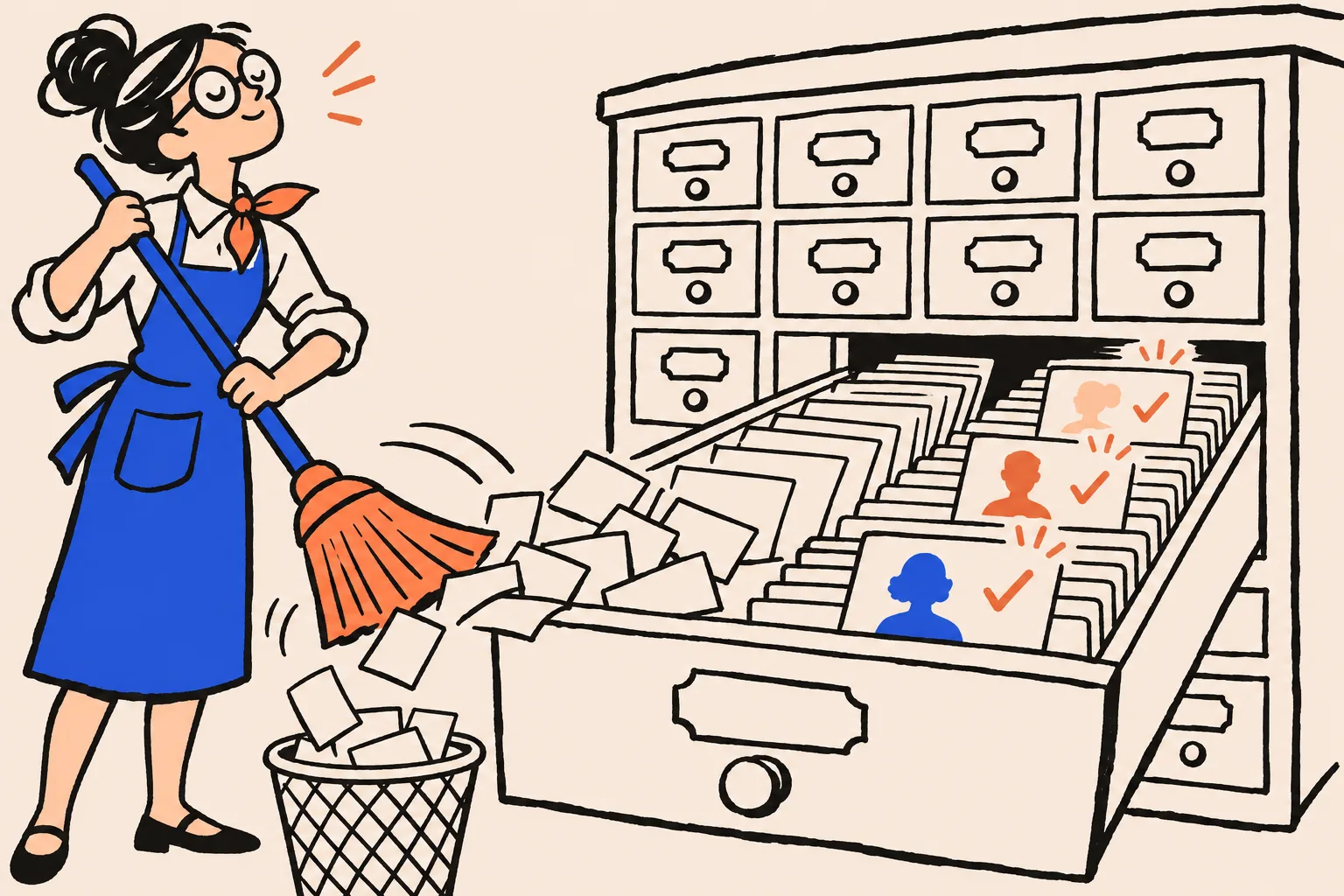
It removed a large slice of the Knowledge Graph in a single week, and it tightened how Google classifies people. That’s according to Kalicube’s tracking, published by Jason Barnard in Search Engine Land in August 20252.
Barnard reported that from May 2024 to May 2025 the graph grew by a steady 2.79%. Then two updates, on 13 and 20 June 2025, shrank it by 6.26%, deleting more than 3 billion entities, which he notes is twice the previous year’s net additions2.
Barnard singles out two categories. Event entities fell 76.91%, which Barnard reads as Google switching off the pandemic-era surge in event tracking. Entities labelled with the vague type “Thing” fell 15.27%, which he puts at about 8 billion2.
For people, the important number is the last one in the grid above. Google’s confidence that a person entity is simply a Person, with no competing types attached, rose from 70.16% to 76.78%2. In plain terms, Google got stricter about entities it couldn’t classify cleanly.
How this fits with the 2023 update
The cleanup didn’t come from nowhere. In July 2023, Kalicube’s tracking showed Person entities tripling in four days. In the same update, the share of person entities carrying a subtitle fell from 57.1% to 16.58%, while “Writer” and “Author” subtitles rose by 21%8. The share of person entities triggered by Wikipedia dropped from 40.9% in June 2023 to 12.44% that September8.
Barnard says a 2024 update continued the focus on people, especially those Google sees as content creators2. Read in sequence, the pattern is that Google added people in bulk in 2023 and then pruned anything ambiguous in 2025. Barnard’s view is that the leaner graph is meant to feed AI Overviews and AI Mode2. It’s a reasonable reading, but Google hasn’t said so.
Google adds people in bulk, then prunes whatever it can’t pin down. Being easy to pin down is how you stay in.
Did Google lose the sources behind panels?
Partly. One original source has closed, and Kalicube’s data suggests Google was already leaning less on another. In February 2026 the CIA discontinued the World Factbook, one of the three public sources Google named when it launched the Knowledge Graph in 2012125. Search Engine Roundtable reported more than 7,000 Factbook URLs still indexed but redirecting to a shutdown notice. Nobody knows yet what that changed in the graph, and Schwartz assumes Google already stores much of the data12.
Wikipedia, another of the three, is still important but far less dominant for people than it was, judging by Kalicube’s 2023 figures above8. Google said back in 2020 that it draws on hundreds of sources, including licensed data and structured markup from site owners7.
For an individual professional, the practical upshot is that your own sources carry more weight than they used to: your website, your profiles and independent pages about you. If those disagree with each other, there’s less of an outside reference to settle it.
What are Google Search profiles, and do they replace panels?
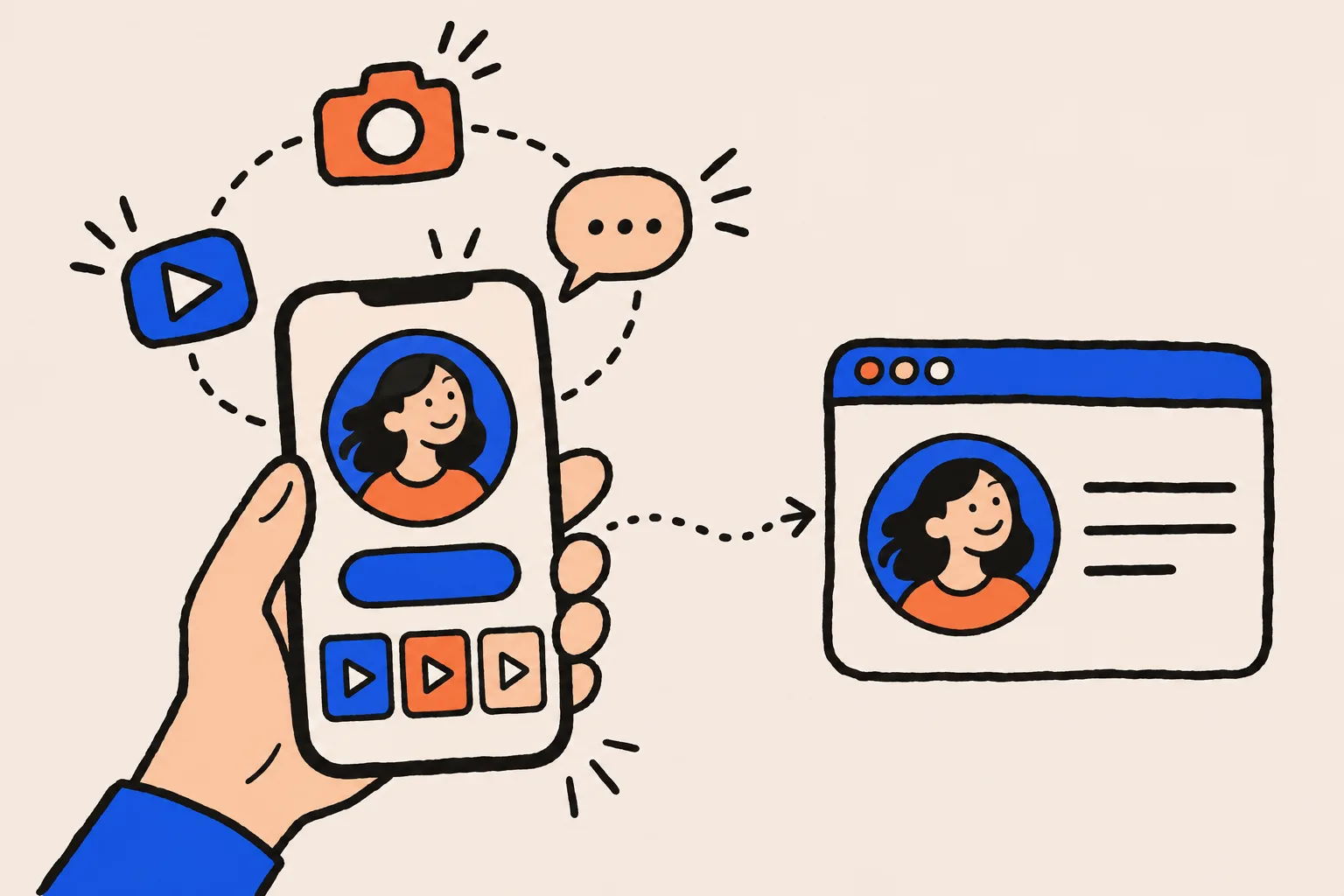
They don’t replace panels. They sit on top of them. Google launched Search profiles on 4 June 2026 as “a central place” for publishers and creators to show their latest articles, videos and social posts3. On mobile, people reach a profile through the creator’s knowledge panel, by tapping the creator’s name in Discover, or by direct link3.
Two lines in Google’s announcement matter for anyone who cares about their panel. Claiming a profile “may trigger the creation of a knowledge panel” for eligible creators, and an existing panel gets an updated avatar, the latest content and a direct link to the profile3.
Who qualifies, and how that has changed
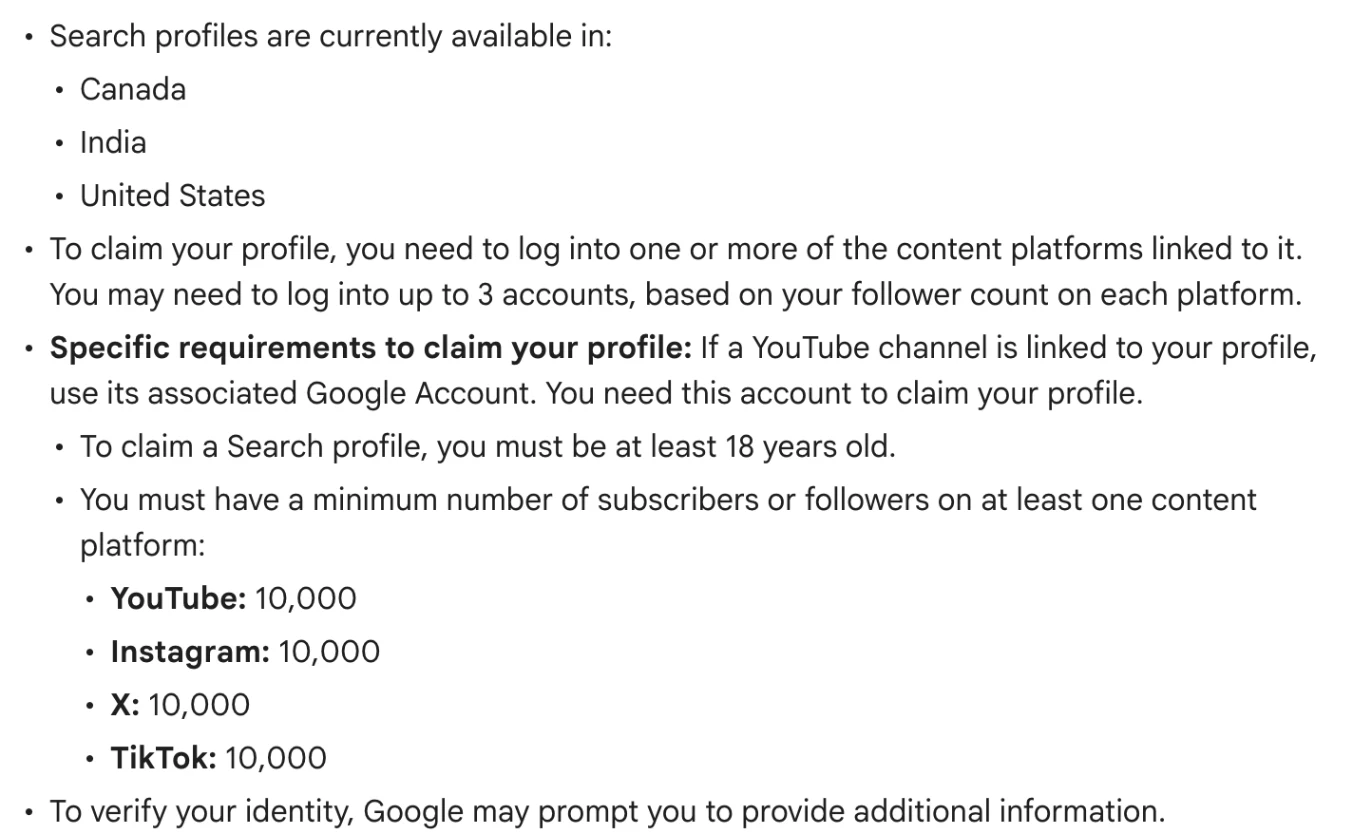
The bar has fallen fast. At launch, Search Engine Journal reported a minimum of 100,000 followers on YouTube, Instagram or X, or 300,000 on TikTok, with owners aged 18 or over14. By mid-September Google’s help page showed 35,000, and on 16 September 2026 Google lowered it to 10,000 on any of the four platforms15.
| Item | Value |
|---|---|
| At launch, 4 Jun 2026 | 100k |
| Before 16 Sep 2026 | 35k |
| Since 16 Sep 2026 | 10k |
As of 17 November 2026, Google’s help pages for claiming and creating a profile both list the 10,000 minimum for YouTube, Instagram, X and TikTok alike, and both name Canada, India and the United States as the countries where Search profiles are available1718. That’s wider than in mid-September, when Search Engine Journal reported profiles were open only in the US15. Check the help page before you plan around it, because both numbers have moved within months.
What it means if you already have a panel
If you have a knowledge panel and meet the requirements, Google may already have generated a Search profile for you18. Claiming a panel and claiming a profile are separate. Google says that even if you claimed your panel in the past, you need to claim the profile on its own, though it will verify your identity automatically if you already hold the panel17.
A claimed profile lets you pin up to 8 posts, add up to 8 links and suggest edits to your name and bio. Google says those edits “may be reflected” on your knowledge panel17. Search Engine Journal quotes Google’s documentation as saying a profile doesn’t directly affect how your content ranks15.
Are AI Overviews replacing knowledge panels?
For brands, it looks that way on some searches. For people, there’s no documented case yet. On 2 November 2026, Search Engine Roundtable reported that AI Overviews for many brand searches had moved to the right-hand column on desktop, the spot knowledge panels have long occupied4. Barry Schwartz wrote that Google is “essentially replacing brand knowledge panels” with them4.
PPC Land, covering the same change, cited Ahrefs data showing AI Overviews on 63 of 100 big-brand searches by 30 September 2026, up from 5 of 98 on 1 July19. It also noted that Google hasn’t announced the change, updated a help page or said whether it’s a test19. Six weeks earlier, Search Engine Roundtable had reported a local business panel presented as an AI Overview, with a “Show more” button leading into an AI Mode-style chat16.
What Google has confirmed is the plumbing. It said in March 2025 that AI Mode draws on “fresh, real-time sources like the Knowledge Graph”10, and the post that launched AI Overviews pointed to Google’s knowledge base of billions of facts about people, places and things9. By Google’s own account, then, the Knowledge Graph that fills panels also feeds AI Mode.
That’s the part worth acting on. If Google’s AI starts describing you in the panel’s place, it will lean on what the Knowledge Graph holds about you. An unclear or contradictory entity gets a vague or wrong summary. If that’s already happening in ChatGPT or Gemini, When AI Gets You Wrong covers how to correct it.
Why did my knowledge panel disappear?
Usually because Google became less sure about you, not because panels were switched off. Google says panels update automatically as information on the web changes1, and Kalicube’s data shows how large a single update can be2. Even so, Barnard cautions that for most people who noticed panel problems around June 2025, that update wasn’t the cause2, so check the other explanations too.
The usual causes:
- A Knowledge Graph update. Bulk updates add, retype and delete entities. If your entity was thinly supported or carried mixed types, it could have been pruned.
- Your details disagree. Different job titles, old bios and mismatched photos make it harder for Google to tie mentions together.
- A source changed. A page Google relied on was deleted, moved or rewritten. Your old employer’s team page is a common one.
- A namesake. Someone with your name became more prominent, and Google now shows their panel first.
- A layout change. On some searches the panel may simply be displayed differently, especially on mobile, where Google splits it into cards7.
Check what Google holds
Search your name in a private window on desktop and mobile, with and without your profession. Then run it through a Knowledge Graph checker to see whether an entity still exists.
Find what changed
Look for anything that moved around the time the panel went: a new job, a deleted profile, a redesigned website, a changed bio.
Make your details agree
Use one name, one role and one short bio everywhere, with your website as the main statement of who you are.
Shore up independent sources
Pages about you written by others carry weight. Keep speaker pages, interviews and directory listings accurate.
Claim and correct when it returns
If the panel comes back, claim it and suggest fixes with public pages that support each change.
How to Claim and Edit Your Knowledge Panel covers the claim process step by step.
What to watch next
Four open questions will decide how much of this sticks. We’ll update this page each quarter as answers come in.
- Do AI Overviews take the panel’s place for people? The reports so far are about brands and local businesses. Watch whether person searches follow.
- Is there a 2026 Knowledge Graph update? Kalicube says Google has made a major Knowledge Graph change every summer since 20152. As of 17 November 2026 we found no published report of a 2026 one.
- Do Search profiles spread? Countries and thresholds have changed within months. Another drop would bring more mid-sized creators in.
- Does Google publish anything new about the graph itself? Its most recent official size figure is still the one from May 20207.
Whatever happens to the display, the thing underneath hasn’t changed in years. Google shows what it’s confident about, and confidence comes from clear, consistent and independently confirmed information about you. Google alone decides whether a panel appears, so nobody can promise one. You can still make it easy for Google to understand you. More guides are in the Knowledge Panels hub, and if you want a second opinion on where you stand, book a free audit.
Frequently asked questions
Did Google get rid of knowledge panels?
No. Google’s Knowledge Panel Help still describes panels as information boxes for people, places, organizations and things in the Knowledge Graph, and you can still claim one. What changed is the database behind them, how they are displayed on some searches, and a new Search profile layer for creators.
Why did my knowledge panel disappear?
Panels update automatically as the web changes, and large Knowledge Graph updates can remove entities in bulk. Kalicube’s tracking recorded more than 3 billion entities deleted in one week in June 2025. A loss of confidence, conflicting details about you, or a namesake can also make a panel stop showing.
Are AI Overviews replacing knowledge panels?
For many brand searches on US desktop, observers reported in early November 2026 that an AI Overview now appears in the right-hand column where the brand’s knowledge panel used to sit. Google has not announced it, and the reports so far concern brands and local businesses, not individual people.
What is a Google Search profile?
A profile page Google launched on 4 June 2026 for publishers and creators. It gathers your content from platforms such as YouTube, Instagram, TikTok and X. Claiming one may trigger a knowledge panel for eligible creators, and existing panels get a profile link. In November 2026 you need at least 10,000 followers on one of those platforms.
Do I need a Search profile to get a knowledge panel?
No. Knowledge panels still come from the Knowledge Graph and still appear for people who have never had a Search profile. A Search profile is an extra route for creators with a qualifying following, and claiming a profile is separate from claiming your panel.
Which knowledge panel changes has Google confirmed?
Google confirmed the 2012 Knowledge Graph launch, the 2018 verification update, the 2020 size figure, AI Overviews in May 2024, AI Mode in 2025 and Search profiles in June 2026. The 2023 and 2025 Knowledge Graph updates come from Kalicube’s tracking, and the 2026 layout changes come from observers. Google hasn’t confirmed those.
Sources
- 1About knowledge panelsGoogle Knowledge Panel Help · Accessed 17 Nov 2026↩
- 2Google’s great clarity cleanup: 3 shifts redefining the Knowledge Graph and its AI future (Jason Barnard)Search Engine Land · 18 Aug 2025↩
- 3A new profile to help publishers and creators highlight their work on Search (Ibrahim Badr)Google blog · 4 Jun 2026↩
- 4Google AI Overviews For Brands Moved To Right Column (Barry Schwartz)Search Engine Roundtable · 2 Nov 2026↩
- 5Introducing the Knowledge Graph: things, not strings (Amit Singhal)Google blog · 16 May 2012↩
- 6Get verified to manage your presence on Google (Lauren Clark)Google blog · 22 Jun 2018↩
- 7A reintroduction to our Knowledge Graph and knowledge panels (Danny Sullivan)Google blog · 20 May 2020↩
- 8Inside Google’s massive 2023 E-E-A-T Knowledge Graph update (Jason Barnard)Search Engine Land · 25 Oct 2023↩
- 9Generative AI in Search: Let Google do the searching for you (Elizabeth Reid)Google blog · 14 May 2024↩
- 10Expanding AI Overviews and introducing AI Mode (Robby Stein)Google blog · 5 Mar 2025↩
- 11AI in Search: Going beyond information to intelligence (Elizabeth Reid)Google blog · 20 May 2025↩
- 12Google Is Losing A Knowledge Graph Source - CIA World Factbook (Barry Schwartz)Search Engine Roundtable · 18 Feb 2026↩
- 13Google Knowledge Panels With Colored Table Elements Sections Rolling Out (Barry Schwartz)Search Engine Roundtable · 3 Mar 2026↩
- 14Google Launches Search Profiles, Here’s How You Can Get One (Matt G. Southern)Search Engine Journal · 4 Jun 2026↩
- 15Google Search Profiles Now Available At 10,000 Followers (Matt G. Southern)Search Engine Journal · 16 Sep 2026↩
- 16Google Local Knowledge Panel As An AI Overview (Barry Schwartz)Search Engine Roundtable · 17 Sep 2026↩
- 17Claim an existing Search profileGoogle Search Help · Accessed 17 Nov 2026↩
- 18Create a new Search profileGoogle Search Help · Accessed 17 Nov 2026↩
- 19Google moves AI Overviews for brand searches out of the main results (Luís Rijo)PPC Land · 3 Nov 2026↩
Keep reading
 Knowledge PanelsIs a Google Knowledge Panel Worth It for a Founder?Shobin K Jose · 18 Nov 2026 · 11 min read
 Knowledge PanelsCan Anyone Get a Google Knowledge Panel? How Google DecidesShobin K Jose · 17 Nov 2026 · 16 min read
 Knowledge PanelsCan't Claim Your Knowledge Panel? Fixes for Every ErrorShobin K Jose · 17 Nov 2026 · 18 min read