How Often Does AI Get Facts About People Wrong? Every Study, Compared (2026)
No one has tested how often ChatGPT, Gemini or Google gets ordinary professionals wrong. Here is every published figure that comes close, from OpenAI’s own PersonQA test to news audits and the lawsuits that followed.
Often enough to matter, and more often for people who aren't famous. Nobody has measured how often ChatGPT, Gemini, Perplexity or Google's AI answers get facts wrong about ordinary named professionals in everyday use. The closest evidence comes from benchmarks built around questions about people. They agree on two things: every model makes up facts about people some of the time, and the less a model has read about someone, the more it gets wrong.
This page lines up every published figure we could verify. That runs from OpenAI's own PersonQA test to independent benchmarks, a study of news answers by 22 public service media organizations, and the legal cases that followed false answers about real people. We checked each figure against its original source on October 24, 2026. If you want to know what assistants look at when they describe or recommend someone, our explainer on how ChatGPT decides who to recommend covers it.
Sources checked for this study
- OpenAI system cards
- FActScore
- WildHallucinations
- EBU and BBC
- NewsGuard
- The New York Times and Oumi
- Reuters
- Cleary Gottlieb
- noyb
- Government Technology
How often do AI models get facts about people wrong?
Short answer
On OpenAI's PersonQA test, o3 hallucinated on 33% of its attempted answers about people, o4-mini on 48% and o1 on 16% (OpenAI, April 2025). In the FActScore biography benchmark, only 58.3% of the facts in ChatGPT-written biographies were supported by Wikipedia (2023).
PersonQA is OpenAI's internal set of questions and publicly available facts about people.1 It's the most direct published measure of how often a mainstream model invents something about a named person, though OpenAI hasn't released the questions. FActScore works differently. It asks a model to write a short biography, splits the text into single facts and checks each one against Wikipedia.2
| Item | Value |
|---|---|
| o1 | 16% |
| o3 | 33% |
| o4-mini | 48% |
Source: OpenAI o3 and o4-mini System Card, April 2025. Share of attempted answers that contained a hallucination.
| Metric | Value | Source |
|---|---|---|
| PersonQA hallucination rate, o3 | 33% | OpenAI, April 2025 |
| PersonQA hallucination rate, o4-mini | 48% | OpenAI, April 2025 |
| PersonQA hallucination rate, o1 | 16% | OpenAI, April 2025 |
| PersonQA accuracy: o3, o4-mini, o1 | 59% / 36% / 47% | OpenAI, April 2025 |
| Facts in ChatGPT-written biographies supported by Wikipedia | 58.3% | Min et al. (FActScore), 2023 |
| Same measure for InstructGPT and PerplexityAI | 42.5% / 71.5% | Min et al. (FActScore), 2023 |
Source: PersonQA figures are from the hallucination evaluations table in OpenAI's o3 and o4-mini System Card. FActScore tested 2023 versions of each model.
| Item | Value |
|---|---|
| InstructGPT | 42.5% |
| ChatGPT | 58.3% |
| PerplexityAI (searched the web) | 71.5% |
Source: Min et al. (FActScore), 2023. Higher is better.
OpenAI's explanation for o3's higher rate is that it makes more claims overall, so it gets more right and more wrong.1 If you're the person being described, that means a longer, more confident answer about you can still be the less accurate one. The FActScore authors also found that errors cluster later in a generated biography, after basics such as nationality and profession.2
Are less-known people described wrongly more often?
Short answer
Yes. FActScore found PerplexityAI's factual precision fell by a relative 50% for rarer people. WildHallucinations (2024) found "people" among the hardest domains, with only two of 15 models scoring over 90%, and every model it compared did worse on entities without a Wikipedia page.
For a lawyer, advisor, doctor or consultant, this is the result to pay attention to, because most of them are not famous. A model learns about a person from how often, and how consistently, that person appears in its training data and in the pages it can retrieve. Fewer, scattered sources leave it more to guess.
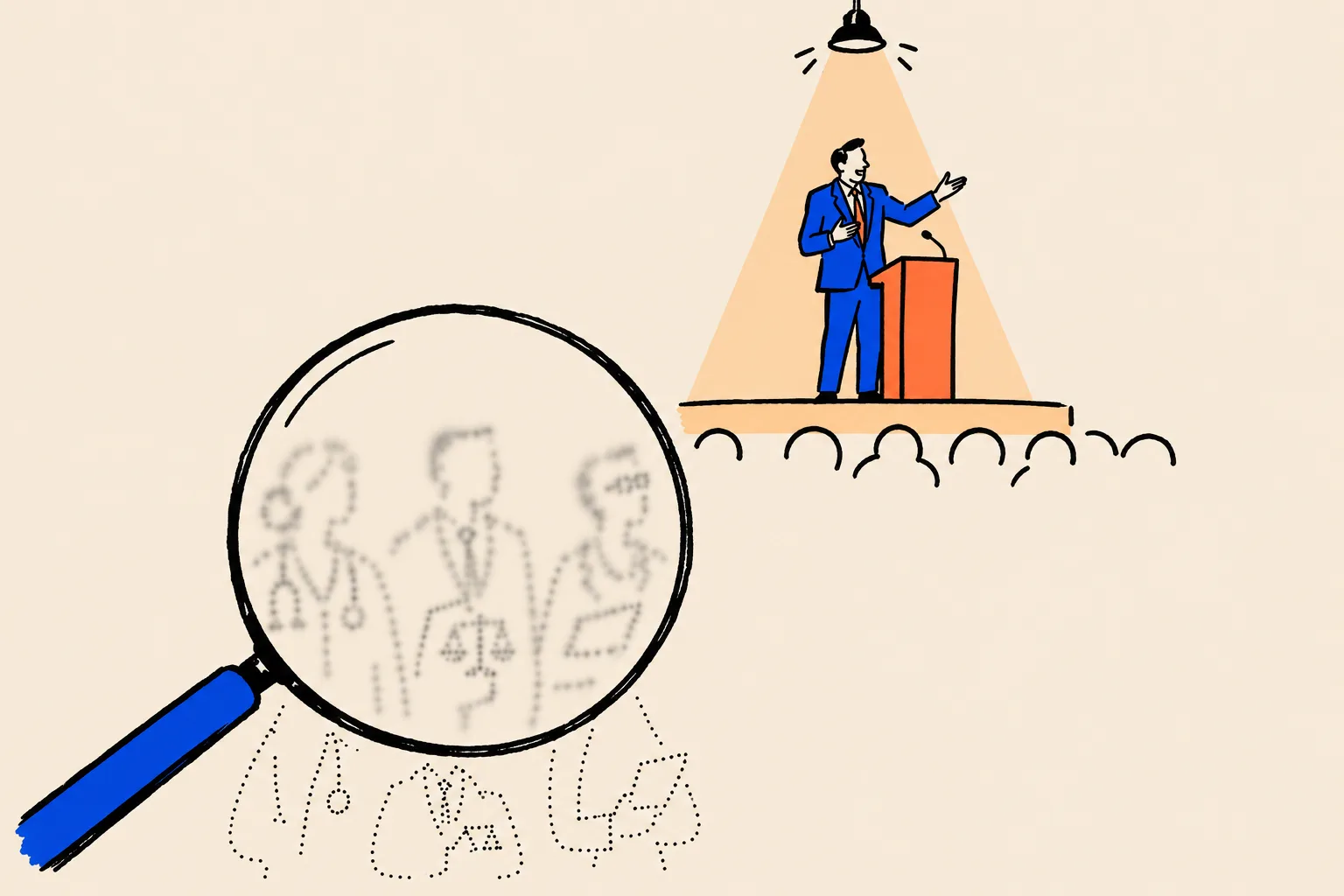
Source: Zhao et al. (WildHallucinations), 2024. Based on 7,917 entities mined from real chatbot conversations.3
| Metric | Value | Source |
|---|---|---|
| Relative drop in PerplexityAI factual precision for rarer people (fact level) | 50% | Min et al. (FActScore), 2023 |
| Same drop at sentence level | 64% | Min et al. (FActScore), 2023 |
| Real-world entities from user chats with no Wikipedia page (7,917 entities) | 52% | Zhao et al. (WildHallucinations), 2024 |
| Models evaluated | 15 | Zhao et al. (WildHallucinations), 2024 |
| Models scoring over 90% on people, versus 7 of 15 on geography and computing | two of 15 | Zhao et al. (WildHallucinations), 2024 |
Source: WildHallucinations mined its entities from real conversations users had with chatbots, then checked model descriptions against web sources.
The WildHallucinations authors also found that models with web search, such as Command R, still did worse on entities without Wikipedia pages.3 Search only helps when there is something consistent to find. So it matters that your facts match across your own site, profiles and directories. Structured identity signals, such as a Google Knowledge Panel or clear structured data, also give search-backed assistants a cleaner source to read. None of this guarantees an accurate answer. It leaves a model less to guess.
Are newer models getting people right more often?
Short answer
On OpenAI's own measures, yes. On ChatGPT traffic with browsing on, 4.5% of factual claims from GPT-5 thinking contained an error, against 12.7% for o3, and GPT-5 thinking made over 5 times fewer factual errors than o3 on the FActScore biography benchmark and LongFact (OpenAI, August 2025).
These figures come from OpenAI grading its own models with an AI grader that checks claims on the web, which OpenAI validated against human reviewers.4 They're the best published view of the trend. They are not independent, though, and they cover every kind of question, not only questions about people.
| Item | Value |
|---|---|
| GPT-5 thinking | 4.8% |
| GPT-5 main | 11.6% |
| GPT-4o | 20.6% |
| o3 | 22% |
Source: OpenAI GPT-5 System Card, 2025. ChatGPT production traffic with browsing on.
| Item | Older model | GPT-5 |
|---|---|---|
| GPT-4o vs GPT-5 main | 12.9% | 9.6% |
| o3 vs GPT-5 thinking | 12.7% | 4.5% |
Source: OpenAI GPT-5 System Card, 2025
| Metric | Value | Source |
|---|---|---|
| Factual claims with errors, GPT-5 main vs GPT-4o | 9.6% vs 12.9% | OpenAI GPT-5 System Card, 2025 |
| Factual claims with errors, GPT-5 thinking vs o3 | 4.5% vs 12.7% | OpenAI GPT-5 System Card, 2025 |
| Responses with at least one major factual error, GPT-5 thinking vs o3 | 4.8% vs 22.0% | OpenAI GPT-5 System Card, 2025 |
| Responses with at least one major factual error, GPT-5 main vs GPT-4o | 11.6% vs 20.6% | OpenAI GPT-5 System Card, 2025 |
| Factual errors on FActScore and LongFact, GPT-5 thinking vs o3 | over 5 times fewer | OpenAI GPT-5 System Card, 2025 |
Source: Values from the production-traffic chart in the GPT-5 System Card; they match the 26%, 65%, 44% and 78% reductions stated in its text.
Even the best rate leaves some claims wrong, and an answer about a person usually holds several claims at once: role, employer, location, credentials, history. Which model someone gets also depends on their plan and settings, so the older and newer error rates exist side by side in everyday use.
How accurate are AI answers about the news?
Short answer
Not very. The EBU and BBC study of 2,709 answers from ChatGPT, Copilot, Gemini and Perplexity found 45% had at least one significant issue and 20% had significant accuracy problems (October 2025). NewsGuard found 10 leading chatbots repeated false news claims 35% of the time in August 2025.
News answers aren't answers about people, but they are the largest independent tests of what consumer assistants actually say, and professional journalists did the judging rather than another AI.5 Many news questions are about named people, too, so the same errors carry over: wrong attributions, outdated details and confident claims the cited source doesn't support.
Source: EBU and BBC, News Integrity in AI Assistants, October 2025. 2,709 answers from ChatGPT, Copilot, Gemini and Perplexity.
| Metric | Value | Source |
|---|---|---|
| Answers with at least one significant issue (22 public service media organizations, 18 countries, 14 languages) | 45% | EBU and BBC, 2025 |
| Answers with any issue, including minor ones | 81% | EBU and BBC, 2025 |
| Significant sourcing problems | 31% | EBU and BBC, 2025 |
| Significant accuracy problems | 20% | EBU and BBC, 2025 |
| Gemini answers with significant issues; Copilot | 76% / 37% | EBU and BBC, 2025 |
| BBC content only: answers with significant issues, first study to second | 51% to 37% | EBU and BBC, 2025 |
| False news claims repeated by 10 leading chatbots, August 2024 to August 2025 | 18% to 35% | NewsGuard, 2025 |
| Chatbots declining to answer, August 2024 to August 2025 | 31% to 0% | NewsGuard, 2025 |
Source: News Integrity in AI Assistants, EBU and BBC, October 2025 (free/consumer versions of each assistant).
Source: NewsGuard, AI False Claim Monitor, August 20256
If an assistant searches instead of refusing, it repeats whatever the web says most clearly about you. When the information about a person is thin or contradictory, it has less to work with and more room to get things wrong.
How accurate are Google's AI Overviews?
Short answer
About 1 in 10 answers was wrong in the most cited test. The New York Times and Oumi found Google's AI Overviews answered 85% of SimpleQA questions correctly before the Gemini 3 update and 91% after it (reported April 2026). The test covered general facts, not people specifically.
AI Overviews sit at the top of an ordinary Google search, including some searches for a person's name or business, which is why they matter to professionals. The Oumi test used more than 4,000 short factual questions from OpenAI's SimpleQA set.7
Source: NYT and Oumi, via Ars Technica, 2026. More than 4,000 questions.
| Metric | Value | Source |
|---|---|---|
| Accuracy before the Gemini 3 update | 85% | NYT and Oumi, via Ars Technica, 2026 |
| Accuracy after the update | 91% | NYT and Oumi, via Ars Technica, 2026 |
| Questions in the benchmark | more than 4,000 | NYT and Oumi, via Ars Technica, 2026 |
A false AI Overview has already led to a lawsuit (see the Wolf River Electric case below). For a name search the risk is the same as with chatbots: if the sources about a person are thin or conflicting, the summary at the top of the page can blend them.
What happens when an AI gets a person wrong?
Short answer
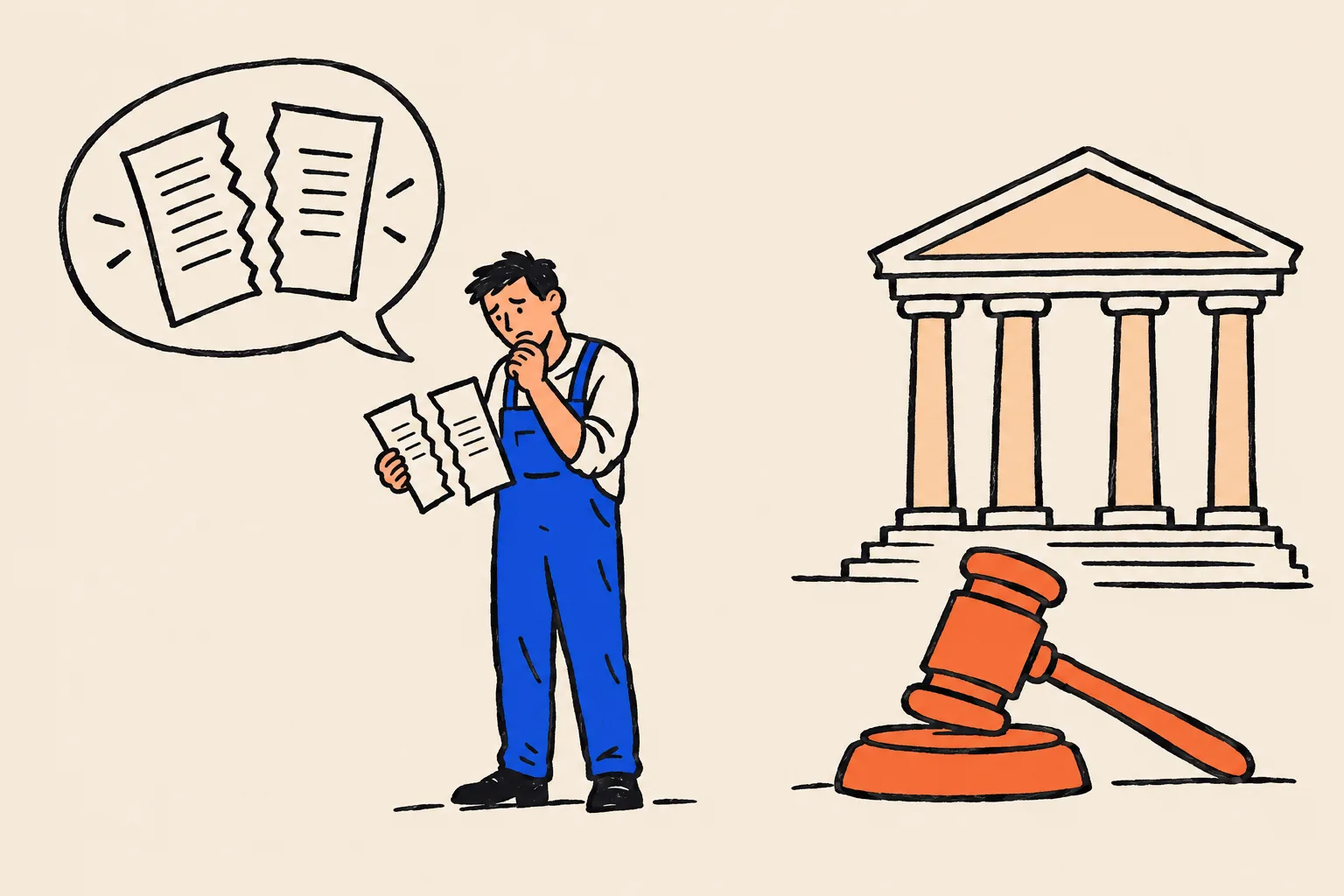
Legal threats, a GDPR complaint and lawsuits. ChatGPT falsely described an Australian mayor as jailed for bribery, a radio host as accused of embezzlement, and a Norwegian father as a child murderer. A Google AI Overview falsely said a Minnesota company had been sued by the state, and the company is seeking $110 million to $210 million.
These are the documented cases that reached lawyers or regulators, the earliest being an Australian mayor's legal letter to OpenAI in 2023.8 Outcomes so far are mixed. A Georgia court ruled for OpenAI in the Walters case.9 The Norwegian complaint and the Wolf River suit took other legal routes: data protection law, and defamation against a search company.
Australia · ChatGPT
Brian Hood, mayor of Hepburn Shire
- What the AI said
- He served prison time for bribery. He was never charged.
- What happened
- Lawyers gave OpenAI 28 days to fix it before a possible suit (letter of March 21, 2023).
United States · ChatGPT
Mark Walters, radio host
- What the AI said
- He had been accused of embezzlement in a lawsuit he was not part of.
- What happened
- Georgia court granted summary judgment for OpenAI, May 2025.
Norway · ChatGPT
Arve Hjalmar Holmen
- What the AI said
- He murdered two of his children, mixed with real details of his family and hometown.
- What happened
- noyb filed a complaint with Norway's data protection authority on 20 March 2025 under GDPR Article 5(1)(d) (accuracy).
Minnesota · Google AI Overview
Wolf River Electric
- What the AI said
- The state attorney general had sued the company. It had not.
- What happened
- Company seeks $110 million to $210 million and cites a lost $150,000 contract.
In the Norwegian case, noyb reports that ChatGPT stopped repeating the false story once it began searching the web for people.10 What an assistant can find shapes what it says. Professionals in regulated fields have extra reasons to check: a wrong credential or practice area attributed to a lawyer or doctor can raise compliance questions as well as reputational ones. Our pages for lawyers and doctors and specialists cover what an accurate search presence looks like in those fields.
Every figure on this page
Filter by section, or sort any column. Each figure links to its source.
| PersonQA hallucination rate, o3 | 33% | 2025 | OpenAI |
| PersonQA hallucination rate, o4-mini | 48% | 2025 | OpenAI |
| PersonQA hallucination rate, o1 | 16% | 2025 | OpenAI |
| PersonQA accuracy, o3 / o4-mini / o1 | 59% / 36% / 47% | 2025 | OpenAI |
| Supported facts in ChatGPT biographies (FActScore) | 58.3% | 2023 | Min et al. |
| Supported facts, InstructGPT / PerplexityAI | 42.5% / 71.5% | 2023 | Min et al. |
| Relative precision drop for rarer people, fact / sentence level (PerplexityAI) | 50% / 64% | 2023 | Min et al. |
| Real-world entities with no Wikipedia page | 52% | 2024 | Zhao et al. |
| Entities in the benchmark | 7,917 | 2024 | Zhao et al. |
| Models scoring over 90% on people (of 15) | two | 2024 | Zhao et al. |
| Claims with errors, GPT-5 main vs GPT-4o | 9.6% vs 12.9% | 2025 | OpenAI |
| Claims with errors, GPT-5 thinking vs o3 | 4.5% vs 12.7% | 2025 | OpenAI |
| Responses with 1+ major error, GPT-5 thinking vs o3 | 4.8% vs 22.0% | 2025 | OpenAI |
| Responses with 1+ major error, GPT-5 main vs GPT-4o | 11.6% vs 20.6% | 2025 | OpenAI |
| AI news answers with a significant issue | 45% | 2025 | EBU and BBC |
| AI news answers with any issue | 81% | 2025 | EBU and BBC |
| Significant sourcing / accuracy problems | 31% / 20% | 2025 | EBU and BBC |
| Gemini / Copilot answers with significant issues | 76% / 37% | 2025 | EBU and BBC |
| Answers evaluated | 2,709 | 2025 | EBU and BBC |
| False news claims repeated, August 2025 (18% a year earlier) | 35% | 2025 | NewsGuard |
| AI Overviews accuracy on SimpleQA, before / after update | 85% / 91% | 2026 | NYT and Oumi |
| Damages sought by Wolf River Electric | $110 million to $210 million | 2025 | Government Technology |
| Contract Wolf River says it lost | $150,000 | 2025 | Government Technology |
Showing 23 of 23 figures.
How we did this
We searched for every published measure of how often AI models or assistants state false facts about people, then widened the search to the largest independent audits of assistant answers and to documented legal cases. We checked each figure against the original system card, paper, report or court summary on October 24, 2026. Where a page blocked automated access, we read it in a published reprint and noted that in our records. We didn't combine figures from different studies, because each one measures something different.
| Sources consulted | 18 |
| Sources cited | 11 |
| Data freshness (figures by data year) | 2026: 1, 2025: 20, older: 6 |
| Data range | April 2023 to April 2026 |
| Research date | October 24, 2026 |
| Update schedule | When OpenAI, Google, the EBU or NewsGuard publish new factuality results |
Check what AI says about you
Every study above points the same way: the less consistent the information about a person, the more an assistant has to guess. Our free AI mention checker shows what ChatGPT, Gemini and Perplexity say when someone asks about you, and the Knowledge Panel checker shows what Google's Knowledge Graph holds. DotVisible is independent and not affiliated with Google, OpenAI, Perplexity or any other AI company.
Frequently asked questions
How often does ChatGPT get facts about people wrong?
It depends on the model. On OpenAI's PersonQA test of questions about people, o3 hallucinated on 33% of attempted answers, o4-mini on 48% and o1 on 16% (April 2025). OpenAI reports its GPT-5 models make far fewer factual errors, but no independent test of current ChatGPT answers about ordinary people has been published.
Is AI more likely to get less famous people wrong?
Yes. The FActScore benchmark found PerplexityAI's factual precision fell by a relative 50% for rarer people, and WildHallucinations (2024) found people among the hardest subjects, with models doing worse on entities without a Wikipedia page. Most working professionals fall into that group.
What is PersonQA?
PersonQA is OpenAI's internal benchmark of questions and publicly available facts about people. OpenAI reports a hallucination rate and an accuracy score on it in its system cards; o3 scored 59% accuracy and a 33% hallucination rate in April 2025. The questions are not published.
How accurate are AI assistants about the news?
The EBU and BBC study of 2,709 answers from ChatGPT, Copilot, Gemini and Perplexity found 45% had at least one significant issue and 20% had significant accuracy problems (October 2025). NewsGuard found leading chatbots repeated false news claims 35% of the time in August 2025.
Can you sue an AI company for false information about you?
People have tried. A Georgia court ruled for OpenAI in Walters v. OpenAI in May 2025, a Norwegian man filed a GDPR complaint through noyb in March 2025, and Wolf River Electric is suing Google over an AI Overview. Outcomes depend on jurisdiction and facts; speak to a lawyer about a specific case.
How do I check what AI assistants say about me?
Ask each assistant who you are and what you do, and compare the answer with your own website and profiles. Our free AI mention checker asks ChatGPT, Gemini and Perplexity the questions buyers ask and shows the answers in one place.
Sources
- 1OpenAI o3 and o4-mini System CardOpenAI · Published April 16, 2025. Accessed October 24, 2026↩
- 2FActScore: Fine-grained Atomic Evaluation of Factual Precision in Long Form Text GenerationMin, S., et al. · Published May 2023. Accessed October 24, 2026↩
- 3WildHallucinations: Evaluating Long-form Factuality in LLMs with Real-World Entity QueriesZhao, W., et al. · Published July 24, 2024. Accessed October 24, 2026↩
- 4GPT-5 System CardOpenAI · Published August 13, 2025. Accessed October 24, 2026↩
- 5News Integrity in AI AssistantsEuropean Broadcasting Union and BBC · Published October 2025. Accessed October 24, 2026↩
- 6AI False Information Rate Nearly Doubles in One YearNewsGuard · Published September 4, 2025. Accessed October 24, 2026↩
- 7Analysis finds Google AI Overviews is wrong 10 percent of the timeArs Technica, reporting The New York Times and Oumi · Published April 2026. Accessed October 24, 2026↩
- 8ChatGPT may receive its first defamation lawsuitReuters, via Cyprus Mail · Published April 5, 2023. Accessed October 24, 2026↩
- 9Georgia Court Dismisses Defamation Lawsuit Against OpenAI Over ChatGPT OutputCleary Gottlieb · Published May 27, 2025. Accessed October 24, 2026↩
- 10AI hallucinations: ChatGPT created a fake child murderernoyb · Published March 20, 2025. Accessed October 24, 2026↩
- 11Minnesota solar company sues Google over AI summaryGovernment Technology (Star Tribune) · Published June 13, 2025. Accessed October 24, 2026↩
Keep reading

Last updated October 24, 2026. Next review when new factuality results are published.