
Marketing for Financial Advisors: The Name-Search Layer
Referrals, seminars, content and ads all send prospects to the same place: a search for your name. Here’s what they find on BrokerCheck, IAPD, your firm page, LinkedIn and in AI answers, and how to keep it working for you.

Marketing for financial advisors usually means referrals, centres of influence, seminars, content and ads. All of them end the same way: the prospect searches your name. What they find on FINRA’s BrokerCheck, the SEC’s IAPD site, your firm page, LinkedIn and, more and more, in AI answers decides whether the referral turns into a call.
That last step is the name-search layer. It doesn’t create demand on its own, but it either confirms the story the referrer told or quietly undermines it. In a 2025 survey by Wealthtender, an advisor directory that can be paid by the advisors it features, 96% of 500 higher-income Americans planning to hire an advisor said they would still research an advisor even if that advisor came highly recommended1.
This guide covers where that layer sits in your marketing, what each part shows, who controls it and how to keep the pieces consistent.
Where does name search fit in a financial advisor’s marketing?
Name search sits between every marketing channel you run and the first conversation. Think of your marketing as two jobs. The first gets your name in front of the right people: a client refers a colleague, an accountant mentions you, someone hears you on a podcast or at a seminar. The second convinces those people, when they look you up, that you are who they were told you are.
Most guides to marketing for financial advisors are about the first job. They list channels: referral programmes, centres of influence, educational events, video, newsletters, paid social, directories. Far fewer cover BrokerCheck, IAPD or what a prospect sees when they type your name.
That gap matters more for advisors than for most professions. A prospect is about to hand you their retirement savings, so they have a reason to check. And they have official places to check that most professions don’t: two regulator databases that hold your registration history and disclosures.

Your marketing gets you a search. The search decides whether you get the call.
What do prospects check before they call?
Prospects check reviews, your website and your credentials, and the careful ones check your regulatory record. Recent data comes from Wealthtender, an advisor directory that says it may receive compensation from the advisors it features, so read its numbers as a vendor survey. Its 2025 study, run through Pollfish in late July 2025, polled 500 US adults aged 35 to 64 with household incomes of at least $100,000 who planned to hire an advisor within five years, with a margin of error of about ±4.4%1.
| Item | Value |
|---|---|
| Research online even after a referral | 96% |
| Look for online reviews and awards | 83% |
| Have an introductory call | 73% |
| Visit the advisor’s website | 72% |
Source: Wealthtender 2025 Study of $100K+ Households Seeking Financial Advice, vendor survey, n=5001
Two more findings from the same survey shape what your name search needs to show. 64% wanted to know an advisor’s areas of specialisation before making contact, and 62% wanted to know the fee structure. Credentials such as the CFP and CFA designations mattered to 63%1. A quarter (25%) planned to use ChatGPT, Gemini or other AI tools to start their advisor search, and 97% planned to interview more than one advisor1.
That last number is the point. A prospect comparing three advisors isn’t looking for a reason to hire you. They’re looking for a reason to cross someone off. A mismatch between what your referrer said and what the search shows is an easy reason.
Regulators push the same habit from the other side. The SEC’s investor education site tells people to always check the background of any financial professional, sends them to the SEC’s IAPD site to do it and, where needed, on to FINRA’s BrokerCheck2.
BrokerCheck and IAPD: the records you can’t write
BrokerCheck and IAPD are the two official places a prospect can look you up, and neither is written by you. They show what you and your firm have filed with regulators. That makes them the most trusted layer of your name search, and the one every other profile is measured against.
What BrokerCheck shows
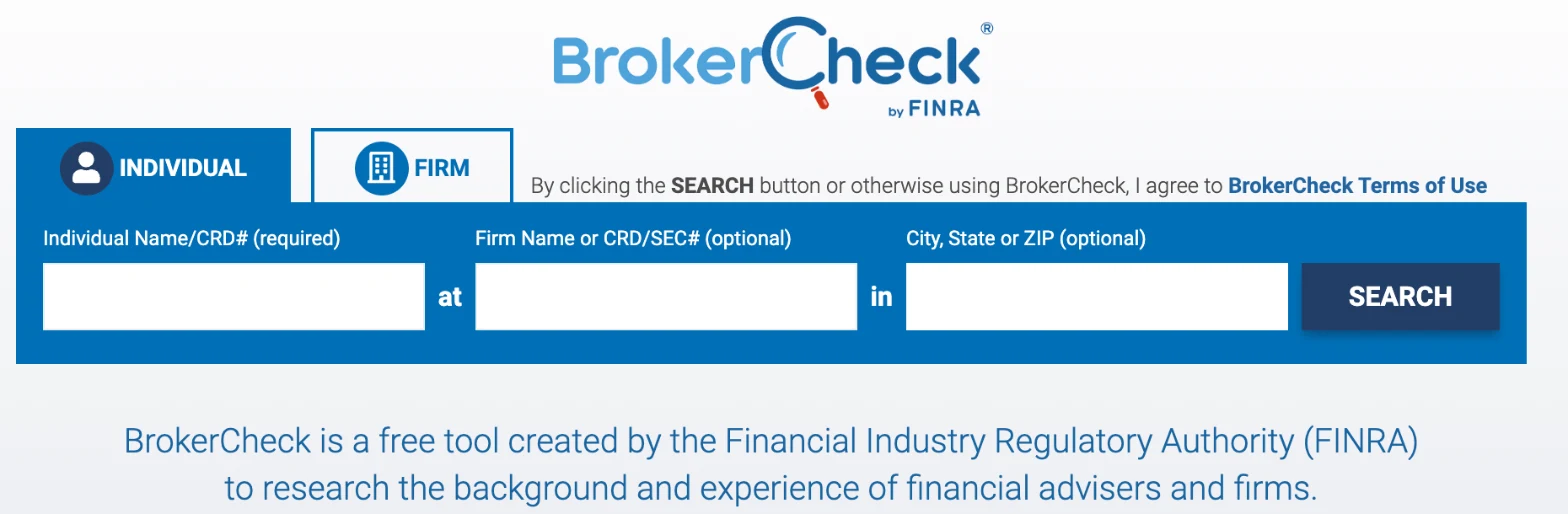
BrokerCheck is FINRA’s free tool for researching brokers, brokerage firms and investment adviser firms. Information on brokerage firms and registered individuals comes from the Central Registration Depository (CRD), the industry’s registration and licensing database, and information on investment advisers comes from the SEC’s Investment Adviser Registration Depository (IARD)3.
For someone registered now or within the last 10 years, a BrokerCheck report includes3:
- a summary of the person and their credentials;
- the firms where they are or were registered;
- 10 years of employment history, inside and outside the securities industry;
- their current registrations or licences;
- a disclosure section covering customer disputes, disciplinary events and certain criminal and financial matters, some of which may be unresolved allegations;
- their most recent comments, if any.
Reports stay visible for 10 years after a registration ends, and longer for people with certain events on record, such as a final regulatory action3.
What IAPD shows
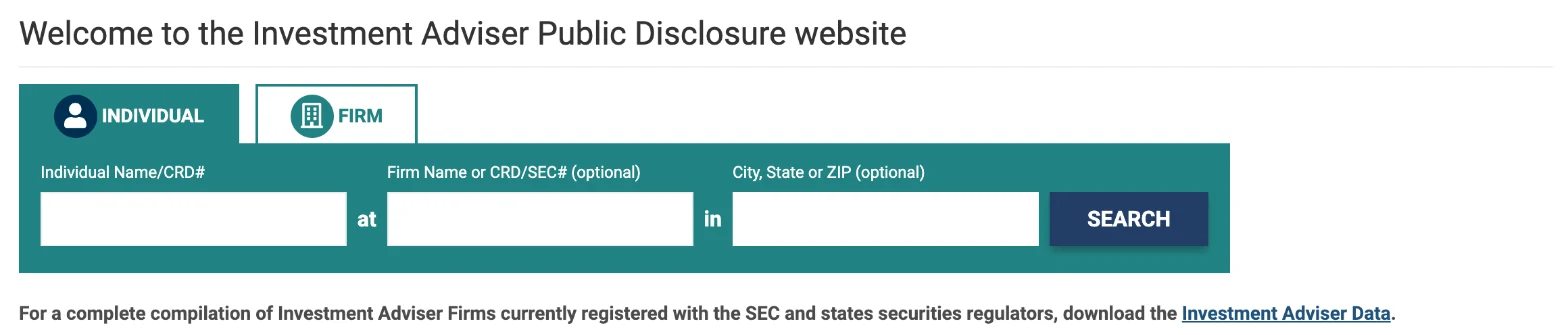
The SEC’s Investment Adviser Public Disclosure site lets anyone search an adviser firm and read the Form ADV it filed, or search an individual investment adviser representative and see their registrations, employment history and certain disciplinary disclosures. It also searches FINRA’s BrokerCheck, so registered representatives of brokerage firms appear in its results too4.
Form ADV is the bigger marketing document of the two, even though nobody writes it as marketing. Parts 1 and 2 are public on IAPD. Part 2 is the narrative brochure, in plain English, covering your firm’s business practices, fees, conflicts of interest and disciplinary information. Part 3, the relationship summary, applies to SEC-registered advisers with retail clients and covers services, fees, conflicts and disciplinary history5.
What you can do about them
You can’t edit these records the way you edit a profile, and you shouldn’t try to market around them. What you can do is keep the filings accurate and current through your firm, and make sure everything else agrees with them.
If something on your BrokerCheck report needs context and you’re currently registered, FINRA says the route is an amended Form U4 filed via Web CRD. People who are no longer registered can ask FINRA to post a broker comment instead, which FINRA reviews and generally posts within 30 business days6. Either way, that’s a conversation with your firm’s registration and compliance staff, not a marketing task.
The marketing task is consistency. If BrokerCheck shows you joined your current firm in 2019, your LinkedIn shouldn’t say 2017. If your Form ADV brochure describes the firm as serving retirees and business owners, your website shouldn’t lead with young professionals. Prospects who check both will notice.
Your firm page and website: the page that ties it together
Your firm’s page about you, or your own website, is where a prospect expects the full story: who you serve, how you’re paid, what credentials you hold and how to get in touch. In Wealthtender’s survey, 72% planned to visit the advisor’s website1, and the information they wanted first, specialisation and fees, is exactly what a good bio page states.
It is also usually treated as marketing. Under the SEC Marketing Rule, which applies to SEC-registered advisers, an advertisement includes any communication to more than one person that offers the adviser’s investment advisory services to prospective clients. The definition leaves out extemporaneous, live, oral communications and information in a required regulatory notice or filing7. A public bio page isn’t a filing, so expect your compliance team to review it against the rule’s general prohibitions, which include untrue statements of material fact and material statements of fact the adviser can’t substantiate7.
For FINRA member firms, Rule 2210 generally requires an appropriately qualified registered principal to approve each retail communication before it is used. Under Rule 2210(d)(8), each of a member’s websites must also include a readily apparent reference and hyperlink to BrokerCheck on the initial page the firm intends retail investors to see and on any other page with a professional profile of registered people who do business with retail investors. Firms with no retail business, and directories limited to names and contact details, are exempt8. So if you’re a registered representative, your profile page should already point prospects to your BrokerCheck record. That’s useful marketing, not just a rule: you’re showing the prospect where to verify you.
A strong advisor bio page, for name-search purposes, does a few plain things well:
- states your name exactly as it appears on your regulatory records, plus any variant people use;
- names your role, firm and location, and who you serve, in the same words you use elsewhere;
- lists credentials exactly as held, with no expired or implied designations;
- explains how you’re paid, consistent with your Form ADV brochure where one applies;
- links to your BrokerCheck or IAPD record and your genuine profiles.

LinkedIn: the profile that ranks for your name
LinkedIn profiles often show up in a search for a person’s name. LinkedIn publishes a public version of each profile to its member directory, and search engines such as Google periodically review that directory and index it. To be indexed, LinkedIn says you need public visibility turned on, and it suggests adding sections and editing the profile regularly to keep it current9. If you want the detail on how Google reads the top of that profile, see how Google reads your LinkedIn headline.
For registered representatives, LinkedIn comes with rules. FINRA’s Regulatory Notice 10-06, issued in 2010, names LinkedIn and says a registered principal must approve all static content on a social networking page set up by the firm or a registered representative, such as profile or background information, before it is posted. Interactive posts don’t need prior approval but must still be supervised10. Most firms build that into a social media policy, and some limit which profile fields you can edit.
That makes LinkedIn the place where an approved master bio pays off. If your compliance team has already signed off a one-paragraph description, a headline and a list of credentials, you can reuse the same words on LinkedIn, your firm page and your speaker bios, and every source tells the same story.
AI answers: the newest place your name gets checked
AI answers are a new step in the name search, not a separate channel. A prospect who has just heard your name can now ask ChatGPT or Google’s AI Mode “who is [your name], financial advisor in [city]?” and get a summary rather than a list of links.
Both tools build those summaries from the web. Google says AI Overviews and AI Mode may use a “query fan-out” technique, running several related searches across subtopics and sources, and that a page only needs to be indexed and eligible for a snippet in normal Search to be eligible as a supporting link. There are no extra technical requirements, and AI Overviews often don’t appear at all11. OpenAI says ChatGPT may search the web automatically, that answers may include citations to sources, and that it sometimes partners with other search providers. It also warns that results and citations “can be incomplete, outdated, or incorrect”12.
For an advisor, that warning cuts both ways. An AI answer about you can only be as good as what it finds. If an old conference bio lists the firm you left, or a directory still shows a designation you’ve let lapse, an AI summary can repeat it with confidence. The fix is upstream: correct the sources, and make sure the accurate ones agree.
Google’s own summaries work the same way. A Google Knowledge Panel, the information box Google shows for people it holds in its Knowledge Graph, is generated automatically from sources across the web and updated automatically as that information changes13. You can’t simply create one for yourself. The clearer and more consistent your public facts, the easier you are for Google’s systems to recognise as one person. Our free Knowledge Panel Checker shows whether Google already holds an entity for your name.
If you want the mechanics of where these tools find information about people, see where ChatGPT gets its information about people. For the wider picture of how professionals end up named in AI answers, see how to get ChatGPT to recommend you.
How do the five sources compare?
The five places a prospect checks differ in who writes them and how much you can change. This table sets them side by side.
| Source | What a prospect sees | Who writes it | What you can do |
|---|---|---|---|
| FINRA BrokerCheck | Registrations, 10-year employment history, licences, disclosures | Regulatory filings such as Form U4 | Keep filings accurate through your firm; add context via Form U4 if registered |
| SEC IAPD | Firm Form ADV, adviser representative records | Form ADV and registration filings | Keep Form ADV current; make your marketing match it |
| Firm page or website | Bio, specialism, fees, credentials, contact | You and your firm, with compliance review | Use one approved bio; link to BrokerCheck or IAPD |
| Headline, about, experience, credentials | You, under your firm’s social media policy | Reuse the approved bio; keep dates and titles in line with your records | |
| AI answers (Google, ChatGPT) | A short summary with links | Generated from web sources | Correct and align the sources; nobody controls the answer |
Source: FINRA, SEC, LinkedIn, Google and OpenAI pages34891112
The pattern is simple. The further down the table you go, the more the source depends on everything above it. AI answers summarise the web, and the web includes your firm page, LinkedIn and the regulator databases. Fix the bottom of the stack, the sources you control, and you’ve done most of what can be done about the top.
How does this layer work with the rest of your marketing?
The name-search layer doesn’t replace referrals, seminars or content. It makes them convert. Each channel produces a moment when someone types your name, and each moment lands on the same five sources.
Channels that create a search
- A client or centre of influence refers you
- Someone hears you on a podcast or at a seminar
- A prospect reads your article or newsletter
- A paid ad or directory listing shows your name
- A prospect asks an AI tool for advisors nearby
What the search needs to confirm
- You are the person the referrer described
- Your specialism matches what they heard
- Your credentials and registrations check out
- Your firm, title and dates agree everywhere
- There’s a clear way to contact you
When referrals go quiet for no obvious reason, the search step is one of the places to look. We cover the warning signs in five signs your online presence is costing you referrals.
A name-search checklist for advisors
Run this once, then again whenever you change firms, add a designation or publish a new bio. Do it with your compliance team in the loop, because most of the pages you’ll touch count as marketing communications.
Search your name the way a prospect would
Use a private browser window, on desktop and mobile. Try your name alone, then with “financial advisor” and with your city. Note what appears on the first page and whether it’s clearly you.
Pull your regulatory records
Look yourself up on BrokerCheck and IAPD. Note your registrations, firm history and dates exactly as they appear, and read your firm’s Form ADV brochure if you’re an adviser representative.
Write down every mismatch
Compare titles, firm names, start dates, credentials and specialisms across your firm page, website, LinkedIn, directories and speaker bios. Old conference and podcast bios are the usual culprits.
Get one master bio approved
Draft a short bio, a one-line headline and a credential list that match your records, and take them to compliance once rather than for every profile.
Update the profiles you control
Roll the approved wording out to your firm page, website and LinkedIn, and make sure your firm page links to BrokerCheck where FINRA’s rule applies.
Ask others to correct factual errors
Contact directories, event organisers and podcast hosts whose pages show an outdated title or firm. Stick to factual corrections, and check your firm’s policy first.
Check what AI tools say
Ask ChatGPT and Google’s AI about yourself, open the cited sources and note any outdated detail. Fix it at the source rather than arguing with the answer.
Repeat after every change
A firm move, a new designation or a change of specialism is when name searches break. Re-run the check within a few weeks.
For a general version of this check that works for any profession, see the name search checklist. To see what AI assistants say about you today, try the free AI Mention Checker.
Where to start
Most advisor marketing advice is about getting more people to hear your name. That’s worth doing, but it assumes the search that follows will back you up. Every referral now comes with a background check, and for advisors part of that check runs through regulator databases you can’t edit.
So start with the search itself. Look yourself up on BrokerCheck or IAPD, your firm page, LinkedIn and an AI assistant, and list where the facts disagree. Fix what you control, with compliance sign-off, and make the official records the anchor everything else matches.
If you’d like help with that groundwork, see how DotVisible works with financial advisors, browse more insights for financial advisors and name search, or book a free audit to see what your name search shows today.
Frequently asked questions
What is the name-search layer in financial advisor marketing?
It is everything a prospect finds when they look you up after hearing about you: your BrokerCheck or IAPD record, your firm’s page about you, your LinkedIn profile, your own website and, increasingly, what Google’s AI or ChatGPT says about you. Every other channel, from referrals to seminars, sends people there before they call.
Do prospects really check BrokerCheck?
The SEC’s investor site tells investors to always check the background of any financial professional, and sends them to the SEC’s IAPD site and FINRA’s BrokerCheck to do it. FINRA Rule 2210 also requires member firms’ websites to link to BrokerCheck on the first page meant for retail investors and on any page that profiles registered people who do business with retail investors. There is no reliable public figure for how many prospects check, so assume the careful ones do.
Can I change what BrokerCheck or IAPD says about me?
Not directly. BrokerCheck reports come from regulatory filings such as Form U4, and IAPD shows Form ADV and adviser representative records. If you are currently registered, FINRA says you add context to a disclosure by filing an amended Form U4 via Web CRD. What you can control is making sure your other profiles agree with those records.
Is my LinkedIn profile part of my marketing under FINRA rules?
For registered representatives using LinkedIn for business, FINRA’s 2010 Regulatory Notice 10-06 says static content such as profile or background information needs approval by a registered principal before it is posted. Your firm will have its own policy. Ask your compliance team before you change a business profile.
How do AI answers fit into advisor marketing?
Google’s AI Overviews and AI Mode and ChatGPT search build answers from web pages they find, and both show links to sources. They can repeat whatever is out there, including outdated details. Keeping your public facts accurate and consistent gives them the right material. Nobody can guarantee an AI tool will mention you.
Where should I start?
Search your own name in a private browser window, then look yourself up on BrokerCheck or IAPD, your firm’s site and LinkedIn, and ask ChatGPT about yourself. Write down every place your title, firm, credentials or specialism differ, and fix the ones you control first, with your compliance team’s sign-off.
Sources
- 1How Americans Will Choose Financial Advisors in 2026 and Beyond (Wealthtender 2025 Study of $100K+ Households Seeking Financial Advice, Brian Thorp)Wealthtender · Aug 2025, accessed 17 Nov 2026↩
- 2Check Out Your Investment ProfessionalInvestor.gov (U.S. Securities and Exchange Commission) · Accessed 17 Nov 2026↩
- 3About BrokerCheckFINRA · Accessed 17 Nov 2026↩
- 4Investment Adviser Public DisclosureU.S. Securities and Exchange Commission · Accessed 17 Nov 2026↩
- 5Form ADV (glossary)Investor.gov (U.S. Securities and Exchange Commission) · Accessed 17 Nov 2026↩
- 6Guidelines for Broker Comments on BrokerCheckFINRA · Accessed 17 Nov 2026↩
- 717 CFR 275.206(4)-1, Investment adviser marketingLegal Information Institute, Cornell Law School · Current rule text, accessed 17 Nov 2026↩
- 8Rule 2210, Communications with the PublicFINRA · Current rule text, accessed 17 Nov 2026↩
- 9Profile does or doesn’t appear after name search on webLinkedIn Help · Accessed 17 Nov 2026↩
- 10Regulatory Notice 10-06: Guidance on Blogs and Social Networking Web SitesFINRA · 25 Jan 2010↩
- 11AI features and your websiteGoogle Search Central · Updated 10 Dec 2025↩
- 12Searching the web with ChatGPTOpenAI Help Center · Accessed 17 Nov 2026↩
- 13About knowledge panelsGoogle Knowledge Panel Help · Accessed 17 Nov 2026↩
Keep reading
 Name searchHow Prospects Vet a Financial Advisor Online, and What You Can Check FirstShobin K Jose · 17 Nov 2026 · 18 min read
 Name searchHow to Get More Referrals as a Financial AdvisorShobin K Jose · 17 Nov 2026 · 19 min read
 Name searchFive Signs Your Online Presence Is Costing You ReferralsShobin K Jose · 29 Oct 2026 · 17 min read