GEO vs SEO: What Changes When Clients Ask AI About You
SEO gets your name onto a list of links. GEO is about what an AI answer says when someone asks about you. Here's what the research and Google's own guidance actually say, applied to a person's name.

SEO is about whether your pages show up when someone searches your name. GEO, or generative engine optimization, is about what an AI answer says when someone asks ChatGPT, Perplexity or Google's AI Overviews about you. For a person whose name is their business, the two overlap far more than most guides admit, because AI answers are built from the same pages search engines already find.
The difference matters for one reason. A prospect who searches your name sees a list and decides what to click. A prospect who asks an AI sees one summary, often with no click at all, and that summary is assembled from whatever the system found and trusted about you.
What do GEO and SEO actually mean?
SEO, search engine optimization, is the work of helping a search engine find, understand and rank your pages in a list of results. GEO is the work of helping a generative engine, an AI system that writes an answer from several sources, include and describe your information in that answer.
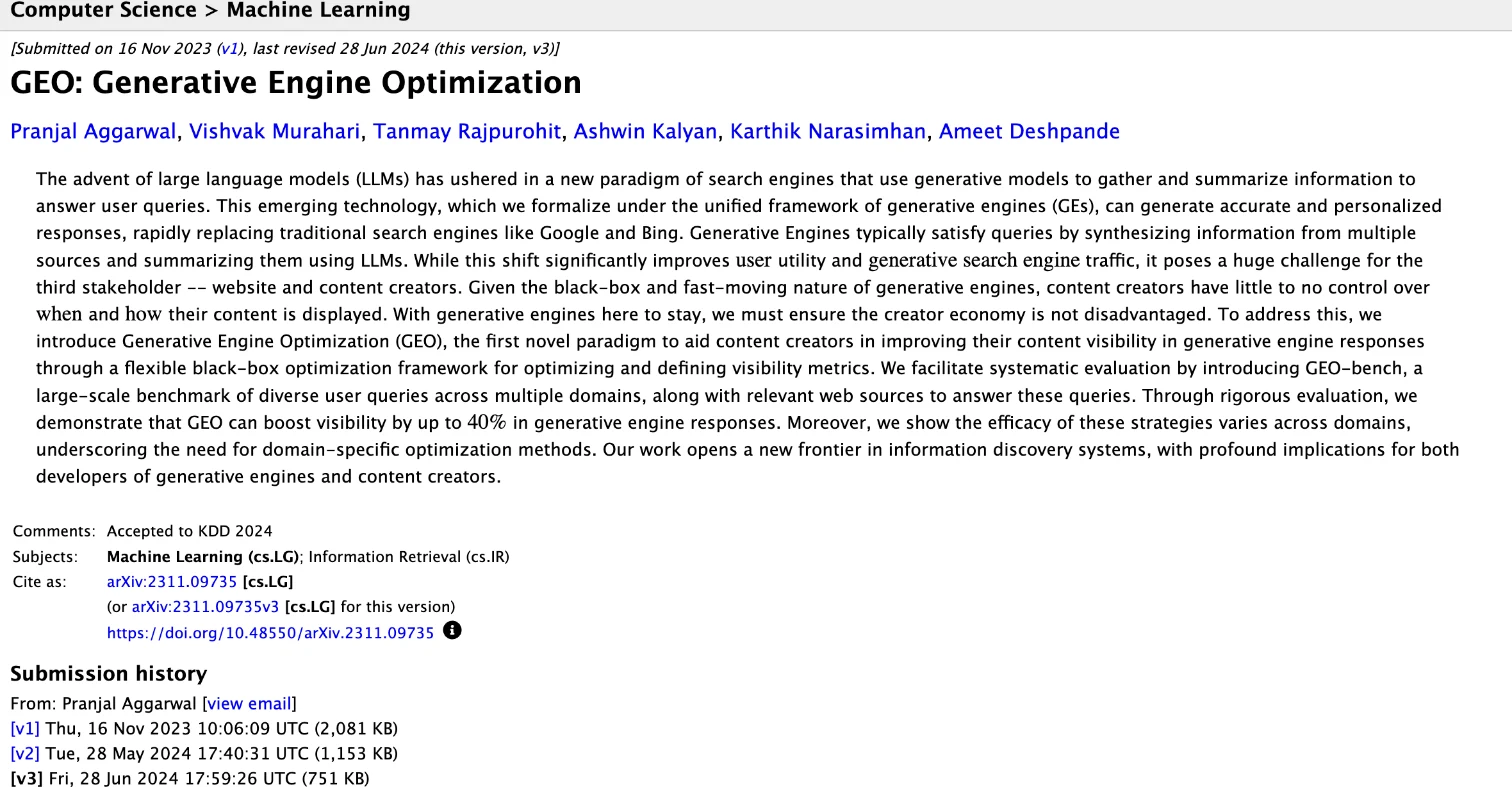
The term GEO has a clear origin. A team of six researchers led by Pranjal Aggarwal posted "GEO: Generative Engine Optimization" on arXiv on 16 November 2023, and the paper was accepted to KDD 20241. It described a problem content creators had just inherited: AI search engines summarise many sources into one answer, and the people who wrote those sources have little say in whether or how they appear.
Most comparisons of GEO and SEO are written for brands selling software or products. That framing misses the case most of our readers face. When a prospective client asks about you, the thing being searched for isn't a product category. It's a specific person, and the question is usually some version of "who is this, and can I trust them?"
How does an AI answer differ from a results page?
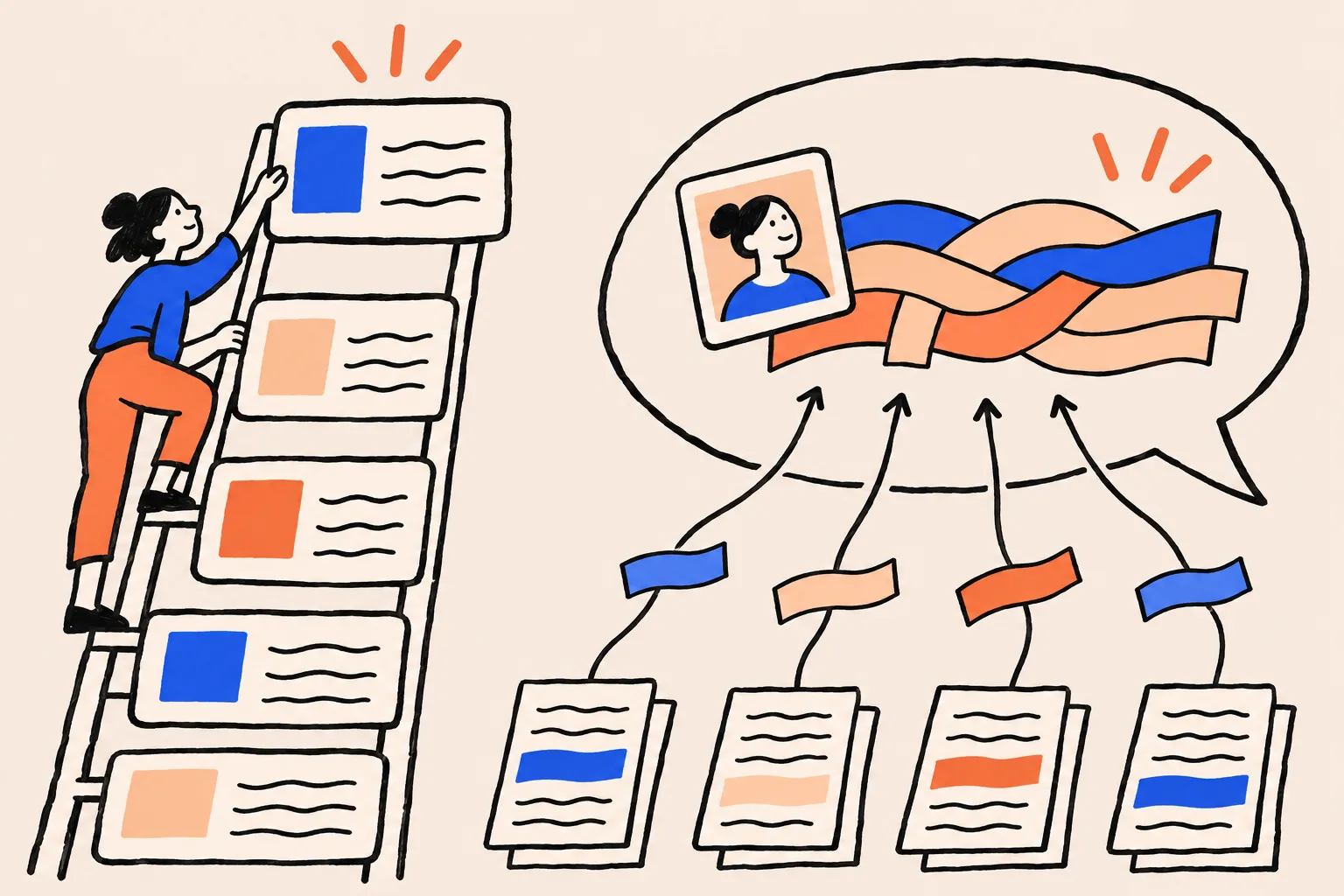
A results page hands the decision to the searcher. An AI answer makes a first pass at the decision for them, by choosing which sources to read and which sentences to keep.
Google describes the mechanism openly. AI Overviews and AI Mode may use a "query fan-out" technique, running several related searches across subtopics and data sources to build one response2. When Google rolled AI Mode out across the US in May 2025, it described the same technique as breaking a question into subtopics and issuing many queries at once on the user's behalf4.
That changes what happens to a question about a person. "Is Dr Priya Raman a good cardiologist?" might fan out into searches for her practice, her credentials, reviews, news and interviews. The answer is stitched together from whichever of those pages are clear enough to quote.
What the behaviour data shows
Pew Research Center tracked the browsing of 900 US adults in March 2025, covering 68,879 Google searches3. Some 18% of those searches produced an AI summary, and 58% of the people in the study saw at least one that month. The difference in what people did next is striking.
| Item | AI summary shown | No AI summary |
|---|---|---|
| Clicked a regular search result | 8% | 15% |
| Ended their browsing session | 26% | 16% |
Source: Pew Research Center, 22 Jul 20253
People clicked a link inside the summary in just 1% of visits3. For a professional, that's the uncomfortable part. If someone asks Google about you and gets an AI summary, there's a good chance they read it and stop, without visiting your site at all.
Pew also found that the kind of question matters. Only 8% of one- or two-word searches produced an AI summary, compared with 53% of searches ten words or longer and 60% of searches that began with "who", "what", "when" or "why"3. Pew didn't study name searches separately, so treat this as an inference: a bare name is a short query, but "who is [your name]" or "is [your name] any good at board coaching" is exactly the kind of question that tends to get an AI answer.
18%
of Google searches in the study produced an AI summary
60%
of searches starting with who, what, when or why produced one
1%
of visits to a page with a summary led to a click on a link inside it
Google reads the shift differently. It says AI Overviews drove an increase of more than 10% in usage of Google for the types of queries that show them, in the US and India, based on its internal data4. It also says clicks from results pages with AI Overviews are higher quality, meaning visitors tend to spend longer on the site2. Both things can be true at once: fewer clicks overall, and more engaged visitors among those who do click. Either way, the summary is now the first impression.
What did the original GEO study actually find?
The GEO paper found that adding quotations, statistics and citations to a page made AI answers use that page more, while classic keyword stuffing didn't help. It's worth knowing exactly how the study worked, because it's quoted widely and often loosely.
The authors built a benchmark called GEO-bench: 10,000 queries across 25 domains, mostly informational, split into training, validation and test sets1. Their test engine fetched the top five Google results for each query and had OpenAI's gpt-3.5-turbo write an answer from them. They then rewrote one source at a time using nine methods and measured how much of the answer drew on that source.
| Item | Value |
|---|---|
| Quotation Addition | 27.2 |
| Statistics Addition | 25.2 |
| Cite Sources | 24.6 |
| No changes (baseline) | 19.3 |
| Keyword Stuffing | 17.7 |
Source: Aggarwal et al., GEO, Table 11
Four findings stand out.
- The best methods were about evidence. Adding quotations, statistics and citations did best. The top method beat the baseline by 41% on the main measure and 28% on a second, AI-judged measure of how prominent a source felt1. That's where the widely repeated "up to 40%" comes from.
- Keyword stuffing didn't help. It scored below the unedited baseline on the main measure. The authors note that simple SEO-style tricks offer little to no improvement in generative engines1.
- Lower-ranked sources gained most. Citing sources lifted the fifth-ranked result's visibility by 115.1% while the top-ranked result's fell by 30.3%1. A page that isn't number one can still shape the answer.
- It depends on the topic. Authoritative wording helped most on debate and history questions. Statistics helped most on law and government questions and opinion questions1.
The authors also ran their methods on Perplexity.ai and reported visibility gains of up to 37%1.
What the study didn't test
So when someone sells "GEO" as a new discipline with guaranteed results, check what they're citing. The research that gave it a name is useful and careful. It's also narrower than the marketing around it.
What does Google say about optimizing for AI features?
Google's position is that AI Overviews and AI Mode need no special optimization. Its Search Central guide, last updated 10 December 2025, says the same foundational SEO best practices apply, and that "specific optimization isn't required"2.
The technical bar is the ordinary one. To appear as a supporting link in AI Overviews or AI Mode, a page has to be indexed and eligible to show in Google Search with a snippet. Google states there are no additional technical requirements2. The guide lists familiar fundamentals: allow crawling, link to important pages internally, keep important content in text, support it with good images and video, and make sure any structured data matches what's visible on the page.

In May 2025, Google's John Mueller added some context on Search Central. People using AI search tend to ask longer, more specific questions and follow-ups, so unique content that genuinely satisfies them is what Google wants to surface. He also suggested looking past raw clicks to signs of value such as sales, signups or people looking up your business5.
Google's broader advice on helpful content matters even more for a person. It names trust as the most important part of E-E-A-T (experience, expertise, authoritativeness and trustworthiness), and asks site owners to make clear who created content, with bylines that lead to more about the author6. It also warns that invented author profiles are deception6. For an expert, that's a strong hint: the page that says clearly who you are, and why you're credible, is doing work for both classic search and AI answers.
GEO vs SEO for a person: a side-by-side
Here's how the two compare once the thing being searched for is your name rather than a product.
SEO for your name
- The searcher types your name, or your name and a profession
- Google returns a list of pages, and the searcher chooses
- Success means the right pages rank: your site, profiles, interviews
- Your own page competes with namesakes and directory listings
- You measure rankings, impressions and clicks in Search Console
- Mistakes sit on pages people can see and contest
GEO for your name
- The client asks a question: who is this, are they any good, who else does this
- An AI reads several sources and writes one answer
- Success means the answer describes you correctly, and names you when relevant
- Contradictions between sources can blend you with a namesake or garble your role
- You check answers by asking the same questions in ChatGPT, Perplexity and Google
- Mistakes appear in a summary many people read without clicking through
The overlap is the part to hold onto. Google's AI features choose supporting links from pages already eligible for normal Search2, and the GEO paper's own engine answered from Google's top five results1. SEO decides what's on the table. GEO is about how clearly it reads once it's there.
Search engines rank pages about you. AI answers summarise what those pages agree on.
What changes when clients ask AI about you?
Three things change for a professional, and none of them requires a new kind of trick.
The answer replaces the list
On a results page, a prospect can skip the outdated speaker bio and click your website. In an AI answer, the outdated bio may simply become a sentence. If your LinkedIn says "managing director", your website says "executive coach" and a 2019 podcast page says you work somewhere you left years ago, the answer has to pick one, or blend them. We've written about how that goes wrong in why AI gets facts about people wrong.
Agreement matters more than volume
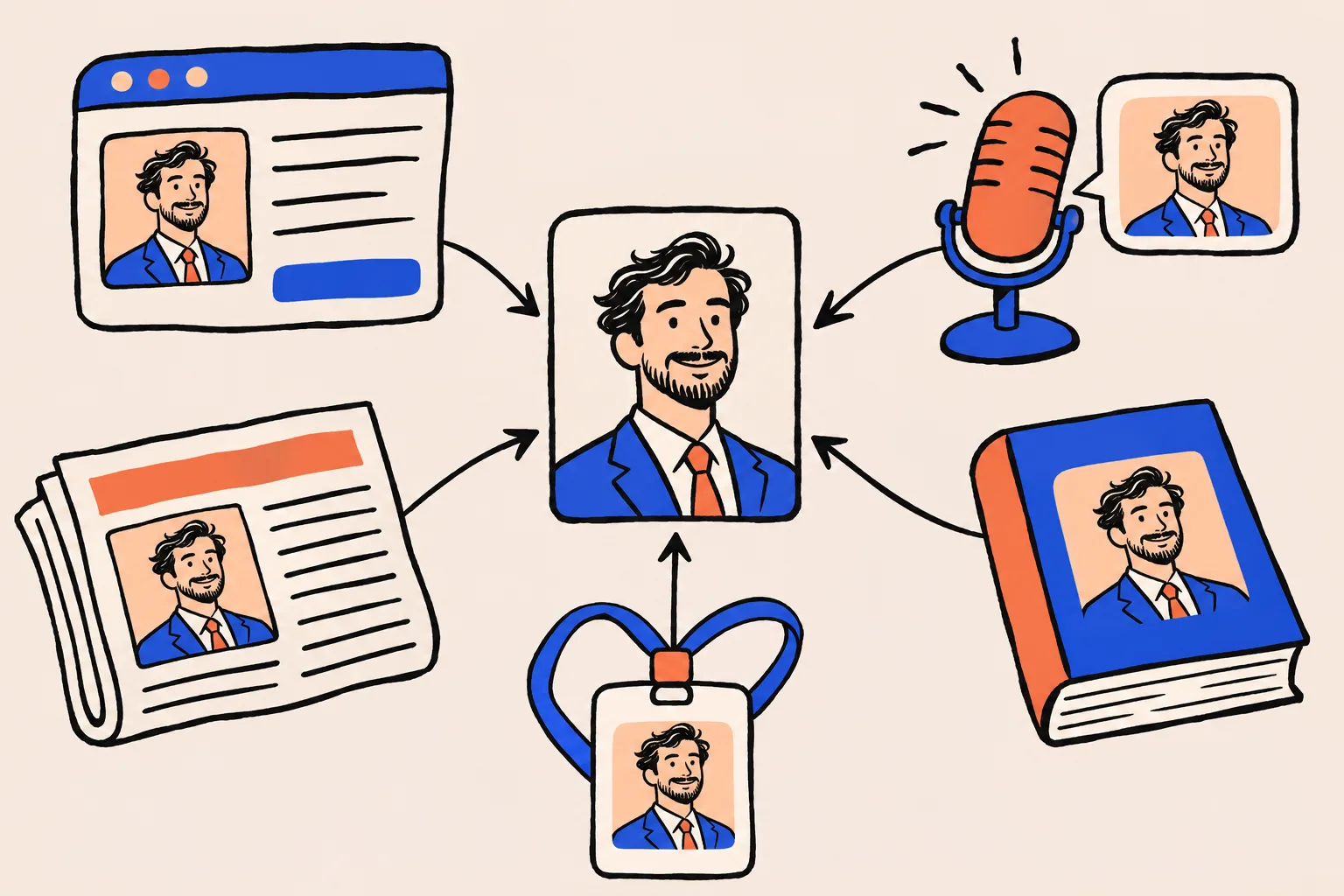
The GEO results point the same way. Citations, quotations and specific facts made a source more useful to the model1. For a person, the equivalent is a clear page about you that states your role, credentials, books, talks and clients' sectors in plain sentences, backed by independent pages that say the same things. One authoritative page and five sources that agree with it are worth more than fifty that half-contradict each other.
Recommendation questions are a different game
"Who is Jordan Ellis?" is a description question. "Who are the best leadership coaches for first-time founders?" is a recommendation question, and it's much harder to influence. OpenAI hasn't published how ChatGPT picks names for questions like that. Our look at how ChatGPT decides which coaches to recommend sets out what is and isn't known. Getting described correctly comes first. Being recommended is a later, less predictable step.
Where do GEO and SEO overlap for a named expert?
Most useful GEO work for a person is also good SEO and good entity work. Google's Knowledge Graph, the database behind a Google Knowledge Panel, rewards the same clarity: one entity, facts that agree, and sources that confirm them.
| Work you do | Why it helps SEO | Why it helps GEO |
|---|---|---|
| One definitive About page | Gives Google a clear page to rank for your name | Gives an AI one trustworthy source to quote |
| Same name, role and bio everywhere | Helps Google connect your profiles | Reduces contradictions an AI might blend or guess between |
| Specific facts: credentials, books, clients' sectors, dates | Answers what searchers want to know | Statistics and specifics made sources more quotable in GEO-bench |
| Independent interviews, speaker pages, press | Earns links and corroboration | Gives the AI agreeing sources beyond your own site |
| Person structured data that matches the page | Helps Google read who you are | Must match visible text, per Google's AI features guidance |
| Crawlers allowed (Googlebot, OAI-SearchBot, PerplexityBot) | Your pages can be indexed | Your pages can be read for AI answers |
Source: Google Search Central guidance and the GEO paper, as cited above
If structured data is new to you, Structured Data in Plain English explains it from scratch. Google's AI features guide asks for the same thing that guide recommends: markup that matches the visible text on the page2.
What should you do differently this quarter?
Start by finding out what the answers say now, then fix the sources rather than chasing the answers.
Ask the questions your clients ask
In ChatGPT, Perplexity and Google, ask who you are, what you're known for, and whether you're a good choice for your specialty. Use full questions, since those are more likely to trigger an AI answer on Google. Write down what each gets right, wrong or leaves out.
Find where each mistake comes from
Most errors trace back to a real page: an old bio, a namesake's profile, a directory listing. Where answers show sources, follow them.
Write one definitive page about you
State your name, role, specialty, credentials and notable work in plain, quotable sentences. Add specific facts and link to proof such as interviews, publications and appointments.
Make every profile agree with it
Update LinkedIn, speaker pages, association listings and podcast guest bios so they match the same name, title and short bio.
Check that the crawlers can reach you
Make sure robots.txt and any security settings allow Googlebot, OAI-SearchBot and PerplexityBot, and that your key pages are indexed in Google Search Console.
Earn sources that aren't yours
Interviews, bylined articles, event pages and professional directories in your field give an AI something independent to agree with your own page.
Re-ask the same questions every month
Answers vary between runs and change as sources change. Track the pattern over time rather than any single answer.
Do you need a GEO specialist, an SEO, or neither?
For most named experts, you don't need two separate projects. You need the facts about you to be clear, consistent and backed up, because that's what classic search ranks and what AI answers summarise.
A traditional SEO agency will usually focus on rankings for service keywords, which matters less when prospects already know your name. A "GEO" agency may promise AI mentions, which nobody outside OpenAI, Google or Perplexity can guarantee. Google alone decides what its AI features show, and the same is true of every other AI company for its own product. What you can control is the material they read.
That's the work DotVisible does for individual professionals: making the sources about you agree, so Google and AI tools can confirm who you are. You can see how our services work, or keep reading in the AI search hub.
Frequently asked questions
What is the difference between GEO and SEO?
SEO (search engine optimization) aims to get a page ranked in a list of search results. GEO (generative engine optimization) aims to get your information included and described correctly in an answer written by an AI system such as ChatGPT, Perplexity or Google's AI Overviews. For a person, SEO decides which pages show up for your name, and GEO is about what the AI answer says about you.
Who coined the term generative engine optimization?
The term comes from a research paper by Pranjal Aggarwal and colleagues, first posted on arXiv on 16 November 2023 and accepted to the KDD 2024 conference. It tested nine ways of rewriting web content on a benchmark of 10,000 queries.
Does Google say I need to do GEO for AI Overviews?
No. Google's Search Central guidance says the same SEO fundamentals apply to AI Overviews and AI Mode, that specific optimization isn't required, and that there are no additional technical requirements beyond being indexed and eligible to show with a snippet.
Is GEO replacing SEO?
Not on the evidence so far. Google's AI features pick supporting links from pages that are already indexed and eligible for normal Search, and the GEO paper's own test engine answered from the top five Google results. Being findable in search remains the starting point for appearing in AI answers.
Does keyword stuffing work for AI answers?
The GEO paper found it didn't. Keyword stuffing scored below the unedited baseline on the paper's main visibility measure, while adding quotations, statistics and citations to sources scored well above it.
Can anyone guarantee that ChatGPT or Google's AI will mention me?
No. Neither OpenAI nor Google publishes how answers choose which people to name, and answers vary from one run to the next. Honest help can make the information about you clearer and more consistent. It can't promise an AI mention.
How do I check what AI says about me today?
Ask ChatGPT, Perplexity and Google (in AI Mode, or with a question that triggers an AI Overview) the questions a prospective client would ask, such as who you are and what you're known for, and note what each gets right, gets wrong or leaves out.
Sources
- 1GEO: Generative Engine Optimization (Aggarwal, Murahari, Rajpurohit, Kalyan, Narasimhan, Deshpande), KDD 2024arXiv 2311.09735 · 16 Nov 2023, revised 28 Jun 2024; accessed 17 Nov 2026↩
- 2AI features and your websiteGoogle Search Central · Updated 10 Dec 2025; accessed 17 Nov 2026↩
- 3Google users are less likely to click on links when an AI summary appears in the results (Athena Chapekis, Anna Lieb)Pew Research Center · 22 Jul 2025↩
- 4AI in Search: Going beyond information to intelligence (Elizabeth Reid)Google blog · 20 May 2025↩
- 5Top ways to ensure your content performs well in Google's AI experiences on Search (John Mueller)Google Search Central blog · 21 May 2025↩
- 6Creating helpful, reliable, people-first contentGoogle Search Central · Updated 5 Oct 2026; accessed 17 Nov 2026↩
- 7Overview of OpenAI crawlersOpenAI · Accessed 17 Nov 2026↩
- 8Perplexity crawlersPerplexity · Accessed 17 Nov 2026↩
Keep reading
 AI searchHow to Get ChatGPT to Recommend You (for Professionals)Shobin K Jose · 17 Nov 2026 · 17 min read
 AI searchWhat Is AI Visibility for a Person (Not a Brand)?Shobin K Jose · 17 Nov 2026 · 16 min read
 AI searchWhere Does ChatGPT Get Its Information About People?Shobin K Jose · 17 Nov 2026 · 16 min read