How ChatGPT Decides Which Coaches to Recommend
What AI tools look at when someone asks for a coach, why a less experienced coach sometimes gets named first, and which parts of the answer you can actually influence.

Ask ChatGPT to recommend a leadership coach for new managers in Manchester, and it will usually give you a short list of names with a line or two about each. Ask again tomorrow and the list may be different. Ask a colleague to try it, and they may see different names again.
If you’re a coach, that short list now matters. Some prospects start there instead of on Google, and the people on it get a warm introduction you didn’t.
It can also be maddening. Plenty of coaches with fifteen years of practice, a shelf of credentials and a full diary of referrals find that ChatGPT names someone who qualified two years ago. This guide explains what is publicly known about how ChatGPT picks names, what is only inference, and what the evidence suggests you can do about it.
What happens when someone asks ChatGPT for a coach
When a person types a request like “Who are the best executive coaches for women in tech?”, ChatGPT has two ways to answer.
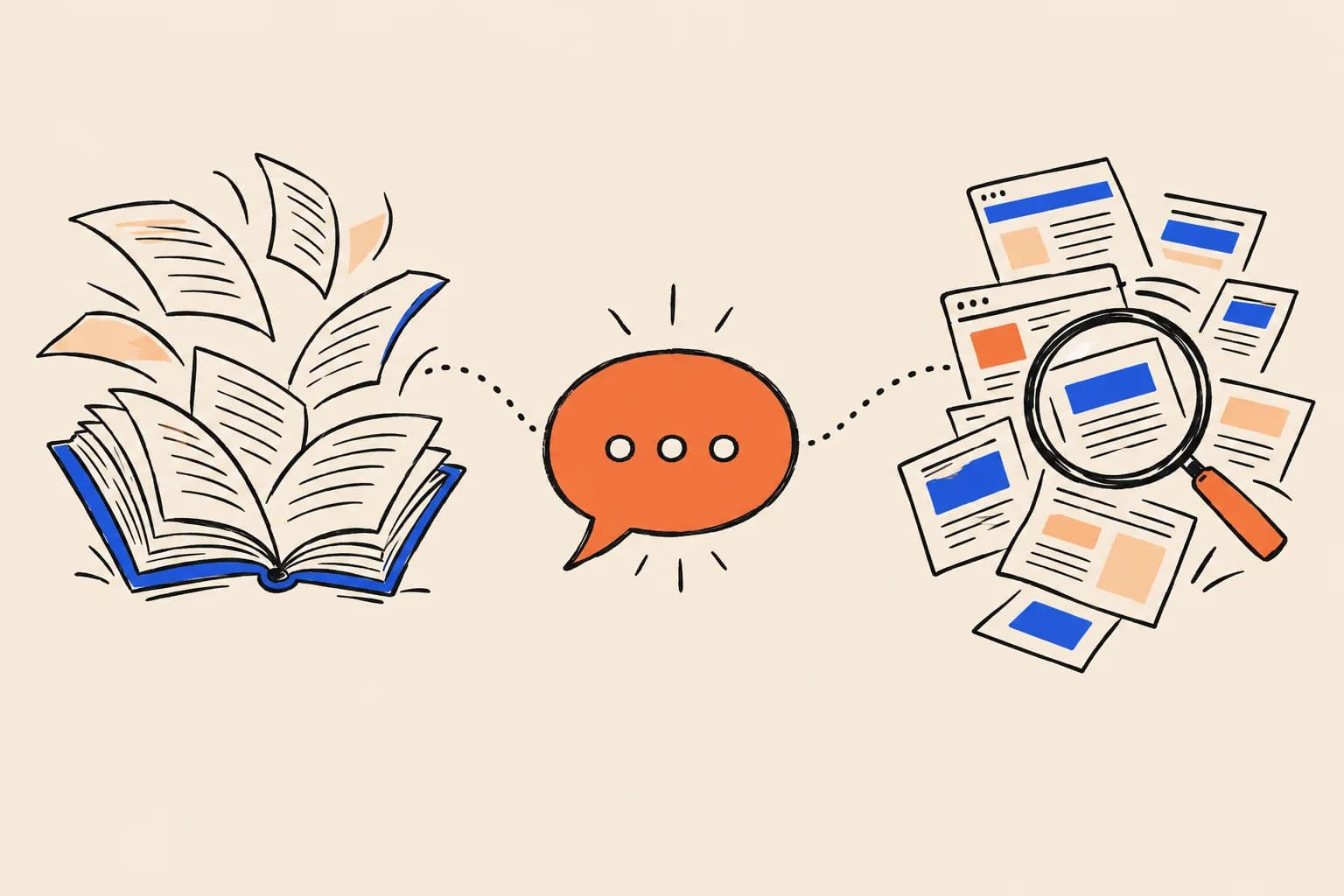
It can answer from memory. The model has absorbed a vast amount of text during training, and some coaches, mostly well-known authors and speakers, appear in that text often enough for the model to associate them with coaching.
Or it can search the web, read what comes back and write an answer from those pages, with links to its sources. Specific, local or current requests (a niche, a city, a budget, “this year”) are the kind that tend to lead to a search, because memory alone can’t answer them well.
Most recommendation answers mix the two. The model decides what to search for, reads the results through the lens of what it already knows, and writes a short list. OpenAI hasn’t published the rules for that blend, so the rest of this guide separates what OpenAI has said from what outside research suggests.
Training data and live search: two sources of knowledge
What the model learned in training
OpenAI runs a crawler called GPTBot that collects public web content which may be used to train its foundation models1. Whatever the model learned in training is fixed at the point training ended. It doesn’t know about the podcast you launched last spring or the niche you moved into last year.
For individual coaches, training data is a thin source. A model may know the names of a handful of famous coaches. It is unlikely to hold reliable, current detail about a coach with a local practice, and that is exactly the detail a recommendation needs.
What it finds when it searches
ChatGPT search launched for paid users on 31 October 2024, with free users to follow. OpenAI said at the time that it “leverages third-party search providers, as well as content provided directly by our partners”, and that the search model was a fine-tuned version of GPT-4o2.
In practice, that means a request for a coach often turns into one or more web searches behind the scenes. ChatGPT reads the pages that come back, picks out names and facts, and shows the pages it relied on as sources. If your name isn’t on any page the search returns, it is hard for you to appear in the answer, however good your work is.
ChatGPT can’t see your fifteen years of practice. It can only see what has been written about them, and where.
Which search index does ChatGPT use?
This is where public information gets patchy. Here is what has been said, and by whom.
23 May 2023
Bing becomes ChatGPT’s default search
At its Build conference, Microsoft announces that Bing is coming to ChatGPT as “the default search experience”.3
31 October 2024
ChatGPT search launches
OpenAI says it uses third-party search providers plus content from partners, without naming the providers.2
2 June 2026
Microsoft’s Web IQ
Microsoft launches Web IQ, a Bing-based grounding service for AI tools. In an engineering post, Microsoft says the same infrastructure powers Copilot and ChatGPT. That is Microsoft’s claim; we found no OpenAI statement confirming it.4
September 2026
A third-party map of providers
Peec AI, which sells AI-visibility tracking, infers from response data that ChatGPT uses its own index plus at least eight outside providers. OpenAI hasn’t confirmed it.5
Read Peec’s analysis as third-party inference, not a confirmed map. It reports signs of Google results gathered through scraping services, Microsoft’s Web IQ, and local data from Yelp and TripAdvisor, alongside an index OpenAI appears to have built itself5. Much of that rests on thin evidence: the Google finding comes from a single test site, several providers are identified only by internal labels, and the Yelp and TripAdvisor link isn’t sourced.
| Claim | Who says so | How solid |
|---|---|---|
| Bing became ChatGPT’s default search | Microsoft, 2023 | Announced by Microsoft; the current setup isn’t published |
| ChatGPT search uses third-party providers and partner content | OpenAI, 2024 | Confirmed, providers not named |
| The infrastructure behind Microsoft’s Web IQ powers ChatGPT | Microsoft, 2026 | A vendor claim, not confirmed by OpenAI |
| ChatGPT now blends its own index with several outside providers | Peec AI, 2026 | Third-party inference, unconfirmed |
The practical reading is simple. ChatGPT doesn’t rely on a single index you can optimise for, and the mix can change without notice. Being findable across the open web matters more than ranking in any one search engine.
What OpenAI has said, and what it hasn’t
OpenAI’s most concrete public documentation is about its crawlers. It runs three, and each does a different job1.
OAI-SearchBot
- Crawls pages for ChatGPT’s search features
- Block it and your site won’t be shown in ChatGPT search answers
- Changes to robots.txt take about 24 hours to apply
GPTBot
- Crawls content that may be used to train OpenAI’s models
- Blocking it is a training opt-out
- Controlled separately from search
ChatGPT-User
- Visits a page when a user’s request needs it
- Not used for automatic crawling
- OpenAI says robots.txt rules may not apply
OpenAI notes that the settings are independent: a site can allow OAI-SearchBot and block GPTBot, staying visible in search while opting out of training1. Sites that block OAI-SearchBot can still appear as plain navigational links, but not in search answers.
Here is what OpenAI hasn’t published: how ChatGPT decides which people or businesses to name, how it orders them, how much weight it gives to reviews, lists or your own website, or how it picks the sources it shows. Any article that gives you “the ChatGPT ranking factors” is presenting inference as fact. That includes the explanations below, which we’ve labelled as inference wherever they go beyond the evidence.
# Allow ChatGPT search to show your pages
User-agent: OAI-SearchBot
Allow: /

# Optional: opt out of model training
User-agent: GPTBot
Disallow: /
What the studies suggest gets people named
With no official ranking guide, the best evidence comes from companies that track AI answers at scale. Most of them sell AI-visibility software, and almost all of their findings are correlations. Treat them as strong hints, not rules.
Mentions elsewhere track visibility closely
Ahrefs studied about 75,000 brands across ChatGPT, Google’s AI Mode and AI Overviews. The factor most closely linked to AI visibility was mentions on YouTube, with a correlation of about 0.737, followed by branded mentions across the web at 0.66 to 0.716. For ChatGPT in particular, classic authority signals were weaker: branded search volume correlated at 0.352 and Ahrefs’ Domain Rating at 0.2666. Ahrefs itself stresses that correlation isn’t causation.
0.737
Correlation between YouTube mentions and AI visibility, the strongest factor Ahrefs found
0.66–0.71
Correlation for branded mentions across the web
0.266
Correlation between Domain Rating, a classic SEO measure, and ChatGPT visibility
For a coach, the translation is direct. Being talked about on other people’s pages and channels seems to matter more than the size or authority of your own site.
The sources ChatGPT cites shift over time
Semrush tracked about 230,000 prompts weekly from July to October 2025. In early August, Reddit appeared in close to 60% of ChatGPT’s responses and Wikipedia in roughly 55%. By mid-September, Reddit had dropped to around 10% and Wikipedia to under 20%, while LinkedIn, Medium and Forbes gained7. Semrush’s data didn’t show why.
That volatility is a reason not to build your whole presence on one platform. A spread of credible sources is sturdier than a bet on whichever site ChatGPT favours this quarter.
How content is written also matters
In a 2024 research paper, a team from Princeton and partner institutions tested ways of rewriting web pages to appear more often in AI-generated answers. In their benchmark, the best methods raised visibility by up to 40%, though results varied a lot by subject8. It was a lab test rather than ChatGPT itself, but it supports a common-sense point: pages that state facts clearly are easier for AI systems to use.
Why a less experienced coach sometimes gets named first
What follows is our inference, not something OpenAI has confirmed. Each point is a reading of the findings above, not a tested result.
Their pages match the question
If someone asks for a career coach for nurses in Leeds, a website that says “career coach for nurses, based in Leeds” is an easy match. A senior coach whose site says “I help people unlock their potential” isn’t.
They appear on lists the search returns
“Best coaches in…” articles, association directories, podcast guest pages and review sites are the kind of third-party pages that turn up in searches and carry names into answers.
Their details agree everywhere
Same name, same niche, same city and the same short bio on every profile make it easy to confirm that all those mentions are one person. Conflicting details make it harder.
Their experience is written down
A system can only weigh credentials it can read. Years of practice that live in your head, or in a PDF nobody can find, don’t count.
Chance did some of the work
AI answers vary from run to run, so one list on one day isn’t a verdict on anyone.
If that reading is right, none of it is about who is the better coach. It is about who is easier to find, match and confirm. Seen that way, experience only helps you in AI answers once it is visible on the web, in words that match how clients ask.
The same principle sits behind how Google decides who gets a knowledge panel. We cover that in What Is a Google Knowledge Panel, and Why Do Some People Get One?, and there is no evidence ChatGPT reads Google’s Knowledge Graph directly. The overlap is in the habits, not the database.
AI answers change every time
If you’ve tested ChatGPT once and given up, this part matters.
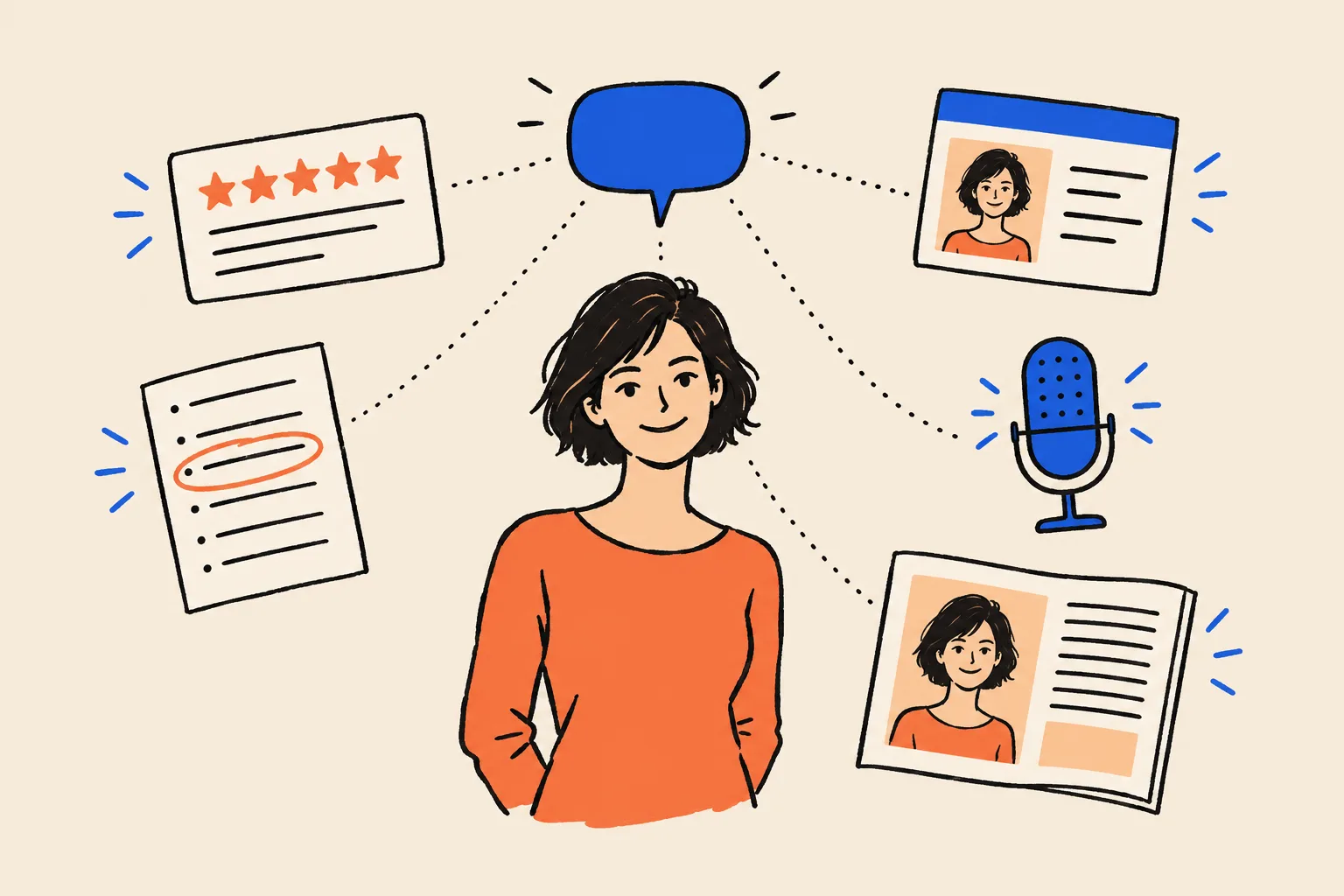
As reported by Search Engine Journal, SparkToro and Gumshoe had hundreds of volunteers run 12 recommendation prompts nearly 3,000 times across ChatGPT, Claude and Google’s AI. One of the prompts asked for digital marketing consultants, a service category much like coaching9.
2,961
Prompt runs across ChatGPT, Claude and Google’s AI
< 1 in 100
Chance that ChatGPT or Google’s AI repeated the same list of brands
< 0.1%
Share of runs that gave the same list in the same order
According to SEJ’s report, the researchers concluded that a name’s position in an AI answer means little, while how often it appears across many runs is more consistent9. The study wasn’t peer-reviewed, and Gumshoe sells AI-tracking tools, which the authors disclosed. It is one study, but it is a good reason to test more than once.
So when you check yourself, ask the same question several times, in fresh chats, with slightly different wording. Count how often you appear. Being named in six of ten answers tells you more than being first in one.
Four myths about AI recommendations
ChatGPT recommends the most experienced or best-qualified coach.
ChatGPT can only weigh what it can read. Clear, matching, well-corroborated information seems to count for more than experience nobody has written about.
Blocking AI bots keeps your content safe and costs you nothing.
Blocking GPTBot is a training opt-out. Blocking OAI-SearchBot removes you from ChatGPT search answers. They are separate switches.
OpenAI documents the difference itself1. Check which one your site is blocking before assuming either.
If you’re ranked first on Google, ChatGPT will name you.
OpenAI says ChatGPT search uses third-party search providers, not one engine, and in Ahrefs’ data ChatGPT visibility tracked classic authority signals only weakly.
Search rankings still help, because a page has to be found before it can be read. They are one input among several26.
You can track your ChatGPT “ranking” like a Google position.
The same question rarely gives the same list twice. Measure how often you appear, not where.
What you can actually do
You can’t apply to be recommended, and nobody outside OpenAI can promise a mention. You can make yourself much easier to find, match and confirm. The steps below follow from the evidence above. None is guaranteed to work on its own.
Start by checking what ChatGPT says today
Ask the questions your clients would ask: your niche, your city, the outcome they want. Run each a few times in fresh chats and note who appears, how often and which sources are cited. Those sources are a map of the pages that shape answers in your niche. Our free AI Mention Checker runs a similar check for you.
Then work through these
Say exactly who you help, where
Put your niche, your typical client and your location in plain words on your homepage and About page. Use the phrases clients use, not internal jargon.
Write your experience down
Years of practice, accreditations, notable clients you can name, books, talks and results belong on your site in clear, factual sentences.
Make your details match everywhere
Same name, title, niche, city and photo on LinkedIn, coaching directories, podcast pages and speaker bios. Our guide to how Google reads your LinkedIn headline shows why the wording matters.
Get onto the pages search returns
Credible directories and associations in your field, reviews from real clients, “best coaches” roundups, interviews and guest articles. A few strong ones beat many weak ones.
Show up on video and audio
Ahrefs found YouTube mentions had the strongest link to AI visibility. Podcast guest spots with show notes on the web give AI search a page to read.
Don’t block the search crawler
Make sure robots.txt allows OAI-SearchBot, so ChatGPT search can show your pages.
Add structured data
Person markup on your About page states your name, role and profiles in a form machines read reliably.
Recheck every few months
Sources and answers shift. Re-run your questions and look at which pages are now being cited.
Step three is where most coaches lose ground without noticing. An old speaker bio with your previous niche, a directory listing in a city you left and a LinkedIn headline that says something else all compete with your current story. Our name search checklist walks through the places prospects, and search systems, look first. If structured data is new to you, Structured Data in Plain English explains it without the jargon, and How Google Reads Your LinkedIn Headline covers the profile most coaches update least.
Where to start
ChatGPT doesn’t pick coaches on merit, and it doesn’t follow a published ranking. As far as anyone outside OpenAI can tell, it names the people it can find, match to the question and confirm across several sources, with a fair amount of chance on top.
That is mostly good for experienced coaches, because it rewards things you already have and can write down. Start by asking ChatGPT the questions your clients ask, or run the AI Mention Checker. Then make your niche, location and experience consistent everywhere they appear. If you’d like help, see how we work with coaches and consultants, or book a free audit.
Frequently asked questions
Does ChatGPT have a ranking algorithm for coaches?
OpenAI hasn't published one. It has documented its crawlers and said ChatGPT search draws on third-party search providers and partner content, but it hasn't said how it chooses or orders the people it names. Anything more specific, including this article's explanations, is inference from outside studies.
Where does ChatGPT get the names it recommends?
From two places. Names it learned during training, and pages it finds when it searches the web live for the question. For a request like a coach in a particular city or niche, the live search usually matters most, because training data goes stale and rarely covers individual coaches in detail.
Which search engine does ChatGPT use?
Microsoft made Bing the default search experience in ChatGPT in 2023, and OpenAI said in 2024 that ChatGPT search uses third-party search providers plus content from partners. OpenAI doesn't publish the current mix. A 2026 third-party analysis suggests it now blends its own index with several outside providers, but OpenAI hasn't confirmed that.
Why did ChatGPT recommend a less experienced coach instead of me?
Usually because that coach is easier to find and match to the question: their website says the exact niche and city, they appear on lists, directories or review sites the search returns, and their details agree everywhere. Chance plays a part too. Studies show AI tools rarely give the same list twice.
Does blocking GPTBot stop ChatGPT from recommending me?
Not by itself. OpenAI says GPTBot is for training and OAI-SearchBot is for search, and the two are controlled separately in robots.txt. If you block OAI-SearchBot, OpenAI says your site won't be shown in ChatGPT search answers.
Can I pay to be recommended by ChatGPT?
There is no published way to buy a place in ChatGPT's recommendations. Be wary of anyone promising a guaranteed mention or a top position. What you can do is make your information clear, consistent and present on the sources AI search tends to read.
How do I find out whether ChatGPT mentions me?
Ask it the questions your clients would ask, several times, in a fresh chat, and note how often your name appears rather than where. Our free AI Mention Checker runs a similar check for you.
Sources
- 1Overview of OpenAI crawlersOpenAI · Accessed 19 Oct 2026↩
- 2OpenAI adds search function to ChatGPT in challenge to GoogleReuters, via Yahoo Finance · 31 Oct 2024↩
- 3Microsoft Build brings AI tools to the forefront for developers (Frank X. Shaw)Microsoft · 23 May 2023↩
- 4Grounding at scale: Engineering the retrieval system for the agentic web (Knut Risvik)Microsoft · 2 Jun 2026↩
- 5ChatGPT search result providers (Tomek Rudzki)Peec AI · Sep 2026↩
- 6Top brand visibility factors in ChatGPT, AI Mode and AI Overviews (75k brands studied) (Louise Linehan)Ahrefs · 12 Dec 2025↩
- 7The most-cited domains in AI search (Luke Harsel)Semrush · 10 Nov 2025↩
- 8GEO: Generative Engine Optimization (Aggarwal et al., KDD 2024)arXiv · Jun 2024↩
- 9AI recommendations change with nearly every query: SparkToro (Matt G. Southern, reporting SparkToro and Gumshoe research)Search Engine Journal · 30 Jan 2026↩
Keep reading
 Knowledge PanelsWhat Is a Google Knowledge Panel, and Why Do Some People Get One?Shobin K Jose · 19 Oct 2026 · 23 min read
 GuidesThe Name Search Checklist: 12 Things Prospects See Before They CallShobin K Jose · 6 Oct 2026 · 18 min read
 GuidesStructured Data in Plain EnglishShobin K Jose · 18 Sep 2026 · 18 min read