
The Ultimate Knowledge Panel Playbook for Financial Advisors
Referred prospects check BrokerCheck, then they Google you. This playbook shows you, step by step and inside your compliance rules, how to make that search confirm who you are.

Margaret has been your client for eleven years. At a dinner party she tells a friend, “You should call my advisor. She’s the reason we could retire when we did.” The friend has just sold a dental practice and has about $2 million sitting in a money market account. She is careful. She writes your name on the back of a receipt.
That night she does two things. First she types your name into BrokerCheck, because her accountant told her to. Your record is clean. Then she opens Google and types your name again.
What she sees in the next two minutes decides whether she calls you on Monday.
If page one shows a confident, consistent picture (your photo, your firm, your designations, a page about you, an interview in the local business journal, and a box on the right that says Google knows exactly who you are), she calls. If it shows one line on page three of your firm’s team page, a directory listing with a designation you dropped in 2019, and an insurance agent with your name in another state, she hesitates. She doesn’t call to ask which one is you. She just doesn’t call. Margaret assumes her friend wasn’t ready. You never hear that the introduction happened.
This playbook is about those two minutes. It shows you, step by step, how to make your name search confirm what your clients already say about you. It also covers the newer version of the same moment, when the friend skips Google and asks ChatGPT, “Is [your name] a good financial advisor?”

Who this playbook is for
This guide is written for:
- Independent advisors at registered investment advisers (RIAs), whether your firm is registered with the SEC or with your state.
- Wealth managers and financial planners, including CFP® professionals, fee-only planners and flat-fee planners.
- Registered representatives and investment adviser representatives at broker-dealers, including dually registered advisors, where the firm controls more of what you can publish.
- Partners and next-generation advisors in multi-advisor firms who want to be findable as people, not only as a line on a team page.
It is for you if most of your new clients arrive through referrals, centers of influence (the CPAs, estate attorneys and other professionals who send you clients), seminars, LinkedIn or media, and then look you up. It is for you if your track record is real but the internet doesn’t show it clearly.
It is not the right guide if:
- Google already shows a panel for the wrong person under your name, or mixes you with someone else in a way that affects your reputation. That needs a specialist.
- You want a panel for your firm rather than for yourself. Firms and brands follow similar principles, but this guide covers personal panels.
- You want a shortcut. There isn’t a legitimate one, and in a regulated profession the illegitimate ones carry extra risk. Chapter 16 explains why.
How to use this playbook
You can use this guide in three ways, depending on how much time you have.
- 10 minutes. Do the Quick Check in the next section. You will know roughly where you stand.
- One weekend, plus compliance turnaround. Work through Parts 2 and 3 and the first chapters of Part 4. You will finish with an audit of your name search, one locked fact sheet about you, a set of bios ready for compliance review, and a plan for your personal page.
- 90 days and beyond. Follow the full roadmap in Part 6.
For advisors, there is one extra planning step: compliance review takes time. Before you start, ask your compliance team how long they usually take to approve a website page, a LinkedIn profile change and a directory listing. Build that into your plan. A bio that takes ten minutes to write might take two weeks to approve, and that is normal.
What you will have at the end
If you work through the whole playbook, you will have:
- an audited name search, from a stranger’s point of view
- a single “source of truth” fact sheet about you, approved by compliance
- your bio in seven lengths, from a one-line headline to a full page
- a personal page (your Entity Home) with structured data that machines can read
- your firm bio, LinkedIn, regulator-adjacent directories and association listings all telling the same story
- a list of the independent sources that confirm who you are, all linked back to your page
- an AI baseline showing how ChatGPT, Gemini, Perplexity, Copilot and Google describe you today
- a monthly routine that keeps it all accurate
The 10-minute Quick Check
Do this now, before you read anything else. You need a computer, a phone and ten minutes. You don’t need any technical knowledge.
Part A: five searches
Set up first. Open a private window in your browser, so Google doesn’t personalise the results because it knows you.
- On Chrome: click the three dots in the top-right corner, then click New Incognito window.
- On Safari: click File in the top menu, then New Private Window.
- On Edge: click the three dots, then New InPrivate window.
Now run these five searches, one at a time. Type each one into Google exactly as shown, with your own details in place of the brackets. Press Enter after each. Look at the whole first page, including the right-hand side on a computer.
Your name, exactly as clients say it
For example: Marisa Delgado. Look for a box on the right with your photo and a short description. That box is a Knowledge Panel.
Your name plus “financial advisor”
For example: Marisa Delgado financial advisor. Is the first result about you? Is it a page you control?
Your name plus your town
For example: Marisa Delgado Sacramento. Does a namesake show up? Does your old firm?
Your name plus your firm
For example: Marisa Delgado Delgado Harbor Planning. Do your designations and job title match across the results?
Your name plus “reviews”
For example: Marisa Delgado reviews. Note what appears, but don’t act on any review content until you have read the compliance chapters.
Part B: three AI questions
Open ChatGPT (chatgpt.com), Gemini (gemini.google.com) or Perplexity (perplexity.ai). You can use the free versions. Type these three questions, one at a time:
- “Who is [your name], the financial advisor in [your city]?”
- “What does [your name] at [your firm] specialise in?”
- “Who are good [your speciality, for example fee-only] financial advisors in [your city] for [your typical client, for example physicians nearing retirement]?”
For each answer, note whether it is accurate, inaccurate or absent (the tool doesn’t know you, or confuses you with someone else).
Part C: score yourself
| Check | Green | Amber | Red |
|---|---|---|---|
| Knowledge Panel on your name search | A panel with your photo and correct details | A panel that’s thin, outdated or only shows for some searches | No panel, or a panel for someone else |
| First result for your name | A page about you that you control | Your firm’s team page or LinkedIn | A namesake, an old firm or a directory |
| Consistency on page one | Same title, firm and designations everywhere | Small differences (old title, missing designation) | Contradictions (old firm, wrong city, retired designation) |
| Namesakes | None on page one | One or two lower down | A namesake ranks above you |
| AI answer to “Who is [name]?” | Accurate | Partly right or vague | Absent or wrong |
| AI answer to the “good advisors in [city]” question | You are named | Your firm is named, but not you | Others are named, not you or your firm |
If you scored red on three or more lines, start with Part 2 and work through the playbook in order. If you scored mostly amber, the clean-up chapters (13 and 14) will probably give you the fastest wins. If you scored mostly green, jump to Part 5 to protect and grow what you have.
Part 1: Why your name search matters
1. The background check you never see
How advice gets bought now
Very few people choose a financial advisor from an advert. Most arrive through a recommendation: a client, a friend, a CPA, an estate attorney, a colleague at work. Others hear you on a podcast, attend a seminar, read a quote in the local paper or see a post on LinkedIn.
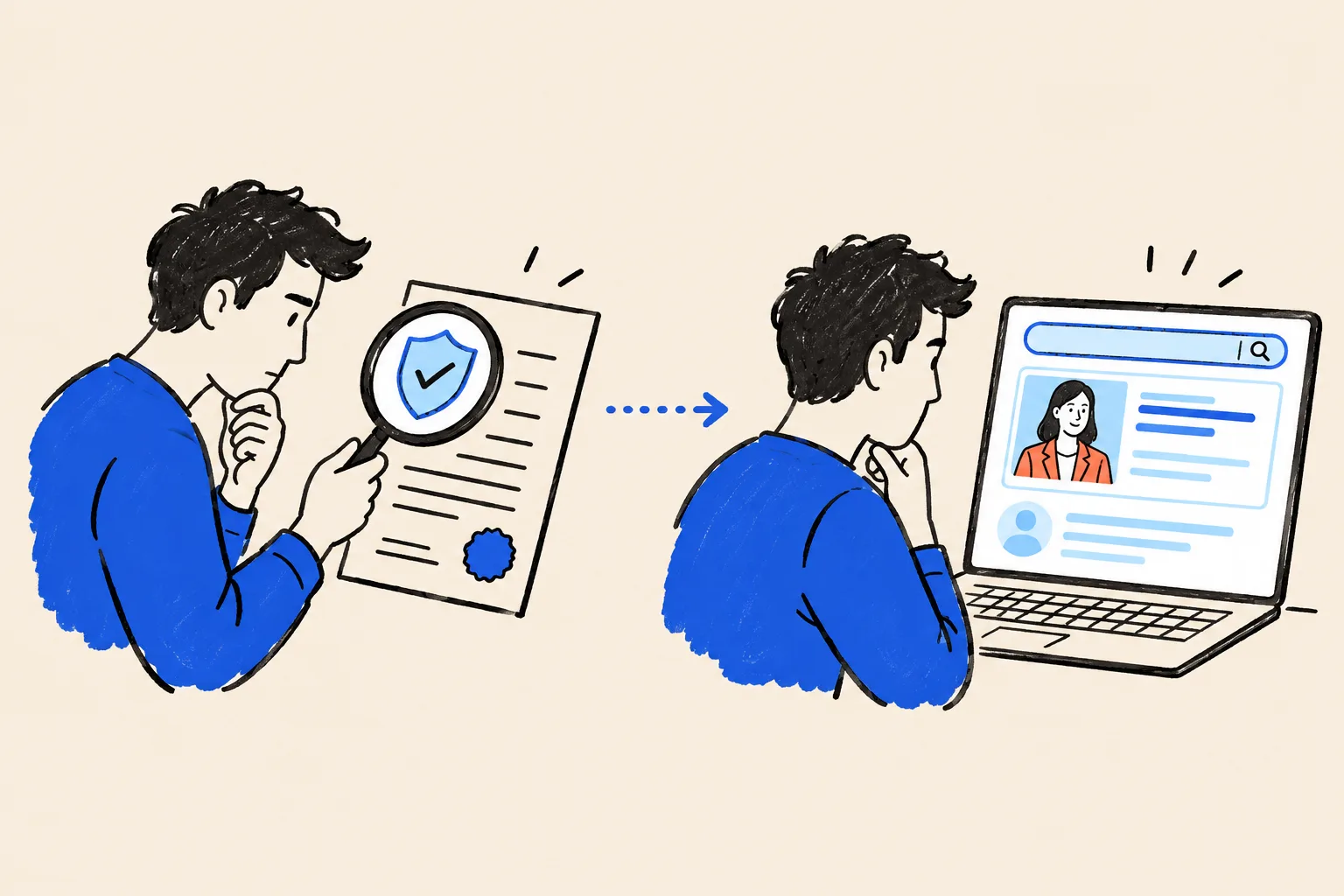
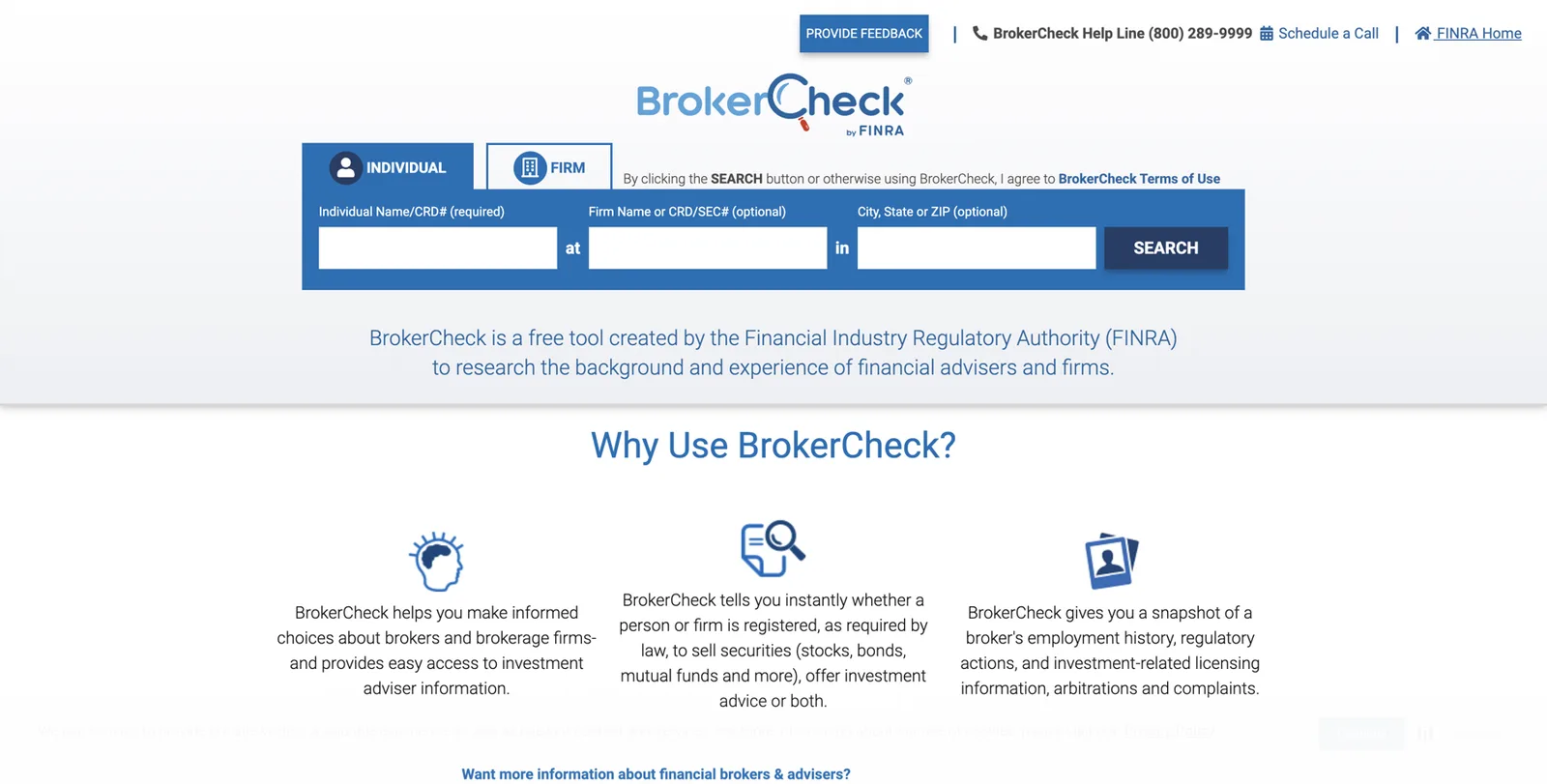
Then almost all of them do the same thing. They look you up. Some go to BrokerCheck or the SEC’s Investment Adviser Public Disclosure site first. Nearly everyone goes to Google. A growing number also ask an AI assistant.
This check usually happens alone, often in the evening, and you are not in the room to explain anything. Whatever the search shows is your first meeting.
Two checks, two different questions
A careful prospect is really asking two separate questions.
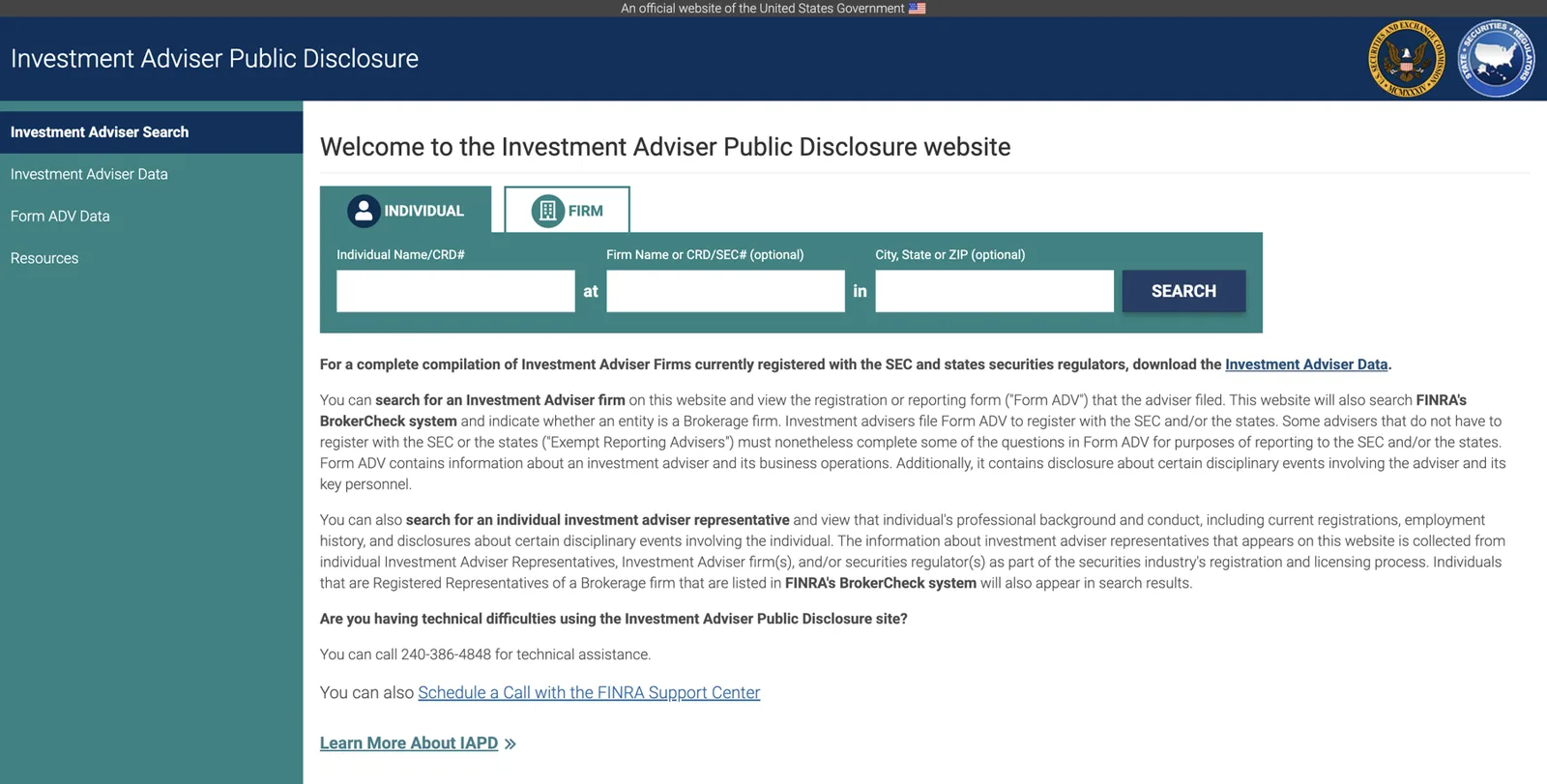
Question one: “Is this person allowed to advise me, and is there anything bad on record?” The regulator answers that. FINRA’s BrokerCheck shows registered brokers and investment adviser representatives, including their registration history, the exams and licences they hold, up to ten years of employment history, and disclosures such as customer disputes and disciplinary events.4 The SEC’s Investment Adviser Public Disclosure site (often called IAPD) lets anyone search individual advisers and firms, read a firm’s Form ADV (the registration document that describes the firm and its business), and see an individual’s registrations, employment history and certain disciplinary disclosures.5
Question two: “Is this the right person for me, for the next twenty years?” The regulator can’t answer that. A clean record tells a prospect you are allowed to advise. It says nothing about whether you understand people like them, whether you are established, or whether other people respect your work. For that, they go to Google.
Why advisors are judged harder than most professions
Google itself treats money as a special topic. Its Search Quality Rater Guidelines, the handbook Google gives to the people who help it evaluate search results, describe a category called “Your Money or Your Life”: topics that could significantly affect a person’s financial stability, health or safety. Financial advice sits squarely inside it, and the guidelines ask raters to hold those pages to high standards of trust.30 Prospects behave the same way. They are about to hand over their savings, so they look harder.
Four things make the check especially tough for advisors:
- Titles are confusing. “Financial advisor”, “wealth manager”, “financial planner” and “investment consultant” sound alike to the public. There are more than 100,000 CFP® professionals in the US alone,19 plus many more advisors without the certification. Prospects look for clues that you are the real thing: designations, a firm they can verify, years in practice and independent mentions.
- Many advisors are hidden behind a brand. If you work at a large firm or a broker-dealer, your name search may show the firm, its logo and its other advisors, but very little about you.
- Careers move. Advisors change broker-dealers, break away to start an RIA, join a larger firm or merge practices. Each move leaves old bios and directory listings behind, with the wrong firm name and sometimes the wrong designations.
- Compliance makes people quiet. Many advisors avoid publishing anything because every word needs review. That caution is sensible, but silence leaves a gap, and other people’s pages, including out-of-date ones, fill it.
The three kinds of research about you
It helps to separate three ways people (and machines) research you. The idea comes from Jason Barnard, the search specialist whose work underpins much of this field.
- Explicit research. Someone types your name: “Marisa Delgado”, “Marisa Delgado reviews”, “Who is Marisa Delgado?”. This is the referral check.
- Implicit research. Someone researches a topic and you appear, or don’t: “fee-only financial planner for doctors in Sacramento”, “advisor who specialises in selling a business”. This is where new prospects find you without a referral.
- Ancillary research. AI tools mention or describe you inside other products: an AI summary in a search result, a chat assistant drafting an email, a sidebar in a document. Nobody typed your name, but the machine still has to decide what it knows about you.
This playbook fixes explicit research first, because it is the foundation. If Google and AI tools can’t describe you correctly when asked by name, they will never recommend you for a topic.
What prospects find, and what it signals
When a referred prospect searches an advisor, these are the most common problems, and what each tells them:
| What they see | What they conclude |
|---|---|
| One line on your firm’s team page | “Junior? Not very established?” |
| Two job titles or two firms on page one | “Did they leave? Which is current?” |
| A directory listing with a designation you no longer hold | “Something doesn’t add up.” |
| A namesake (an insurance agent, a realtor, a lawyer) ranking above you | “Is that the same person?” |
| Nothing much at all | “Are they real? Why is there nothing?” |
| An AI answer that names three other advisors in your city | “Maybe I should talk to them instead.” |
None of these is a disaster on its own. Together they create doubt at exactly the moment someone is deciding whether to trust you with their savings.
What good looks like
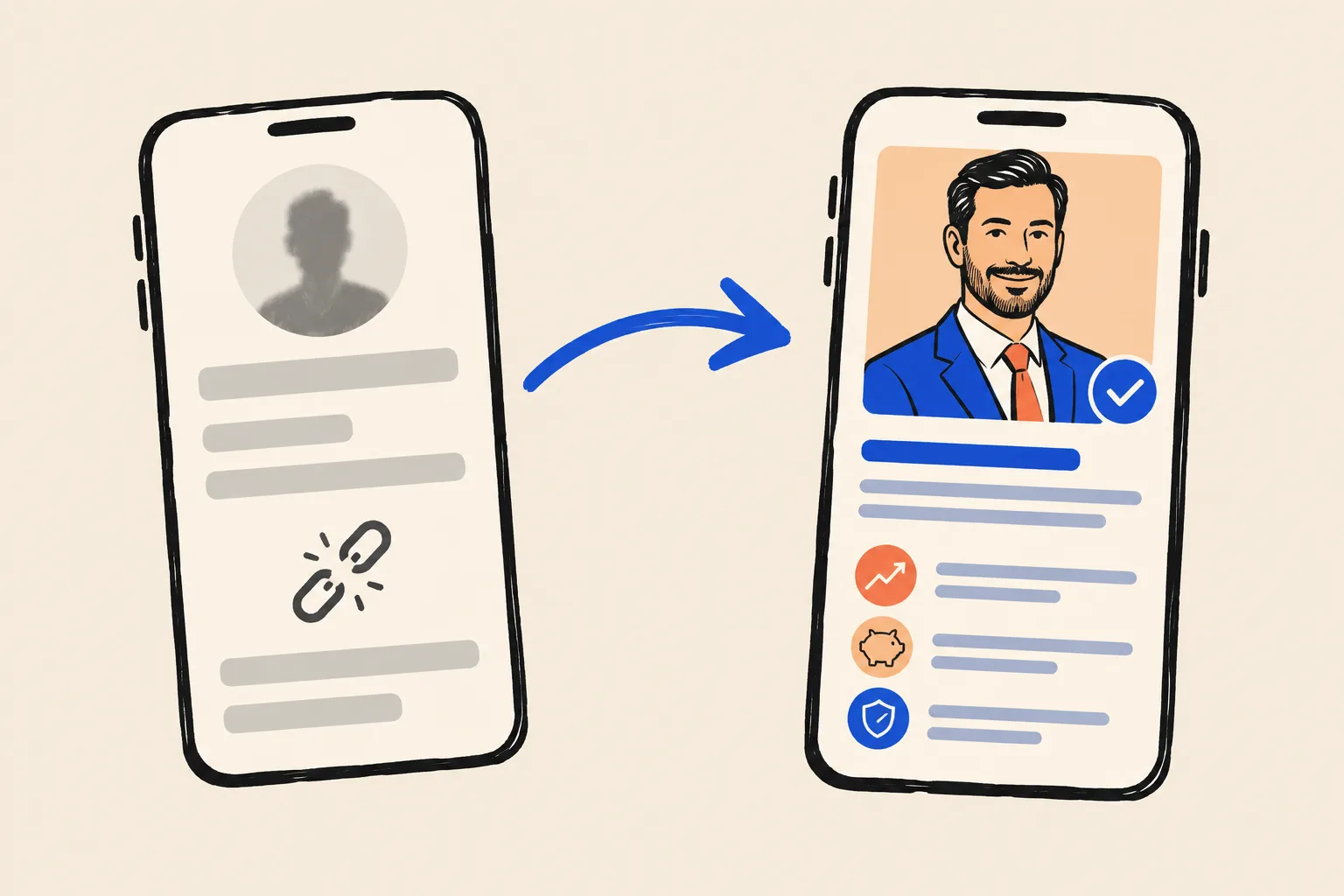
When someone searches the name of an advisor who has done this work, they usually see:
- a Knowledge Panel on the right (or at the top on mobile) with the advisor’s photo, a short description, a subtitle such as “Financial planner”, and a link to their own site
- the advisor’s own page as the first result, stating clearly who they are, which firm they are with and who they serve
- LinkedIn, the firm bio and the right directory listings, all with the same title, firm, designations and photo
- independent mentions: an article in a business journal, a podcast episode, a speaker page for a conference or association event
- AI answers that describe the advisor accurately when asked by name
2. What a thin name search costs you
The silent loss
A prospect who searches you and moves on leaves no trace. They never call, so they never appear in your CRM. The client who referred them assumes the friend wasn’t ready. You never find out the introduction happened. You can’t see the loss, so it’s easy to believe it isn’t there.
You can estimate it, though, with your own numbers. Nobody has reliable industry figures for how many referred prospects drop off after a search, so we won’t invent one. Use your own judgement.
Work it out with your own numbers
Fill in the worksheet below. Be conservative.
Your silent-loss estimate
Use your own figures. The example row is fictional and only shows how the sum works.
| Referred prospects per year (A) | How many you think search and then drop off (B) | Typical new household’s annual fee (C) | Years a household usually stays (D) | Estimated lost revenue: B × C × D |
|---|---|---|---|---|
| 12 | 2 | $10,000 (a $1M household at 1%) | 10 | $200,000 over ten years, before any growth in assets |
That example assumes the household’s assets never grow, which is unrealistic, and it ignores the referrals those lost households would have sent you in turn. Even so, two quiet losses a year add up to the value of a small practice over a decade.
| Item | Value |
|---|---|
| Year 1 | 10,000 |
| Year 3 | 30,000 |
| Year 5 | 50,000 |
| Year 7 | 70,000 |
| Year 10 | 100,000 |
Source: Illustrative arithmetic, not industry data. Replace with your own fee and asset figures.
Where it shows up in your practice
The silent loss doesn’t only hit cold referrals. Look for it in these places:
- Referrals that never call. A client recommends you; the friend searches and stalls.
- Larger prospects who verify and stall. The bigger the household, the harder they check. A prospect with $2 million to move is more likely to compare you with two other advisors before the first meeting.
- Centers of influence who hesitate. A CPA or estate attorney looks you up before sending their own clients to you. Their reputation is on the line too.
- Journalists and producers who pick someone else. A reporter looking for a source on Social Security timing searches three names and quotes the one whose expertise is easiest to confirm.
- Event organisers and podcast hosts. They check you before offering a speaking slot or an episode.
- Recruits and successors. Talented younger advisors look you up before joining your firm, and a buyer or successor looks at how findable the practice’s people are.
What your goals have to do with your name search
Most of the goals advisors set for their practice run through the same check:
What you want
- More referrals that turn into first meetings
- Referrals from CPAs and estate attorneys
- Higher-net-worth households and higher minimums
- A recognised niche (doctors, business owners, pre-retirees)
- Quotes in financial media and the local business press
- Podcast invitations, seminar audiences and speaking slots
- A book that people can find and buy
- A practice that keeps its value through succession
What the searcher needs to see
- Proof that matches the recommendation
- A professional they can comfortably put their name behind
- An established advisor whose details agree everywhere
- Your speciality stated the same way on every page
- Expertise a journalist can confirm in two minutes
- A clear identity, a photo and a page to link to
- An author with one name, one bio and one home page
- Named people clients can find and trust, alongside the firm logo

3. What a Knowledge Panel is, and what it isn’t
A plain definition
A Knowledge Panel is the information box Google shows when you search for a person, place, organisation or thing that Google is confident it knows about. On a computer it usually sits on the right of the results. On a phone it appears near the top. Google describes knowledge panels as information boxes that help people get a quick snapshot of information about a topic, generated automatically from information found across the web.1
Think of it as Google’s summary card about you. It says, in effect, “We know who this is, and here are the basics.” Google writes it. You can influence it, and once you claim it you can suggest changes, but you can’t type into it directly.
The parts of a panel, using a real one
Here is a real personal Knowledge Panel: the one Google shows for DotVisible’s founder, Shobin K Jose. It’s a useful example because he isn’t a celebrity. He is a business owner who did this work on purpose.
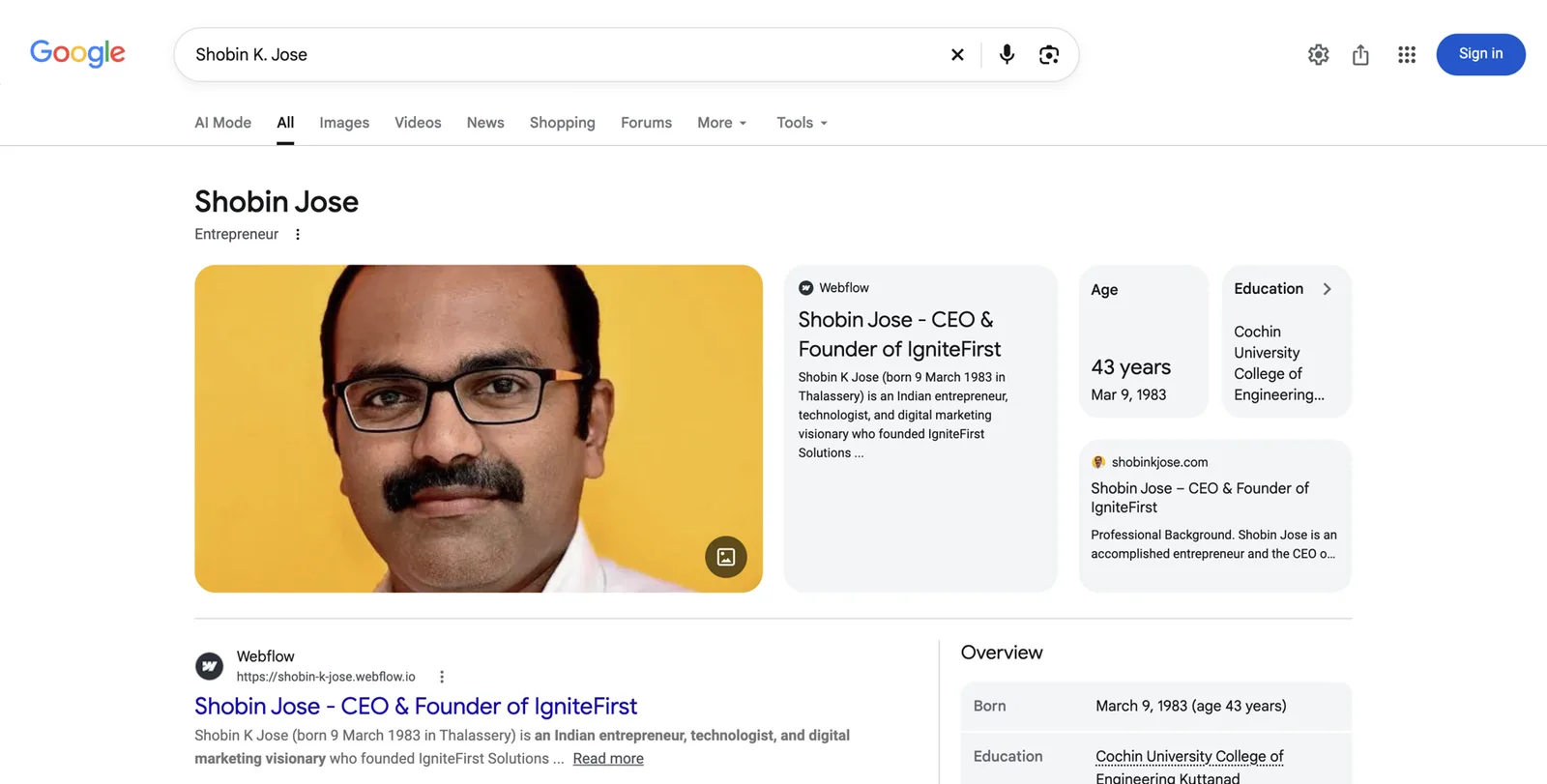
Read it from the top down:
- Name. The name Google has settled on for the person. Here it is “Shobin Jose”, even though the search was for “Shobin K Jose”. Google matched the variant to the same person.
- Subtitle. The short label under the name: “Entrepreneur”. For an advisor this might read “Financial planner”, “Financial advisor” or “Investment adviser”. Google picks it, usually from the way you are described most consistently across the web.
- Photo. Google chooses the image it sees most often and trusts most. That’s why using the same headshot everywhere matters.
- Website cards. The pages Google associates with the person, including his own site. When your own page appears here, Google has accepted it as your home base.
- Main facts. In this example: age and education. For an advisor these might include education, the organisation you founded or work for, and books you have written.
- Overview and description. A short summary, often taken from a page Google trusts, such as your own site.
Other panels also show social profiles, “People also search for” (other people Google considers related), videos, books, and a link at the bottom that says Claim this knowledge panel.
Things that look like a panel but aren’t
Several Google features get mistaken for a Knowledge Panel. Knowing the difference saves you a lot of wasted effort.
- Google Business Profile. This is a listing for a business location: an office address on Google Maps, opening hours, reviews and directions. Your firm may have one. It is about a place and a business, not about you as a person. (You may still see it called Google My Business in old articles. Google renamed it.)
- Your LinkedIn result. A big, well-ranked LinkedIn result is helpful, but it’s just a search result, not Google’s own summary.
- A featured snippet. A box at the top of results quoting a paragraph from one website. It answers a question; it isn’t about an entity.
- An AI Overview. Google’s AI-written summary at the top of some searches. It can mention you, but it is generated fresh for the question, and it isn’t a confirmation of identity.
- A “See results about” box. This appears when Google thinks a name could mean several things. It often means Google knows about you but isn’t confident enough to show a full panel.
The machinery behind it, in plain words
You will meet a few terms in this playbook. Here they are in everyday language.
- Knowledge Graph. Google’s giant database of things and the facts that connect them. Its entries are things such as people, companies, books and places. Think of it as Google’s address book of the world, where each entry links to related entries.
- Entity. One “thing” in that database. You, as a person Google can identify, are an entity. So is your firm.
- Knowledge Graph ID (sometimes called a KGMID). The unique ID number Google gives each entity, a bit like a CRD number for a broker. It looks like
/g/11abc123de. If Google has one for you, you exist in its database even if no panel shows yet. - Entity Home. The one page on the web that you control and that Google treats as your own official account of who you are. Usually an About page on your own website. Much more on this in Chapter 11.
- Corroboration. Other trustworthy sources that confirm the same facts. Your firm’s site, LinkedIn, association directories, articles about you.
- Sprout. An informal name for a thin panel that Google knows about but rarely shows, perhaps with just a name and a photo.
Being in Google’s database and having a visible panel are two different stages. Many advisors are already in the database without knowing it. A panel appears when Google is confident enough to show what it knows.
Myths worth dropping
Only celebrities get Knowledge Panels.
Google needs confidence, not fame.
Plenty of local professionals, authors and business owners have panels. What they share is a clear, consistent, well-corroborated identity.
You need a Wikipedia page.
Most people with panels don’t have one.
Wikipedia can feed panels, but it isn’t required, and its notability rules make it unrealistic for most advisors. Chapter 16 covers why chasing one usually backfires.
You can buy a Knowledge Panel or edit it directly.
Google creates panels from what it reads across the web.
You can claim a panel and suggest changes. Anyone selling a guaranteed panel is selling something Google doesn’t sell.
Once you have one, it’s permanent.
Panels can change, shrink or disappear.
If the sources behind it go stale or contradict each other, Google’s confidence drops. Maintenance matters (Chapter 22).
BrokerCheck is enough. Prospects trust the regulator.
The regulator answers a different question.
BrokerCheck and IAPD confirm you may advise and show your record. They don’t tell a prospect who you serve, how you work, or whether other people respect your work.
4. Why AI answers now matter as much as Google
Prospects ask AI for recommendations
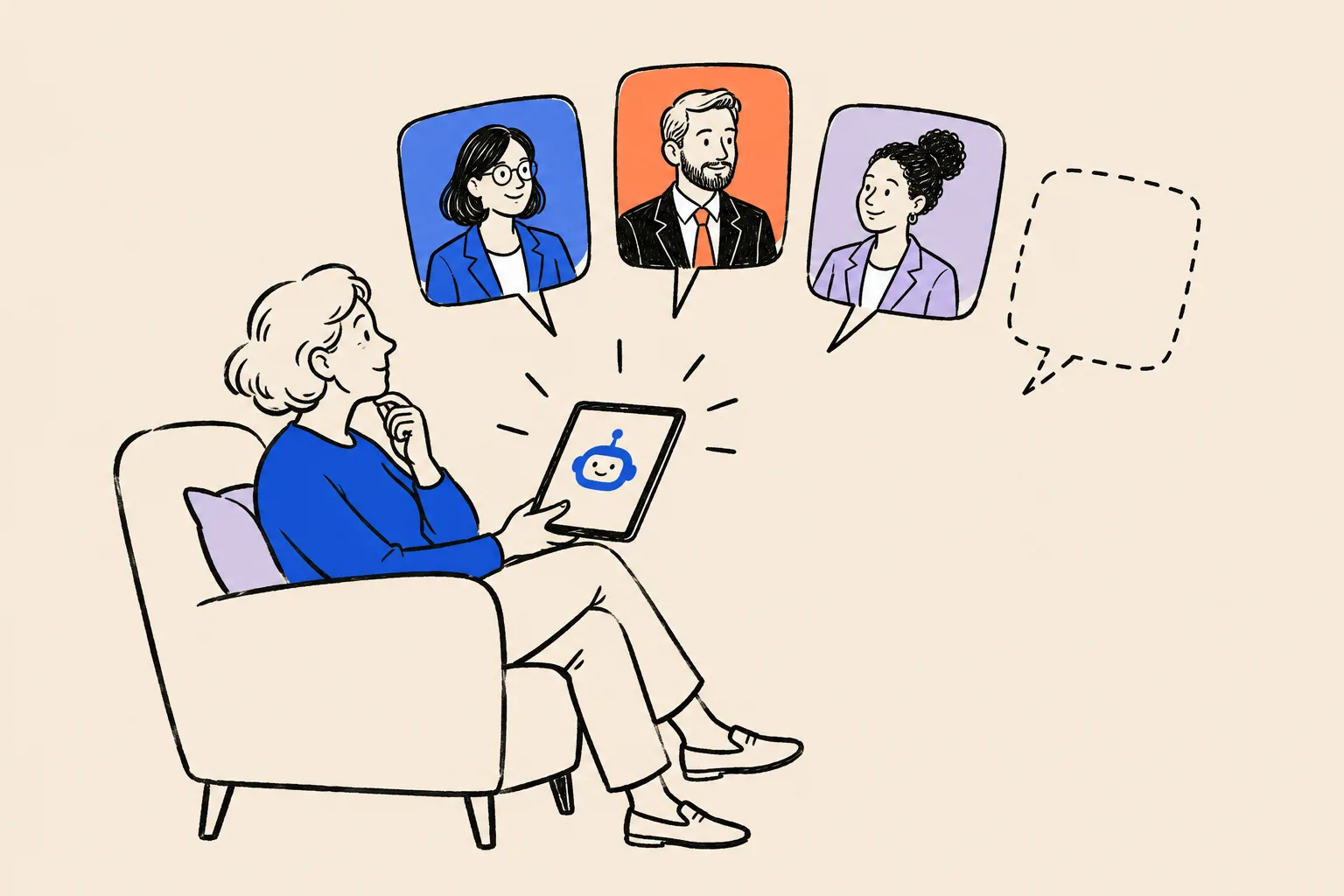
A growing number of people now ask an AI assistant instead of, or as well as, searching: “Who’s a good fee-only advisor in Denver for someone retiring next year?” “Which wealth managers in Charlotte work with business owners selling their company?” “Is [your name] a good financial advisor?”
The answer usually names two or three people with a line about each. If you aren’t one of them, the prospect may never reach your name search at all.
How AI tools decide whom to mention
Here is the simple version. AI assistants build answers from three ingredients:
- What the model learned in training. Large amounts of web text, read before a cut-off date.
- Live search results. Many assistants now search the web while answering and cite the pages they used. Google says there are no special requirements for appearing in its AI Overviews or AI Mode beyond being indexed and eligible to show a snippet in normal Search.3
- Structured knowledge. Facts held in knowledge bases. Google’s own AI features can draw on Google’s Knowledge Graph. Other assistants use their own sources.
All three ingredients come from the same public web, so the pages that teach Google who you are are the same pages AI tools read.
What a clean footprint does for AI
When your facts are clear, consistent and repeated by independent sources, AI tools:
- identify you as one specific person, not a blend of you and your namesake
- describe you accurately, with the right firm, designations and speciality
- find you a safer name to mention, because several sources agree about you
What it doesn’t do
- It doesn’t guarantee you will be recommended. Nobody can promise that.
- It doesn’t mean Google’s panel feeds ChatGPT directly. There’s no public evidence that it does. The connection is that both read the same web.
- It doesn’t override compliance. If an AI tool says something flattering about you, sharing or quoting it is a compliance question (Chapter 21).
The approach in this playbook is “explicit first”. Make sure AI tools describe you correctly when asked by name. Being recommended for a topic depends on that foundation.
5. How Google decides to show a panel
Three conditions
Google shows a personal Knowledge Panel when three things are true:
- It understands who you are. It has a clear set of facts: name, role, firm, location, education, the things you have done.
- It is confident that understanding is right. Several trustworthy sources agree, and nothing important contradicts them.
- It judges you are the person the searcher most probably means. If there are five people with your name, Google has to decide which one the searcher wants. That often depends on location: a search in your city may show you, while a search in another state shows a namesake.
Teaching a careful child
Jason Barnard compares Google to a child learning about the world, and it’s a good way to think about it:
- The child starts with your own explanation of who you are (your Entity Home).
- It then checks with people it trusts (independent sources).
- Repetition and consistency build its confidence.
- Contradictions make it stay quiet. If your website says “financial planner”, LinkedIn says “wealth strategist” and an old directory says “insurance agent”, the child doesn’t know what to say, so it says nothing.
The three-part method
Everyone who does this work well uses the same three parts:
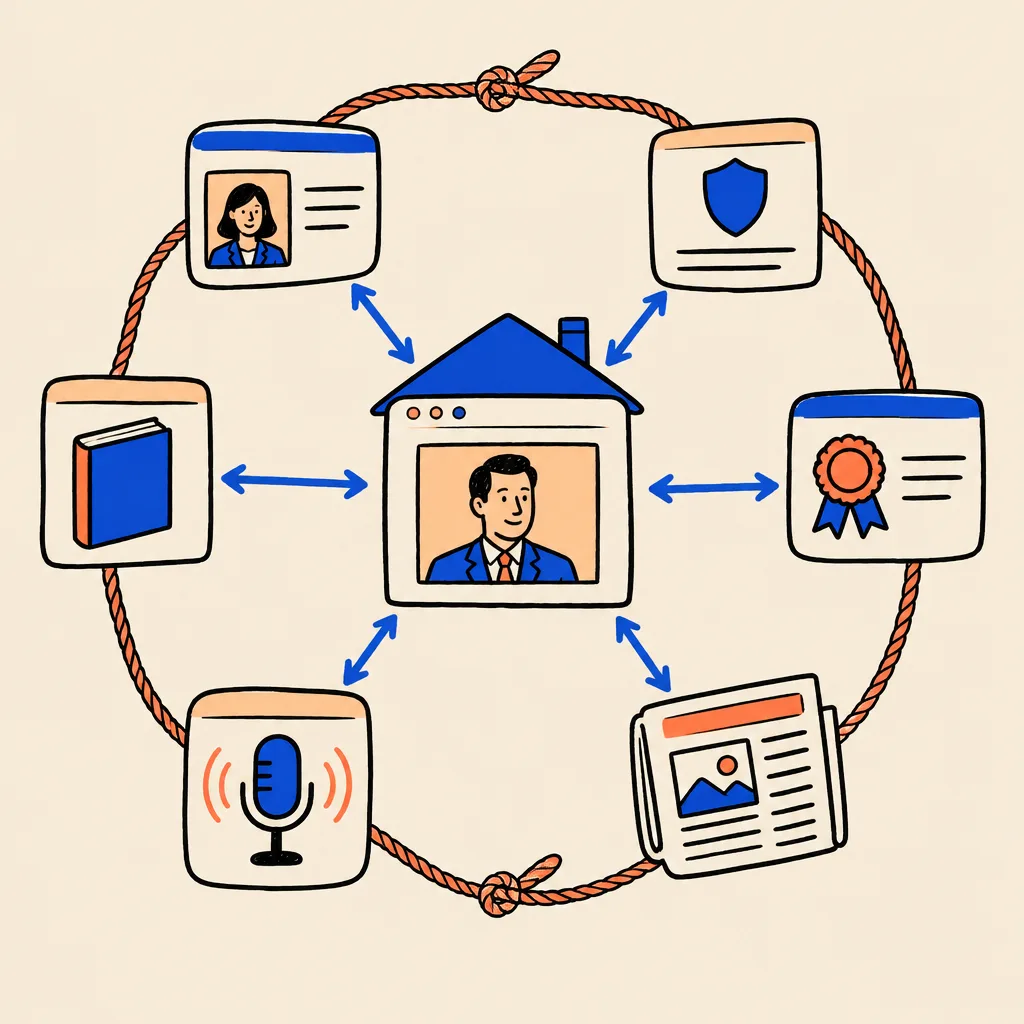
- An Entity Home. One page you control that states clearly who you are.
- Corroboration. Sources Google trusts that confirm the same facts.
- The loop. Your Entity Home links out to each of those sources, and each source links back to your Entity Home where it can.
Structured data (Chapter 12) is a hidden label on your Entity Home that ties the three together in a language machines read easily.
Three kinds of source
- First party: yours. Your own website and Entity Home.
- Second party: profiles you partly control. LinkedIn, your firm bio, your CFP Board profile, association directory listings, your YouTube channel.
- Third party: independent. An article about you in a business journal, a podcast episode about you, a conference speaker page, an association announcement, an official record.
Independent sources carry the most weight, because you didn’t write them. Extra profiles you create yourself add less and less after the first handful. Advisors have one extra asset: official records such as BrokerCheck, IAPD and CFP Board’s verification tool are strong third-party sources. You can’t edit them, but you can make sure everything else agrees with them.
Why consistency beats volume
The most common reason a qualified advisor has no panel is inconsistency, not a lack of profiles. A typical advisor example:
- Website: “Marisa Delgado, Financial Advisor”
- LinkedIn: “Wealth Strategist | Helping Physicians Retire Well”
- Firm bio: “Senior Vice President, Wealth Management”
- Old directory listing: “Marisa Delgado-Ruiz, Registered Representative, Pinnacle Securities”
- BrokerCheck: “Marisa Elena Delgado”
To a person, that’s obviously one advisor. To a machine, it’s possibly four people with four jobs. Chapter 8 shows how to pick one identity and use it everywhere.
How Google reads pages
Google reads structured content with more confidence than loose text. Headings, short clear sentences, tables, lists and structured data are easier for it to understand than a long paragraph of marketing copy. That’s why the page blueprint in Chapter 11 looks the way it does.
What slows it down
- A common name. “Michael Johnson, financial advisor” competes with many namesakes.
- A famous namesake. An athlete, actor or politician with your name.
- Old, wrong information that Google has already joined together, such as a previous firm.
- A social profile acting as your home. If Google treats your LinkedIn as your main page, it has less to work with.
- Firm-controlled pages that change. Team pages that are restructured every year, or that list you on page three.
How long it takes
It varies. Experienced practitioners report anything from a few weeks to a year or more for a first panel. Kalicube (the company Jason Barnard founded) publishes targets that put a panel appearing on a name search at roughly four to six months, and a stable panel at six to twelve months. Treat those as one firm’s observations, not Google’s rules. What drives the spread:
- how much accurate information already exists about you
- how common your name is
- how fast you can get changes through compliance and published
- how consistent your old footprint is
- how often Google re-reads the pages involved
You can’t control the timing, only the quality of the evidence.
Part 2: Diagnose what prospects see
6. The name-search audit
This chapter takes about an hour. You will fill in two worksheets: the name-search audit and the AI baseline. Don’t fix anything yet. The goal is an honest picture.
Set up
You need:
- a computer and a phone
- a private (incognito) window on each
- a spreadsheet or a printed copy of the worksheet below
- 60 minutes without interruptions
On your phone, open a private tab:
- iPhone Safari: tap the tabs icon (two overlapping squares) at the bottom right, tap Private at the bottom, then tap +.
- Android Chrome: tap the three dots at the top right, then New Incognito tab.
Why private? When you’re signed in, Google tailors results to you. You have visited your own website a thousand times, so Google may rank it higher for you than for a stranger. A private window gets closer to what a prospect sees.
The searches to run
Run each of these on Google on your computer, then again on your phone. Then run the first two on Bing (bing.com) as well. Bing is useful because it often shows which sources it used for its own panels, which gives you clues about where search engines look.
[Your name], the way clients say it[Your name] financial advisor(or planner, or wealth manager, whichever you use)[Your name] [your city][Your name] [your firm][Your name] CFP(or CFA, or your main designation)[Your name] reviewswho is [your name]- Variants: with and without your middle initial, any maiden or previous name, a nickname
What to record
For each search, write down:
- Panel: yes or no. If yes: the subtitle, the photo (yours? which one?), the description and where it comes from (it usually shows a source link), and which website is linked.
- Positions 1 to 10: for each result, is it about you, someone else or your firm? Is it accurate? Is it current?
- Namesakes: anyone else with your name on page one, and what they do.
- Old information: previous firms, retired designations, old job titles, old cities.
- “People also search for” and “See results about” boxes: who appears with you, if anything.
- Anything negative or confusing, including results about a namesake that a prospect might mistake for you.
Worksheet A1: Name-search audit
One row per search. Use a new sheet for your phone results.
| Search typed | Panel? (Y/N, subtitle, photo) | Result 1 | Results 2 to 5 | Results 6 to 10 | Namesakes or old info | Notes |
|---|---|---|---|---|---|---|
| Marisa Delgado (fictional example) | N | Firm team page, page 3, one line | LinkedIn (title: Wealth Strategist); old directory with previous firm; Delgado Insurance (namesake) | Conference agenda PDF, 2019 | Namesake insurance agent in Fresno; old firm on directory | No page about me ranks |
Check whether Google already knows you
Even with no panel showing, Google may already have an entry for you in its Knowledge Graph. There are three ways to check, from easiest to most technical.
1. Use a free checker. DotVisible’s free Knowledge Panel Checker looks your name up in Google’s Knowledge Graph and reports what it finds in about a minute.
2. If you see a panel, find its ID. Click the three dots or the share icon at the top of the panel, then copy the share link. Paste it somewhere you can read it. Look for kgmid= followed by something like /g/11abc123de or /m/0abc12. That’s your Knowledge Graph ID. Save it in your fact sheet.
3. Use Google’s Knowledge Graph Search API. Google publishes a free API (a way for software to ask Google’s database questions) that returns entities matching a name.32 It needs a little technical setup, so most people use a checker tool instead.
If you find more than one ID for yourself, Google thinks there may be more than one of you. Note every ID. Chapter 20 explains how duplicates get merged.
Optional: the deep sweep
If you want to be thorough, run a set of targeted searches that use Google’s site: command. Typing site:linkedin.com "Marisa Delgado" tells Google to show only pages from LinkedIn that mention that exact name. The quotation marks keep your name together as one phrase.
Run these, replacing the name with yours:
- Identity:
site:linkedin.com "Your Name",site:x.com "Your Name",site:facebook.com "Your Name",site:youtube.com "Your Name" - Regulatory and credential:
site:brokercheck.finra.org "Your Name",site:adviserinfo.sec.gov "Your Name",site:letsmakeaplan.org "Your Name" - Associations and directories:
site:napfa.org "Your Name",site:plannersearch.org "Your Name",site:xyplanningnetwork.com "Your Name",site:wealthtender.com "Your Name" - Media:
"Your Name" site:investmentnews.com,"Your Name" site:financial-planning.com,"Your Name" site:bizjournals.com, and your local newspaper’s site - Podcasts and speaking:
"Your Name" podcast,"Your Name" speaker,"Your Name" webinar - Old firms:
"Your Name" "[previous firm name]"
Every result goes into your footprint inventory in Chapter 7.
The AI baseline
Now record what AI tools say about you. You will repeat this every month, so keep it simple and consistent.
Which tools: ChatGPT, Gemini, Perplexity, Microsoft Copilot and Claude, plus Google’s AI Overview (it appears at the top of some Google searches) and Google’s AI Mode (a tab labelled “AI Mode” on the Google results page in many countries).
Which prompts:
- “Who is [your name]?”
- “Who is [your name], the financial advisor at [firm] in [city]?”
- “Who are the best [speciality] financial advisors in [city] for [type of client]?”
- “What do people say about [your name], [firm]?”
What to record: for each answer, mark Accurate, Inaccurate or Absent, note any wrong facts, and copy the sources it cites. Those cited sources are gold. They tell you which pages the AI trusts for your topic and city.
Worksheet A2: AI baseline
Run each prompt in each tool. Date the sheet. Repeat monthly.
| Tool | Prompt | Accurate / Inaccurate / Absent | Wrong facts | Sources cited | Other advisors named |
|---|---|---|---|---|---|
| Perplexity (fictional example) | Best fee-only advisors in Sacramento for physicians | Absent | NAPFA directory; a local business journal list; two firm websites | Three other planners | |
You can also use DotVisible’s free AI Mention Checker for a quick snapshot of whether AI tools mention you.
Which situation are you in?
Look at your audit and pick the line that fits best.
| Your situation | What it usually means | Start with |
|---|---|---|
| No panel, very little about you online | Google doesn’t have enough to work with | Parts 3 and 4 in full |
| No panel, plenty about you online | The information exists but disagrees or isn’t linked | Chapters 8, 13 and 15 (identity, clean-up, the loop) |
| A panel exists but rarely shows | Google knows you but isn’t confident, or a namesake dominates | Chapters 14, 17 and 20 |
| A panel shows old or wrong details | Google is reading outdated sources | Chapters 13 and 19 (fix the sources, then suggest edits) |
| Your panel disappeared | A source changed, or confidence dropped | Chapter 20 |
| More than one ID for you | Google thinks you are several people | Chapters 12 and 20 |
| The panel shows someone else, or mixes you up with them | Identity confusion | Get specialist help; this is beyond DIY |
7. Inventory your digital footprint
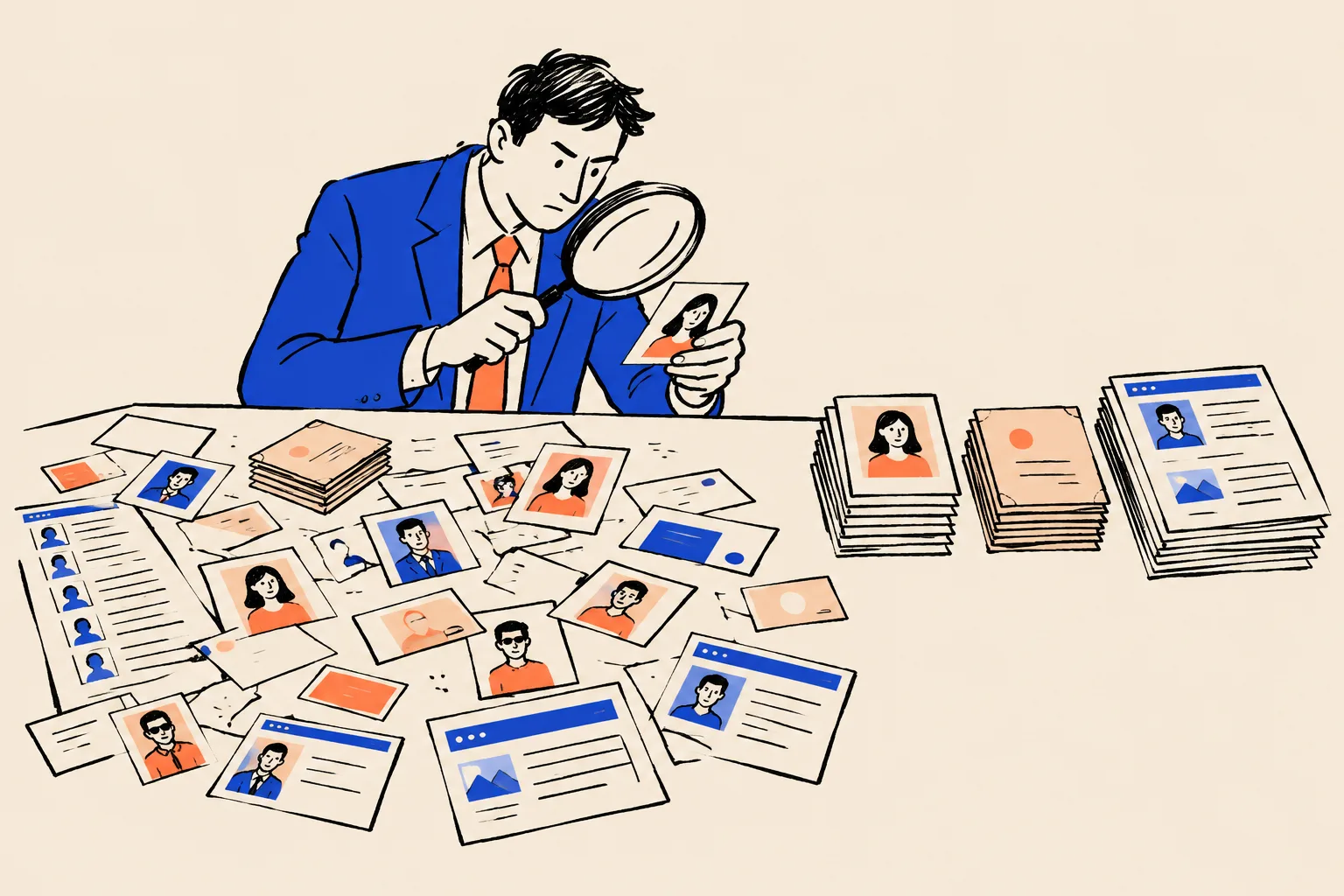
Your digital footprint is every page on the web that mentions you. This chapter turns your audit into one list, then sorts it. It’s Worksheet A3.
Sources by priority
Sort what you find into four priority groups:
- Priority 1: your own website, your firm bio page, LinkedIn, BrokerCheck, IAPD, CFP Board’s verification and public profile, and any wiki entries about you.
- Priority 2: association and network directories (NAPFA, FPA, XY Planning Network and others), review and advisor-directory sites, press coverage, articles you wrote with an author bio.
- Priority 3: podcasts, speaker pages, seminar and webinar listings, books, awards, your own blog.
- Priority 4: forums, data-broker “people search” sites, scraped directories and anything else.
The “how much is about you” rule
For each page, estimate how much of it is about you.
- 80% or more about you: a core source. It can be linked from your Entity Home and listed in your structured data.
- Between 20% and 80%: useful. Summarise it on a media or press page with a link.
- Under 20%: ignore it for this work. A passing mention in a list of thirty names doesn’t help Google much.
This rule of thumb comes from Jason Barnard’s course. It keeps you focused on the sources that describe you.
Check every field
For each source, compare these fields with what is true today:
- name (exact form, including middle initial and suffix)
- job title
- firm name (current and exact)
- designations and their exact wording
- location
- speciality and who you serve
- photo
- bio text
- website link
- years in practice or the year you started
- registration type (registered representative, investment adviser representative, both)
Rate the problems
Use this self-assessment scale. It isn’t a Google metric. It just helps you decide what to fix first.
- Critical: the wrong person, someone else’s photo, a designation you never held.
- High: a previous firm shown as current, a retired designation, an old job title.
- Medium: bios that disagree, a missing designation, an outdated speciality.
- Low: formatting, an old photo that is still recognisably you.
- Info: facts you could add (a new article, a speaking slot).
If you want a single number, start at 100 and deduct 20 for each critical issue, 10 for each high, 5 for each medium and 2 for each low. Track the score over time.
Problems advisors run into most
- Firm transitions. Directory listings and old bios still show your previous broker-dealer or firm. Prospects who see two firms wonder why you left.
- Retired or changed designations. A designation you let lapse, or one that changed name, still appears on old pages.
- Firm brand swallows the person. The firm ranks for your name, but the page about you is a single line.
- Different job titles for internal and public use. “Senior Vice President, Wealth Management” on the firm site, “Financial Advisor” on LinkedIn and “Wealth Strategist” in a speaker bio.
- Name variants. Your full legal name on BrokerCheck, a shortened version on LinkedIn, a married or maiden name in older articles.
- Old team pages. Pages from an acquired firm that were never taken down.
- Headshots from different decades.
- People-search sites listing your home address. These don’t help your identity and you may want to remove them for privacy anyway.
Sort by how much control you have
Finally, mark each source:
- Direct control: you can edit it yourself (your website, LinkedIn, your CFP Board profile, most directory listings you created).
- Partial control: you can ask for it to be changed (your firm bio, an association listing managed by staff, a podcast host’s show notes).
- No control: you can’t change it (BrokerCheck and IAPD, which come from regulatory filings, and most news articles).
Work in that order: direct, then partial. For “no control” sources, make sure everything else agrees with them, or, if a regulatory record itself is wrong, raise it with your firm’s registration team.
Worksheet A3: Footprint inventory
One row per page that mentions you. Sort by priority, then by control.
| URL | Type (own, profile, independent, official) | % about me | What’s wrong | Severity | Control (direct, partial, none) | Compliance approval needed? (Y/N) | Fixed on |
|---|---|---|---|---|---|---|---|
| advisordirectory.example/oh/marisa-delgado (fictional) | Directory | 90% | Shows previous firm and old designation | High | Partial (claim listing) | Y | |
Part 3: Decide exactly who you are
8. Choose your identity, your label and your name
This is the most important decision in the playbook. Everything else repeats it.
One primary label
Pick the one phrase you want under your name in a Knowledge Panel. Common choices for advisors:
- Financial planner: clear to the public, and common for CFP® professionals and fee-only planners.
- Financial advisor: the most widely searched and understood term.
- Wealth manager: suits advisors serving higher-net-worth households with investment management and planning combined.
- Investment adviser: precise, but reads as formal and regulatory to most people.
Three rules for choosing:
- Use a label your clients use. If your clients say “my financial planner”, that’s your label, even if your business card says “Managing Director”.
- Use a label Google recognises as a profession. Kalicube has observed that Google tends to show subtitles from a recognised list of roles. “Financial planner” works. “Retirement Freedom Architect” won’t.
- Use a label compliance is comfortable with. Some firms restrict which titles advisors may use, and your title must be accurate for your registration. Get compliance approval first.
The order every bio follows
Once you have a label, every description of you follows the same order. Think of it as the order of importance:
- Who you are and where you work: your primary label and your firm.
- Where and who you serve: location and the people you work with.
- What you do for them: services, approach, how you’re paid (fee-only, flat-fee, fee-based) if compliance allows.
- Proof: designations, education, books, media, associations.
- Background: earlier career, how you got here.
The first sentence decides the subtitle
The single most influential sentence you will write is the first sentence of your Entity Home. It follows this pattern:
[Name] is a [label] at [firm] who helps [audience] [do something specific].
For example (fictional): “Marisa Delgado, CFP®, is a fee-only financial planner and the founder of Delgado Harbor Planning, a Sacramento firm that helps physicians and their families plan for retirement.”
Google tends to take the subtitle from the first label used, repeated consistently across sources. If you write “author, speaker and financial planner”, you may end up as “Author”. Put the label you want first.
If you do several things
Many advisors are also authors, podcast hosts, speakers or business owners. Choose one primary identity, and treat the others as facets that appear later in your bio. Mixing them in the first sentence confuses machines and can produce a subtitle you didn’t want. If your book becomes your main business one day, you can change your primary identity then, deliberately, everywhere at once.
If you changed careers or firms
Advisors who came from another career (engineering, medicine, the military, corporate finance) or moved from a wirehouse to an independent RIA face the same problem: the internet remembers the old version.
- Lead with the new identity in every first sentence.
- Update old references rather than deleting them. A former employer’s page that still lists you can often be updated or redirected. If it can’t, it will fade as new sources outnumber it.
- Join your new peer group. Association listings and networks that match your new identity (for example, a fee-only network after leaving a broker-dealer) tell Google which group you now belong to.
- Check your regulatory record shows the change. BrokerCheck and IAPD reflect your current registrations; make sure everything you publish agrees with them.
Your name, decided once
Pick one exact form of your name and use it everywhere: website, LinkedIn, firm bio, directories, podcast show notes, book cover.
- Common name? Add a middle initial, a full middle name or a professional word. “Michael R. Johnson” is easier to identify than “Michael Johnson”.
- Legal name differs? BrokerCheck and IAPD will show your registered name. If clients know you as “Liz Carter” but you’re registered as “Elizabeth Anne Carter”, make sure your Entity Home mentions both, and list the variants in your structured data as alternate names.
- Don’t name your firm exactly after yourself if you can avoid it. “Marisa Delgado Wealth” and “Marisa Delgado” compete for the same search. If you already have, make the difference clear on your site (one page about the firm, one about you).
- Every rename is a full rebrand. If you change your name, after marriage or for any other reason, update every major source within a couple of weeks, keep your existing domain and handles, and list the old name as an alternate name. Expect it to take months for Google to catch up.
Designations: use them exactly as their owners require
Designations are some of your strongest proof, and each comes with usage rules. The best known are CFP Board’s. Its guide to the certification marks says, among other things:1516
- Always write CFP® in capitals, without periods, with the ® symbol (exceptions apply where special characters are impossible, such as some social media fields).
- Use the marks as adjectives, not nouns: “a CFP® professional”, not “a CFP®”. Directly after your name on the same line, such as “Marisa Delgado, CFP®”, is fine.
- Never use the marks in domain names, website addresses, email addresses or social media hashtags or handles. “marisadelgadocfp.com” and “@MarisaDelgadoCFP” are not permitted.
- On a website, the mark must be directly associated with the individual certified person’s name, not with a company or group.
- Include CFP Board’s trademark tagline wherever you use the marks online and in promotional materials.
Your ideal client, written for machines
Write down, in plain words, who you serve. Machines (and prospects) find specific descriptions; they can’t do much with “individuals and families”.
- Who: physicians, business owners, tech employees with equity compensation, pre-retirees, widows, divorcing spouses, federal employees, small-business 401(k) sponsors
- Life stage or event: five years from retirement, selling a business, receiving an inheritance
- Geography: your city and region, or “nationwide, virtual” if you work remotely and your registrations allow
- How you’re paid, if compliance allows: fee-only, flat-fee, hourly, assets under management
- What you don’t do (helpful for you and for searchers): “We don’t sell insurance products.”
Worksheet A5: Identity picker
Fill in each row, then circle the one you will use everywhere.
| Field | Option 1 | Option 2 | Chosen | Compliance approved? |
|---|---|---|---|---|
| Primary label (fictional example) | Financial planner | Financial advisor | Financial planner | Yes, 3 Nov |
| Name form | Marisa Delgado | Marisa E. Delgado | Marisa Delgado | Yes |
| Who I serve | Physicians and their families | Doctors nearing retirement | Physicians and their families | Pending |
9. Build your source-of-truth profile
Your source-of-truth profile is one locked fact sheet about you. Every bio, profile, directory listing and structured-data label copies from it. When a fact changes, you change it here first.
For advisors, this document has a second job: it’s the thing you take to compliance. Approve the facts once, in one place, and every later bio becomes a lot easier to approve.
The fields
Fill in as many as apply. Leave blank anything you can’t prove.
- Full legal name, public name and any variants (maiden name, middle initial, nickname)
- CRD number (your Central Registration Depository number, shown on BrokerCheck), if you have one
- Primary label and job title
- Firm name, exactly as registered, and your role (founder, partner, advisor)
- Registration type: registered representative, investment adviser representative, or both, and with which firm
- Year you started advising (only if you can document it)
- Office location (city and state) and the areas you serve
- Who you serve and your specialities
- Services, and how you’re paid, if compliance allows it to be published
- Designations, with the exact required wording and the year earned
- Education: degrees and institutions
- Professional memberships (FPA, NAPFA, XY Planning Network, local estate planning councils, CFA society)
- Books (title, publisher, year, ISBN)
- Podcasts and media appearances (with links)
- Speaking (event, date, link)
- Awards (with the date, the period covered and who granted them, and whether you paid anything)
- Board and volunteer roles
- Languages
- Topics you’re known for
- Photo set (file names and where each is used)
- Every profile URL you own
- Your Knowledge Graph ID, if you have one
The evidence ladder
Not all evidence is equal. Rank each fact by its strongest source, from best to weakest:
- Official records and credential issuers: BrokerCheck, IAPD, CFP Board’s verification tool, university records.
- Your Entity Home and verified profiles.
- Institutional pages: your firm’s site, an association’s member page, a conference’s speaker page.
- Independent editorial coverage: a journalist’s article, a podcast episode.
- Directories.
- Paid press releases and self-published reposts. These are the weakest. They show what you said about yourself, not what someone checked.
Give every fact a status
- Verified: you have a link or document that proves it.
- Partial, confirm: you believe it’s true but need to find the proof.
- Self-reported: only you can vouch for it (for example, the languages you speak).
- Exclude until confirmed: don’t publish it yet.
What never goes in
These are the honesty rules, and for advisors most of them are also compliance rules:
- Years of experience you can’t document. Don’t round up from an incomplete timeline.
- Client counts or assets under management, unless compliance has approved the figure, its date and its wording. Assets figures in particular must be calculated and presented the way your regulator expects.
- Performance figures. Leave them out of bios and profiles entirely. Performance advertising has its own detailed rules.
- Awards from paid inclusions, or awards you can’t describe with their date, period, provider and any fees.
- Podcast or speaking credits you can’t link to.
- Testimonials. Keep them out of your fact sheet. If your firm uses them at all, that’s a separate compliance process.
- Accounts you can’t prove are yours.
Lock the profile
Once compliance has approved the fact sheet, treat it as locked. From now on you only change length, person and format (short or long, “I” or “she”, paragraph or list), never the facts. If a fact changes, update the fact sheet, get it approved, then roll it out.
Worksheet A4: Source-of-truth profile
One row per fact. Nothing gets published that isn’t on this sheet with status Verified and compliance approval.
| Fact | Exact approved wording | Best evidence (link) | Status | Compliance approved (date) |
|---|---|---|---|---|
| Designation (fictional example) | CFP® professional since 2014 | CFP Board verification page | Verified | 3 Nov 2026 |
| Firm | Delgado Harbor Planning, LLC, a registered investment adviser | IAPD firm record | Verified | 3 Nov 2026 |
| Years advising | Advising clients since 2009 | BrokerCheck employment history | Verified | 3 Nov 2026 |
10. Write your bio ladder
A bio ladder is the same bio written at several lengths, so you have the right version ready for every platform. Each rung starts with the same identity sentence. Write the full ladder once, send it to compliance once, and you won’t have to improvise a bio on a deadline again.

The identity summary
Before the ladder, write a 20 to 50 word identity summary. It opens with your identity sentence and adds where you work and who you serve. You will paste it, word for word, into every place it fits. Google learns by seeing the same facts said the same way.
The rungs
- Headline (title line): “Fee-only financial planner at Delgado Harbor Planning | CFP® professional | Sacramento”
- One-liner (about 150 characters): for social bios and directory summaries.
- Short bio (about 50 words): for podcast show notes, event programmes and author bylines.
- Standard bio (100 to 150 words): for LinkedIn’s About section, association directories and your firm bio.
- Full bio (300 to 500 words): for your Entity Home.
- First-person introduction: for platforms that expect “I” (LinkedIn, some directories).
- Spoken introduction (30 seconds, read aloud): what a podcast host or seminar organiser says before you speak.
You will also need, for your Entity Home: a page title, a meta description (the two-line summary Google sometimes shows under your page in results) and alt text for your photo (a short description that screen readers and search engines read).
The full bio, written as a life story told backwards
Write the full bio in short sections, each with its own heading, starting with today and ending with your history:
- What you do today: your identity sentence and firm.
- Who you serve: your clients and the problems you help with.
- How you work: your planning process, services, how you’re paid (if approved).
- Books, podcast and speaking.
- Designations, education and memberships.
- Media: where you’ve been quoted or featured, with links.
- Background: earlier career, how you came to advising, community roles.
Writing rules
- Short sentences. Subject, verb, object: “Marisa founded Delgado Harbor Planning in 2016.”
- Capitalise proper names, so machines recognise them as names: “Financial Planning Association”, not “a planning association”.
- Mention your city for disambiguation.
- Name your relationships to known organisations: your firm, your university, your associations, your publisher, your broker-dealer or custodian if compliance wants it disclosed.
- No superlatives. “Leading”, “top”, “best” and “premier” are both weak signals and compliance problems.
- Third person on your Entity Home and directories. First person where the platform expects it.
- Use designations exactly as required (Chapter 8).
Duplicate bios aren’t a problem here
You may have heard that duplicate content is bad for search. For bios, repetition across your own profiles is exactly what helps Google connect them. Use the same identity summary everywhere.
Worked examples (all fictional)
Example 1: founder of an independent RIA.
Identity summary: “Marisa Delgado, CFP®, is a fee-only financial planner and the founder of Delgado Harbor Planning, a registered investment adviser in Sacramento, California. She works with physicians and their families on retirement, tax and education planning.”
Headline: “Fee-only financial planner | Founder, Delgado Harbor Planning | CFP® professional | Sacramento”
One-liner: “Fee-only financial planner in Sacramento helping physicians and their families plan for retirement. Founder of Delgado Harbor Planning.”
Example 2: advisor at a broker-dealer branch.
Identity summary: “Tom Becker is a financial advisor with Prairie Line Securities in Omaha, Nebraska, where he works with small-business owners on retirement plans and personal investment planning. He has advised clients since 2011.”
Tom’s website and social media are controlled by his firm. His bio ladder goes to the firm’s marketing and compliance team for approval as one package, and his firm bio page becomes his main home page for now (see Chapter 11).
Example 3: partner in a multi-advisor wealth management firm.
Identity summary: “Aisha Grant, CFA, CFP®, is a wealth manager and partner at Linden Row Wealth in Charlotte, North Carolina. She advises business owners who are preparing to sell their companies, and their families.”
Aisha’s firm publishes a page for each partner. She negotiates with her firm for an expanded profile page with her full bio and a links section, rather than the one-paragraph template every advisor gets.
Adapt the ladder to each platform
| Platform | Rung | Lead with |
|---|---|---|
| Your Entity Home | Full bio | Identity sentence, then sections |
| Firm bio page | Standard bio | Identity sentence, who you serve |
| LinkedIn headline | Headline | Label, firm, designation |
| LinkedIn About | Standard bio, first person if you prefer | Who you serve and how |
| CFP Board, NAPFA, FPA, XYPN listings | Standard bio | Speciality and fee model, as the directory asks |
| Podcast show notes | Short bio | Identity sentence and one link |
| Speaker pages and seminar flyers | Short bio + spoken intro | Topic expertise |
| Author pages (Amazon, Goodreads, publisher) | Standard bio | Author of [book], then advisor identity |
| X, Instagram, Facebook | One-liner | Label and city |
| YouTube channel “About” | Short bio | What viewers will learn, then identity |
Worksheet A6: Bio ladder
Write each rung, count the words, then send the whole sheet to compliance in one go.
| Rung | Target length | Your text | Word count | Approved (date) |
|---|---|---|---|---|
| Identity summary | 20 to 50 words | |||
| Headline | Under 120 characters | |||
| One-liner | About 150 characters | |||
| Short bio | About 50 words | |||
| Standard bio | 100 to 150 words | |||
| Full bio | 300 to 500 words | |||
| Spoken intro | 30 seconds |
Part 4: Build the foundation Google trusts
11. Your Entity Home
Your Entity Home is the single web page you want Google to treat as your official account of who you are. Everything else points to it. Jason Barnard calls it the closest thing to control you will ever get.

Your options, best first
- An About page on a website you own, in your name. For example,
www.yourname.com/about. This is the strongest option because it moves with you if you change firms, sell your practice or retire. - Your own website’s home page, if it’s entirely about you.
- A dedicated page about you on your firm’s site, if you own the firm. A founder of an independent RIA can make this work, as long as the page is about you, not the team.
- Your profile page on your employer’s site, if the first three aren’t allowed. This is common for advisors at broker-dealers and larger firms. It works, but it carries a risk: if you leave, the page goes, and Google loses your home.
- Never a social profile. LinkedIn is your strongest profile, but you don’t own it, you can’t add structured data to it, and Google gives it less authority as a “home”.
The questions to take to your firm
Bring these to your compliance or marketing team. They save weeks.
- May I have a personal website in my own name? On my own domain, or only as a page on the firm’s domain?
- Who approves the content, and how are changes approved?
- Which disclosures and links must appear (firm disclosures, BrokerCheck, ADV brochure, privacy notice)?
- How is the site archived for recordkeeping?
- May I add structured data (hidden labels for search engines) that restates the visible facts?
- May I link to my association directory listings, articles and podcast episodes?
- If my firm bio is my home page, can it be expanded beyond the standard template?
The minimum viable version
If your firm allows a personal site, you don’t need a big one. Two pages are enough to start: a home page and an About page. A simple website builder (Squarespace, Wix, WordPress.com, Webflow) is fine.
Choosing a domain (your website address):
- Use your name:
yourname.com. Add a middle initial if the plain version is taken. - Use
.comunless you only work locally in a country where the local ending (.co.uk,.com.au) is normal. - Don’t include a designation. CFP Board forbids using its marks in domain names, and other credential bodies may have rules of their own.16
- Buy it, even if you don’t use it straight away. Changing your Entity Home later is slow.
The page blueprint
Build your About page in this order. Each line is a section.
- Heading (H1): your name, or “About [Name]”. An H1 is the main title of a page; your website builder will usually call it “Heading 1”.
- First sentence: your identity sentence, word for word from your fact sheet.
- Your main headshot, near the top, with alt text such as “Marisa Delgado, CFP®, fee-only financial planner in Sacramento”.
- Sections (H2 headings) in bio-ladder order: what you do, who you serve, how you work, books and media, designations and education, memberships, background.
- A credentials table: designation, issuing body, year, and a link to the issuer’s verification page where one exists.
- Regulatory information: your firm’s name, your CRD number if compliance wants it shown, and links to BrokerCheck and IAPD.
- Media and speaking: a list of articles, podcast episodes and talks, each with a link.
- “Find me elsewhere”: a short list of links to your verified profiles (LinkedIn, firm bio, CFP Board profile, association listings).
- Contact details: office address or city, phone, a contact form.
- Required disclosures: whatever your compliance team specifies, plus CFP Board’s tagline if you use its marks.
- “Last updated” date: for example, “Updated November 2026”.
Choose it before Google chooses for you
If Google already shows a website link in your Knowledge Panel, that page is your Entity Home in Google’s eyes. Build on it rather than fighting it. Moving an Entity Home Google has already chosen is slow and uncertain.
The photo rule
Google tends to keep the first image it trusts. Choose your main headshot before you publish anything, and use it from day one. Chapter 13 covers the full photo plan.
Search Console: tell Google the page exists
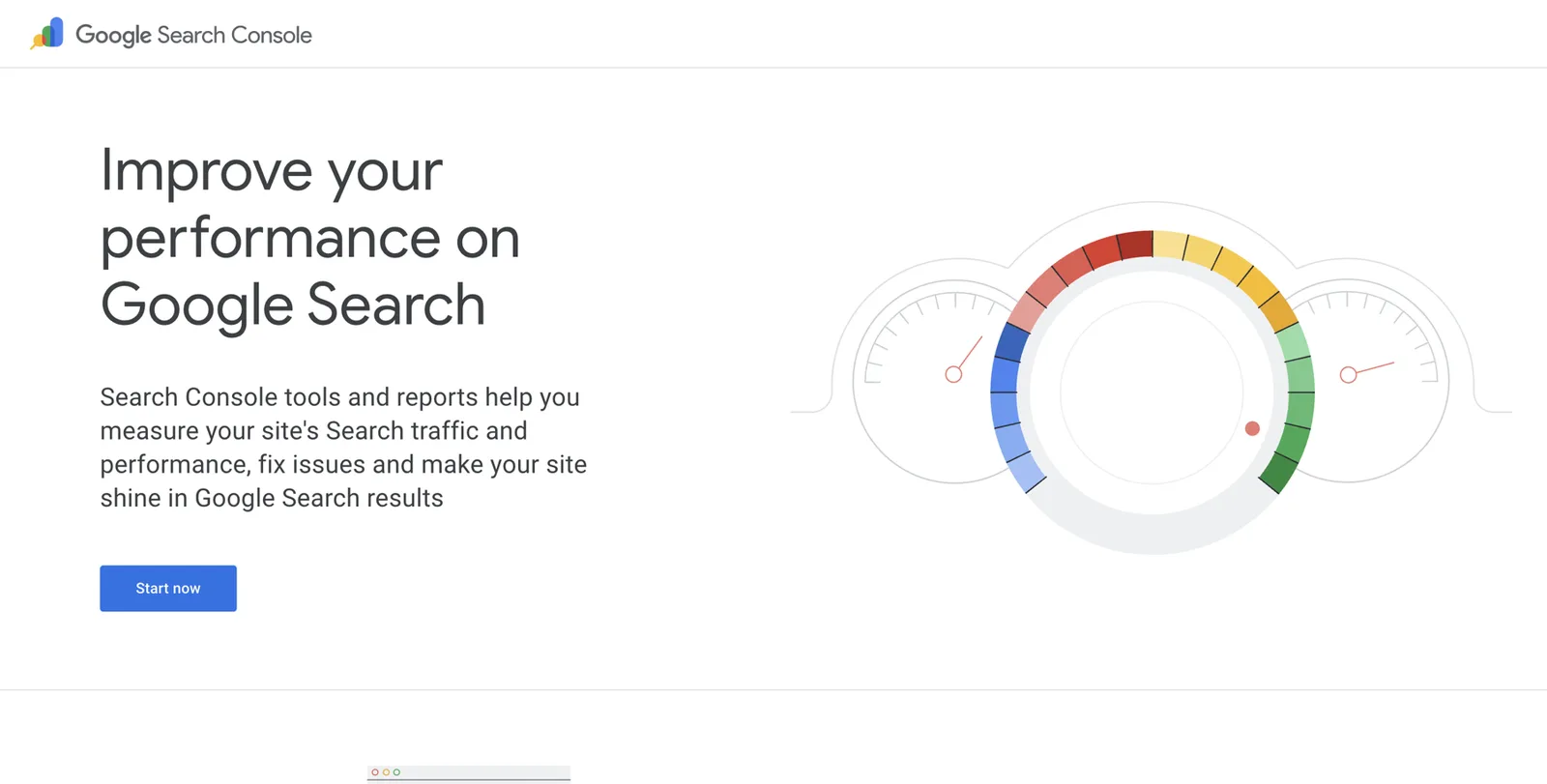
Google Search Console is a free Google tool that lets website owners see how Google reads their site and ask it to visit new pages.29 It’s also one of the ways to claim a Knowledge Panel later. Set it up when your page goes live:
Go to search.google.com/search-console
Sign in with the Google account you will use for the long term. Use the same account later when you claim your panel.
Add your website
Choose “Domain” if you can edit your domain’s settings, or “URL prefix” if your website builder offers a simpler verification method. Your website builder’s help pages explain the exact clicks.
Verify that you own it
Follow the on-screen instructions. Most builders verify with one copy-and-paste step.
Inspect your About page
Paste the full address of your About page into the search bar at the top, press Enter, then click “Request indexing”. This asks Google to read the page.
Repeat after big changes
Whenever you update the page significantly, request indexing again.
If your firm bio page has to be your Entity Home
Plenty of advisors at broker-dealers and larger RIAs can’t have a personal site. You can still make your firm bio page work much harder:
- Ask for your own URL (
firm.com/advisors/marisa-delgado, notfirm.com/team?page=3). - Ask for the full standard bio, not a two-line summary.
- Ask for your designations, education and memberships as a list.
- Ask for links to your LinkedIn, CFP Board profile and media coverage.
- Ask whether the firm’s web team can add Person structured data to your page.
- Make sure the page links to BrokerCheck, as your firm’s rules require.
And keep a copy of your full bio and fact sheet, so you can rebuild quickly if you ever move.
Worksheet A7: Entity Home pre-launch checklist
- Compliance has approved the page in writingKeep the approval with your records.
- The page title and H1 contain your name
- The first sentence is your approved identity sentence
- Your main headshot is near the top, with descriptive alt text
- Sections follow the bio-ladder order
- Designations are written exactly as their issuers require
- No designation appears in the domain name
- Links to BrokerCheck and IAPD are present where required
- A “Find me elsewhere” list links to every verified profile
- Required disclosures and the CFP Board tagline (if applicable) are in place
- Structured data is added and validated (Chapter 12)
- The page is verified in Search Console and indexing requested
- A “last updated” date is visible
12. Structured data in plain English
What it is
Structured data (also called schema markup) is a hidden label on your Entity Home. Visitors don’t see it. Search engines read it. It says, in a standard format, “This page is about this person, here are the facts, and here are the other pages that confirm them.” The vocabulary comes from Schema.org, a shared dictionary that Google, Microsoft and others use. The type for a person is called Person.27
Think of it as filling in a form for a machine, instead of hoping it reads your paragraphs correctly.
Where it goes
Put it on your Entity Home only. Putting a “this page is about Marisa” label on your blog posts and contact page confuses the message.
The labels an advisor needs
Each label is called a property. Here they are in plain English:
@id: a permanent identifier for you, usually your page address plus#person.name: your chosen name form.alternateName: every variant: legal name, maiden name, with and without middle initial.url: your Entity Home address.image: your main headshot.description: your identity summary.jobTitle: your primary label, for example “Financial planner”.worksFororfounder: your firm, described as an Organization with its own name and website.address: your city and state (not your home address).alumniOf: your university.hasCredential: your designations, each with the issuing body.27memberOf: associations such as the Financial Planning Association or NAPFA.knowsAbout: your topics, such as retirement income planning.sameAs: links to profiles that are at least 80% about you (LinkedIn, BrokerCheck, IAPD, CFP Board profile, association listings).subjectOf: articles, interviews and podcast episodes about you.- Your Knowledge Graph ID, once you have one. Many practitioners add a link to
https://www.google.com/search?kgmid=/g/...insameAs.
The template (fictional example)
Here is a complete example for our fictional planner, Marisa Delgado. Copy it, replace every value with your own approved facts, and delete any line that doesn’t apply. The .example addresses are placeholders that don’t exist; use your real addresses. Most website builders need the code wrapped in a script tag: put <script type="application/ld+json"> on the line before it and </script> on the line after.
{
  "@context": "https://schema.org",
  "@type": "ProfilePage",
  "@id": "https://www.marisadelgado.example/about#page",
  "url": "https://www.marisadelgado.example/about",
  "name": "About Marisa Delgado, CFP®",
  "dateModified": "2026-11-03",
  "mainEntity": {
    "@type": "Person",
    "@id": "https://www.marisadelgado.example/about#person",
    "name": "Marisa Delgado",
    "alternateName": ["Marisa E. Delgado", "Marisa Elena Delgado"],
    "url": "https://www.marisadelgado.example/about",
    "image": "https://www.marisadelgado.example/images/marisa-delgado-financial-planner.jpg",
    "description": "Marisa Delgado, CFP®, is a fee-only financial planner and the founder of Delgado Harbor Planning, a registered investment adviser in Sacramento, California. She works with physicians and their families on retirement, tax and education planning.",
    "jobTitle": "Financial planner",
    "founder": {
      "@type": "Organization",
      "@id": "https://www.delgadoharbor.example/#organization",
      "name": "Delgado Harbor Planning",
      "url": "https://www.delgadoharbor.example/"
    },
    "worksFor": { "@id": "https://www.delgadoharbor.example/#organization" },
    "address": {
      "@type": "PostalAddress",
      "addressLocality": "Sacramento",
      "addressRegion": "CA",
      "addressCountry": "US"
    },
    "alumniOf": {
      "@type": "CollegeOrUniversity",
      "name": "University of California, Davis"
    },
    "hasCredential": [
      {
        "@type": "EducationalOccupationalCredential",
        "name": "CFP® certification",
        "credentialCategory": "Professional certification",
        "recognizedBy": {
          "@type": "Organization",
          "name": "Certified Financial Planner Board of Standards, Inc.",
          "url": "https://www.cfp.net/"
        }
      }
    ],
    "memberOf": [
      { "@type": "Organization", "name": "Financial Planning Association" },
      { "@type": "Organization", "name": "National Association of Personal Financial Advisors" }
    ],
    "knowsAbout": ["Retirement planning", "Financial planning for physicians", "Tax planning"],
    "sameAs": [
      "https://www.linkedin.com/in/marisadelgado-example/",
      "https://brokercheck.finra.org/individual/summary/0000000",
      "https://adviserinfo.sec.gov/individual/summary/0000000",
      "https://www.letsmakeaplan.org/example-profile"
    ],
    "subjectOf": [
      {
        "@type": "NewsArticle",
        "headline": "Planning for a doctor’s retirement: five questions for a Sacramento planner",
        "url": "https://www.businessjournal.example/2026/05/planning-for-a-doctors-retirement"
      },
      {
        "@type": "PodcastEpisode",
        "name": "Episode 112: Marisa Delgado on student loans and retirement for physicians",
        "url": "https://www.podcast.example/episodes/112"
      }
    ]
  }
}
What each part does, in plain English:
ProfilePageandmainEntitysay “this page is a profile, and its main subject is the person below”.@idgives Marisa a permanent identifier that other pages on her site can point to.founderandworksForconnect her to her firm, which has its own identifier, so machines understand she and the firm are two connected things, not one.hasCredentialnames the designation and who issues it. Note how the designation is written as “CFP® certification”, an adjective with an approved noun.sameAslists profiles that are all about her. The BrokerCheck and IAPD addresses use made-up numbers here; copy your real ones from your own records.subjectOflists independent coverage about her.
Rules that keep it honest
- Mirror what’s on the page. Every fact in the label should also be visible on the page. Structured data restates; it doesn’t add secret claims.
- Include only accurate, current sources. If in doubt, leave it out.
- Don’t overload it at the start. Begin with name, image, job title, firm, location, credentials and a few
sameAslinks. Add more as you earn it. - Merge with your website plugin. If you use WordPress with Yoast or Rank Math, they already output some structured data. Reuse their
@idfor the person so you don’t end up describing two different people. - Revalidate after every change.
- Get compliance approval first. Structured data is part of the page. Show it to compliance as text, alongside the visible page.
How to add it
- WordPress: add a “Custom HTML” block at the bottom of your About page and paste the code, or use your SEO plugin’s schema settings.
- Squarespace: open the page’s settings, go to Advanced, and paste the code into Page Header Code Injection (available on most paid plans).
- Wix: go to the page’s SEO settings and use the Structured Data Markup option to paste the code.
- Webflow: open the page settings and paste the code into Custom Code, before the closing body tag.
- Firm-managed site: send the code to your firm’s web team with your approved bio.
How to check it
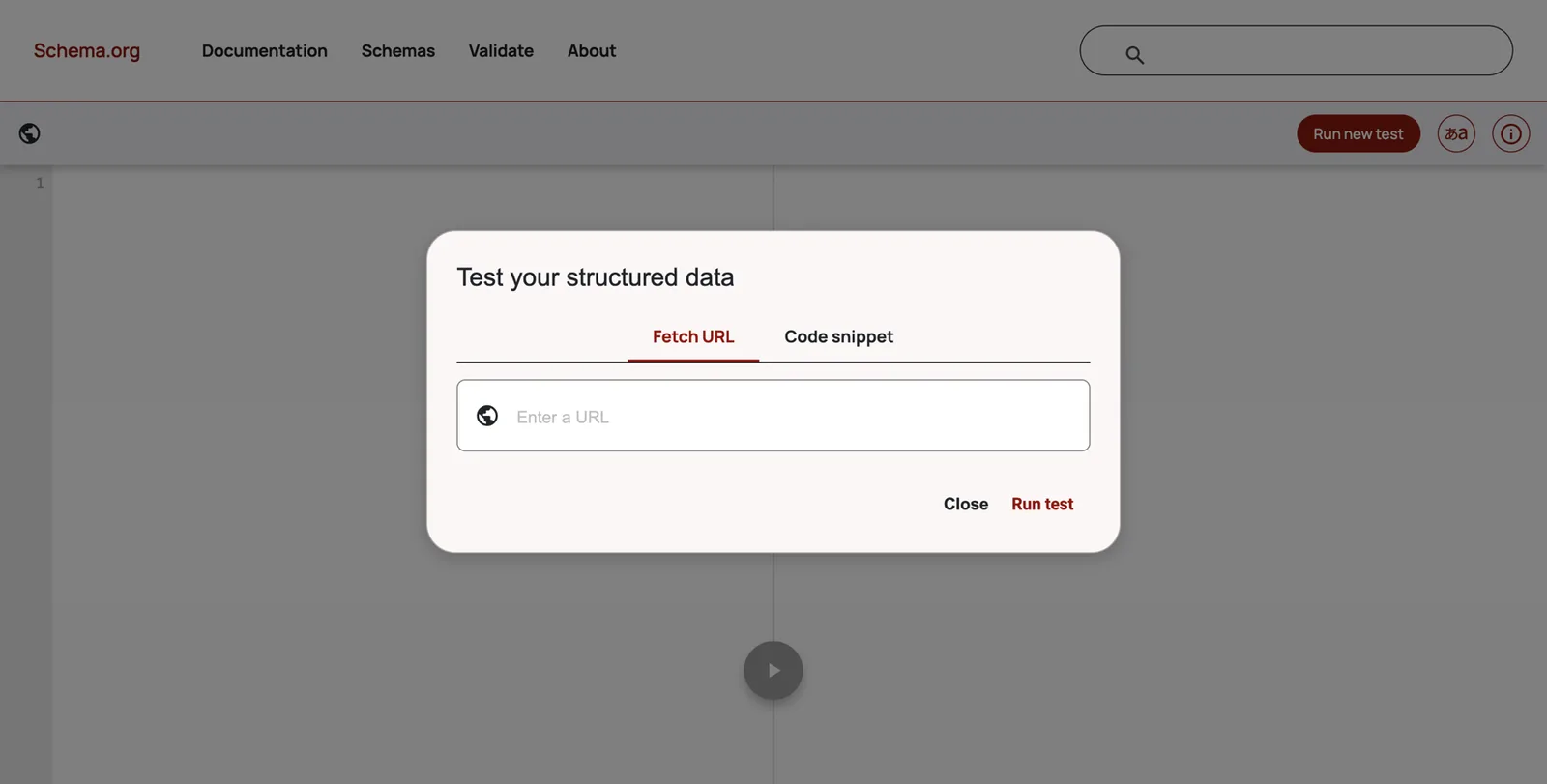
Use the free Schema Markup Validator at validator.schema.org.28
Open validator.schema.org
You will see a box asking for a URL or a code snippet.
Paste your About page’s address
Click “Run test”. If your page isn’t live yet, choose the code snippet tab and paste the code instead.
Read the results
On the right you should see your ProfilePage and Person listed, with zero errors. Click Person to see every property it found.
Fix and retest
If there are errors, the tool highlights the line. The most common problem is a missing comma or quotation mark.
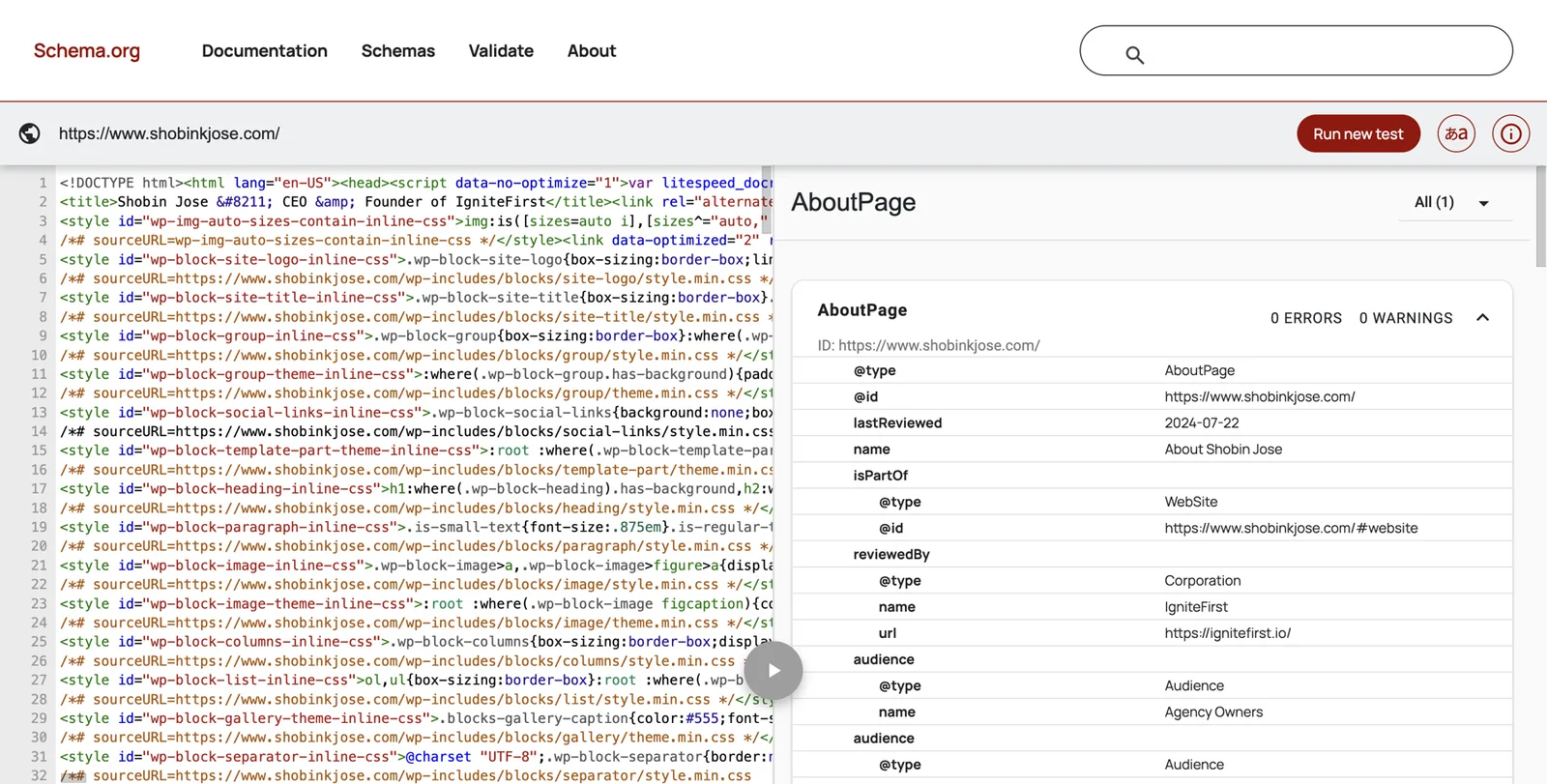
Google’s Rich Results Test checks whether a page qualifies for special search features such as review stars. It’s useful for spotting syntax errors, but it doesn’t judge Person markup. Google’s older Structured Data Testing Tool has been retired, so ignore guides that tell you to use it.
Helpful, with limits
Panels can appear without structured data, and structured data alone won’t create one. It makes your Entity Home easier to read and reduces the chance of confusion. Do it once, do it carefully, and keep it current.
13. Clean up everything you already own
Before adding anything new, fix what exists. For most advisors this is the biggest and fastest improvement, because the problem is rarely too few sources. It’s too many sources telling different stories.
Order of work
- Your Entity Home (Chapters 11 and 12).
- The profiles that already rank on page one for your name.
- Other profiles you control.
- Pages you can ask someone else to update.
LinkedIn, in detail
LinkedIn is usually your strongest profile. Get compliance approval first: many firms treat a LinkedIn profile as static content that must be pre-approved, and FINRA has long said static content such as a profile needs principal approval in the same way as other retail communications.8
Name
Click your photo at the top, then View profile, then the pencil icon next to your name. Use your chosen name form. You may add “CFP®” after your last name if your firm allows it. Never put a designation in your custom profile address.
Headline
In the same edit box, paste your approved headline rung.
Current position
Make sure your current experience entry shows your exact firm name, linked to the firm’s LinkedIn page, with your approved title.
Location and contact info
Set your city. Under Contact info, add your Entity Home as your website.
About
Paste your approved standard bio. Start with your identity sentence.
Featured
Add your Entity Home and one or two strong independent pieces, such as an article about you, if compliance approves.
Licences and certifications
List each designation with its issuing body and year, written as the issuer requires.
Photo
Use your main headshot.
Custom URL
Click Edit public profile and URL on the right. Set something like linkedin.com/in/marisadelgado. No designations.
Remember that liking or sharing other people’s content from a business profile can mean you have adopted it.7 Keep your engagement inside your firm’s social media policy.
Your firm bio
Send your firm’s marketing team your approved standard bio, headshot and fact sheet, with a short note asking them to update your page. Ask for your own URL and a link to your Entity Home if your firm allows it.
Regulator and credential records
- BrokerCheck and IAPD: you can’t edit these directly. They come from regulatory filings (Form U4 for registered individuals; Form ADV for advisory firms). If your name, employment history or firm details are wrong, talk to your firm’s registration or compliance team. Make sure everything else you publish matches these records, not the other way round.
- CFP Board: if you’re a CFP® professional, log in to your CFP Board account and review your public profile. CFP Board’s guidance says your profile can appear in the “Find a CFP® Professional” search on its consumer site, Let’s Make a Plan, if you agree to the terms, add a search address and indicate you’re accepting new clients.1718 The tool only lists professionals who choose to be included.
- Other credential bodies: check any member or credential directories for CFA, ChFC, CPWA and other designations you hold.
Directory listings you already have
Advisors often have listings they forgot about: association directories, old network memberships, advisor-search sites, review platforms. For each one:
- Log in and update it with your approved standard bio, or
- Ask the site to correct it, or
- If it’s a listing you no longer want (for example, a paid site you left), ask for it to be removed after you have updated it.
FINRA’s guidance is helpful here. It says that if a firm or representative contacts the publisher of a directory listing they didn’t request, solicit or pay for, to correct a factual error, the corrected listing does not become the firm’s communication.7 That covers factual corrections only, not adding marketing claims, and it’s FINRA’s view for member firms. Check your firm’s policy.
Old pages from previous firms
- Ask your previous firm to remove or redirect your old bio page. A polite email to their marketing team is usually enough.
- Update old speaker pages and podcast show notes by asking the organiser or host (template below).
- Don’t delete old social accounts that still rank. Update them first, then decide.
One headshot set
Google picks the image it sees most often and trusts most. So:
- Choose one primary headshot and use it everywhere.
- Make it at least 1200 × 1200 pixels, face clearly visible, plain background, no filters or illustrations.
- If you want variety, create one or two deliberate variants (a different crop or background) and use each in specific places.
- Name the file descriptively:
marisa-delgado-financial-planner-sacramento.jpg. - Add alt text everywhere the platform allows.
- Update every profile on the same day, so Google sees a consistent switch.
Worksheet A12: Headshot plan
Decide once, then roll out on one day.
| Photo | File name | Used on | Date published |
|---|---|---|---|
| Primary (fictional example) | marisa-delgado-financial-planner-sacramento.jpg | Entity Home, LinkedIn, firm bio, CFP Board, NAPFA | 3 Nov 2026 |
Asking third parties to update you
Use a short, friendly message. Ask for facts, never praise.
Subject: Small update to my bio on [site name]

Hi [first name],

Thanks again for having me on [show / event / article] in [month, year].
My details have changed since then. Could you update my bio to the
version below? It's the same text I use everywhere.

[approved short bio]

If you can link my name, please use: [Entity Home URL]

Many thanks,
[Name]
Check with compliance whether even a factual update request needs approval or recording under your firm’s policy.
14. Add the right corroborating sources
The principle: sources Google expects for someone like you
Google learns what “a financial advisor” looks like by seeing many of them. It expects to find advisors in certain places: regulator records, credential directories, professional associations, the media advisors appear in, and local business sources. A handful of strong, relevant sources beats a hundred thin listings.
A good trick: search the names of three to five advisors in your area who do have Knowledge Panels. Look at which sources appear on their page one and in their panel. Do the same on Bing, which often shows the sources behind its panels. Those are the sources Google trusts for “people like you”.
A rough sense of scale
Kalicube observes that people without Wikipedia or Wikidata entries tend to need roughly 20 to 30 consistent, relevant sources before a panel becomes stable. That’s one firm’s observation, not a Google rule. Use it only as a guide to scale.
The advisor source menu, by tier
Every source below exists as of October 2026. Check eligibility and terms before you join anything, and get compliance approval first for any listing that includes a bio, photo or marketing text.
| Source | What it is | What you do |
|---|---|---|
| FINRA BrokerCheck | Public record of registered brokers and investment adviser representatives, with registrations, exams, employment history and disclosures4 | Make sure your name and firm elsewhere match it; link to it from your Entity Home |
| SEC Investment Adviser Public Disclosure (IAPD) | Public search of advisers and firms, with Form ADV and individual records5 | Same as above; link your firm’s ADV where compliance requires |
| CFP Board: Verify a CFP® Professional | CFP Board’s public verification tool | Confirm your record; link to it as proof of certification |
| Let’s Make a Plan (CFP Board) | CFP Board’s consumer site with a “Find a CFP® Professional” search18 | Opt in to your public profile if eligible |
| Other credential bodies | CFA Institute, The American College and others | Check member or credential directories and their usage rules |
| Source | Who it’s for | Notes |
|---|---|---|
| NAPFA Find an Advisor | Fee-only advisors who are NAPFA members | Directory filters by client markets, fee structure and technical focus; NAPFA notes that a listing isn’t an endorsement20 |
| XY Planning Network Find an Advisor | Independent fee-only planners who are XYPN members | A consumer search of member advisors21 |
| FPA PlannerSearch | Run by the Financial Planning Association | A consumer directory of planners; check eligibility with FPA22 |
| Fee-Only Network | Fee-only advisors | A paid directory; check terms and how it describes fee-only |
| Garrett Planning Network, Alliance of Comprehensive Planners | Members of each network | Check whether member profiles are public |
| Local FPA chapter, CFA society, estate planning council | Members | Chapter pages, event listings and board roles are good local sources |
| Your custodian or broker-dealer’s advisor locator | Advisors using that platform | Often editable through the firm; keep it consistent |
| Source | What it is | Compliance angle |
|---|---|---|
| Wealthtender | An advisor directory with client reviews; advisors pay a monthly fee, and the site asks advisors to disclose their relationship with each reviewer23 | Reviews are testimonials; check your firm’s Marketing Rule policy before turning them on |
| SmartAsset’s advisor matching services | Paid matching between advisors and investors; SmartAsset says it receives compensation from advisers24 | Paid lead generation can create endorsement or solicitation arrangements; SEC examiners have looked closely at lead-generation firms11 |
| Google Business Profile for your office | A listing for your firm’s location | About the business, not you; reviews raise the same testimonial questions |
| Type | Examples | How you appear |
|---|---|---|
| Industry press | InvestmentNews, Financial Planning, WealthManagement.com, ThinkAdvisor, Financial Advisor magazine, Journal of Financial Planning | Quoted as a source, contributed articles, practice profiles |
| Consumer and business press | Your local business journal and newspaper, regional magazines, national personal-finance outlets | Expert quotes, interviews, columns |
| Podcasts | Consumer money shows, physician or business-owner shows in your niche, industry shows for advisors | Guest episodes with show-notes pages |
| Events | FPA chapter events, estate planning council meetings, CPA society events, chambers of commerce, community workshops, conferences | Speaker pages, agendas, recordings |
| Books | Amazon Author Central, Goodreads, your publisher’s author page, Google Books | Author profiles under your chosen name |
| Community | Nonprofit boards, university alumni features, professional school talks | Board pages, announcements |
What not to add
- Platforms irrelevant to advisors (film databases, startup launch sites, app stores).
- Pages about many people where you are one line among dozens.
- Outdated pages you can’t fix.
- Pseudo-wikis such as EverybodyWiki or Wikitia (Chapter 16).
- Mass directory submissions and “100 free backlinks” packages.
- Paid “Top Advisor” lists, unless compliance approves them and you can make every disclosure the Marketing Rule requires for third-party ratings.
Map your peer group
Draw two columns:
- Where my craft is validated: regulator records, CFP Board, associations, industry press, peer conferences.
- Where my clients read: your niche’s publications (medical association newsletters for physician clients, trade journals for business owners), your local business press, community events.
The best sources sit in both columns. An article in a physicians’ magazine about retirement planning, quoting you as a CFP® professional, does both jobs at once.
Worksheet A10: Corroboration tracker
One row per source. Aim for quality, consistency and links back, not volume.
| Source URL | Party (own, profile, independent, official) | % about me | Facts consistent? (Y/N) | Links to my Entity Home? (Y/N) | Compliance approved | Last checked |
|---|---|---|---|---|---|---|
| napfa.org listing (fictional example) | Profile | 100% | Y | Y | 3 Nov 2026 | Nov 2026 |
15. Close the loop
The loop
The loop is simple:
- Your Entity Home links out to every source that confirms you.
- Every source links back to your Entity Home, wherever the platform allows a link (a website field, a bio link, show notes).
When Google follows those links in both directions and finds the same facts at each end, its confidence grows.
Anchor text
Anchor text is the clickable text of a link. Keep it natural:
- your name: “Marisa Delgado”
- the platform: “Marisa Delgado on LinkedIn”, “Marisa’s CFP Board profile”
- the content: “Marisa’s interview on [show name]”
Avoid stuffing keywords into links (“best Sacramento financial advisor”). It looks like spam to Google and like a superlative to compliance.
Link hygiene
- Never link from your Entity Home to a source you haven’t corrected yet. You would be pointing Google at the wrong facts.
- Link to the final address. If a link redirects somewhere else, use the address it ends up on.
- Check links every quarter. Pages move, podcasts change hosts, firms restructure their sites.
- Remember the compliance angle. FINRA says sharing or linking to specific third-party content can mean adopting it, and you must not link to a site you know or have reason to know is false or misleading.731 Link only to accurate pages, and include your links list in what compliance approves.
When a platform won’t allow a link
Some directories don’t allow outbound links. Mention your domain in the text if that’s allowed, and make sure the facts still match exactly. The consistency still counts.
16. Wikipedia, Wikidata and the shortcuts that backfire
Wikipedia
Wikipedia is not required for a Knowledge Panel, and it’s rarely realistic for advisors. Its notability guideline for people asks for significant coverage in multiple reliable, independent, secondary sources.26 Being an excellent advisor isn’t enough on its own. Wikipedia also has strict conflict-of-interest rules: you shouldn’t write about yourself, and you shouldn’t pay someone to. A deleted article can make Google’s view of you less stable for a long time. Don’t pay anyone to write one.
Wikidata
Wikidata is a free, structured database run by the same foundation as Wikipedia. It can help Google connect facts, but only for people who meet its notability policy, which requires that an item can be described using serious, publicly available references, or that it fills a structural need.25 An entry must be neutral and fully sourced. Paid creation of entries breaches the community’s norms, entries get deleted, and a deleted entry is worse than none. If you are clearly notable (for example, you have published books and been covered in independent media), it may be worth adding an entry carefully and honestly. If not, skip it.
The shortcuts that set advisors back
- Pseudo-wikis (EverybodyWiki, Wikitia and similar). They look like Wikipedia but have no real editorial standards. Google treats them as low-trust, and panels built on them tend to disappear when reviewed.
- Mass profile creation. Packages promising “100 profiles” or “200 backlinks”. They go stale, contradict each other and look like spam. For an advisor they also create dozens of unsupervised pages that may count as communications your firm should have approved.
- Mass press releases. A wire release is paid distribution, not independent coverage. One honest release about a real event can help confirm facts. Dozens, sent only to trigger a panel, look like spam.
- Paid awards and “Top Advisor” lists. They carry little weight with Google, and using them in marketing triggers the Marketing Rule’s third-party rating conditions, including disclosure of the date, period, provider and any fees.9 In September 2024 the SEC settled charges against nine advisers for Marketing Rule violations, including ratings advertised without required dates and periods.12
- Fake reviews, AI-generated interviews and “guaranteed panel in two weeks” offers. These are the fastest way to lose a panel, and for an advisor they can become a regulatory problem as well as a search problem.
Builds lasting trust
- One accurate Entity Home
- Consistent, approved bios
- Regulator records that match everything else
- Association and credential listings
- Real interviews, quotes and speaking slots
- Patience and monthly maintenance
Backfires
- Bought Wikipedia or Wikidata pages
- Pseudo-wikis
- Hundreds of unsupervised profiles
- Press-release blasts
- Paid awards used without disclosures
- Incentivised or fake reviews
17. Earn independent proof as an advisor
Most of your authority comes from independent sources. These are the ways advisors earn them inside the rules.
Be a source for journalists
Reporters covering retirement, taxes, Social Security, college savings and markets need quotable experts every day. Being quoted gives you independent coverage that names you, your firm and your speciality.
- Tell your firm first. Most firms require pre-approval of media contact, and some have a media relations team that handles it.
- Use expert-source platforms, where journalists post requests for sources. Examples include Qwoted and Featured. Check each platform’s current terms and fees, and your firm’s policy, before you sign up.
- Pitch your local business journal and newspaper with a specific, timely angle (“What doctors in our region should know about the new retirement plan rules”).
- Answer clearly and neutrally. Explain, don’t sell. Editors cut sales talk, and compliance will too.
- Keep records. Note what you said and where it ran.
Podcasts
Podcasts are one of the best sources for advisors, because each episode page is mostly about you, and the audience hears your expertise in your own voice.

Your podcast guest kit (Worksheet A11):
- one approved short bio
- one approved spoken introduction
- one headshot
- one link: your Entity Home
- three to five topics you can talk about, phrased as questions listeners ask
Change the angle between shows, never the facts. Pitch shows your clients listen to (physician finance shows, business-owner shows) as well as advisor industry shows. Ask whether your firm needs to review the episode before or after it airs, and whether you need to keep a recording.
Seminars, workshops and speaking
Advisors have always earned trust in a room. Now each talk can also leave a permanent trace online.

- Ask every organiser for a speaker page with your approved short bio, photo and a link to your Entity Home.
- Look for slots at FPA chapters, estate planning councils, CPA society events, medical or dental societies, chambers of commerce, libraries and universities.
- Webinars hosted by others (a CPA firm, an employer’s HR team) often publish a page and a recording.
- Seminar materials are usually retail communications. Get compliance approval first for slides, invitations and handouts.
Writing a book
A book is a powerful source because it creates its own entries in Google’s book records and on Amazon, Goodreads and your publisher’s site.

- Publish under exactly the name you chose in Chapter 8.
- Set up Amazon Author Central and a Goodreads author profile, using your approved standard bio.
- Give the book its own page on your site, linked from your Entity Home.
- Tell your firm early. A book is likely to need compliance review, and your firm may treat it as an outside business activity under its policies and FINRA’s rules for registered persons.

Client stories, done the compliant way
Client stories and case studies are common marketing in many professions. For advisors they are testimonials, with all the rules that brings. If your firm allows them, they go through compliance with the required disclosures. If not, use anonymised planning scenarios that describe a type of situation, not a client’s results, and still get compliance approval first.
Co-authored and community work
- Co-write an article with a CPA or estate attorney you work with, published on their site or in their association’s newsletter.
- Join a nonprofit board or finance committee; board pages list you.
- Teach a session at a local university or community college.
Your media page
Give your Entity Home (or a page linked from it) a Media section:
- Each strong piece gets a line: date, outlet, headline, link, one-sentence summary.
- Lighter mentions go in a simple list.
- Don’t reproduce full articles, and don’t add “as seen in” logos without compliance approval.
Fixing old articles
If an old article lists the wrong firm or title, write to the editor politely and ask for a factual correction. Ask for facts only, never added praise.
Part 5: Get found, claim, grow and protect
18. Get found, then track progress
Make sure Google has read your pages
Publishing a page doesn’t mean Google has read it. To check:
Search for the page itself
Type site: followed by your page address, for example site:yourname.com/about, into Google. If the page appears, Google has it in its index (its library of pages).
Use Search Console
Paste the page address into the inspection bar at the top of Search Console. It tells you whether the page is indexed and when Google last read it.
Request indexing after changes
If you updated the page, click Request indexing.
Check your main profiles
Run site: searches for your LinkedIn, firm bio and directory listings, for example site:napfa.org "Marisa Delgado". Not every profile gets indexed, and that’s normal.
Avoid paid “indexing services” that promise to force pages into Google. They don’t add trust and some use spammy methods.
The progress ladder
A panel rarely appears all at once. Track these signs month by month. The ladder is adapted from levels Kalicube uses with its clients; it’s a practical guide, not a Google scale.
| Level | What you see | Month first seen |
|---|---|---|
| 1 | Google has a Knowledge Graph ID for you (the checker finds you) | |
| 2 | Your name appears in Google’s autocomplete as you type it | |
| 3 | Your Entity Home ranks first for your name | |
| 4 | A “See results about” box mentions you | |
| 5 | A panel appears for some searches (with your city, or your firm) | |
| 6 | The panel shows your photo | |
| 7 | The panel shows your chosen subtitle | |
| 8 | The panel links to your Entity Home | |
| 9 | The panel shows profiles and a description | |
| 10 | The panel shows for your plain name, from your area | |
| 11 | Extra facts appear (education, firm, books) | |
| 12 | AI tools describe you accurately when asked by name | |
| 13 | AI tools mention you for topic questions in your niche |
A simple rhythm
- Weekly for the first three months: run your name search in a private window and note what changed.
- Monthly after that: the full name search, the AI baseline and the progress ladder.
- Don’t panic at daily swings. Google tests and refreshes its results constantly. Look at trends over weeks.
19. Your panel appears: the first 30 days
Step one: record it
When your panel first appears:
- Take a screenshot on your computer and on your phone.
- Copy the share link and save the Knowledge Graph ID (the part after
kgmid=). - Note the date, the search you used and the city you searched from.
- Save all of this in your fact sheet.
Step two: claim it
Claiming a panel means proving to Google that you are the person it describes. Once you’re verified, your suggested changes get priority review, and nobody else can claim your panel.
Here is Google’s current process, from its own help page:2
Sign in to the right Google account
Use the account you will keep long term, ideally the one that manages your Search Console property or your YouTube channel. Ask compliance whether a firm-controlled account is required.
Search for your name on Google
Make sure your panel is showing.
Find “Claim this knowledge panel”
It’s at the bottom of the panel, sometimes inside the About section. On a phone, open the panel’s menu and choose the same option.
Review the information
Google shows what the panel contains.
Sign in to one of the listed official sites or profiles
Google lists options such as YouTube, Search Console, X (shown on Google’s page as Twitter) or Facebook. Choose one that Google already associates with you, such as the Search Console property for your Entity Home.
If none of the options apply
Google asks you to provide more information so it can verify you. Follow the instructions on screen.
Wait for confirmation
Google emails you when you’re verified.
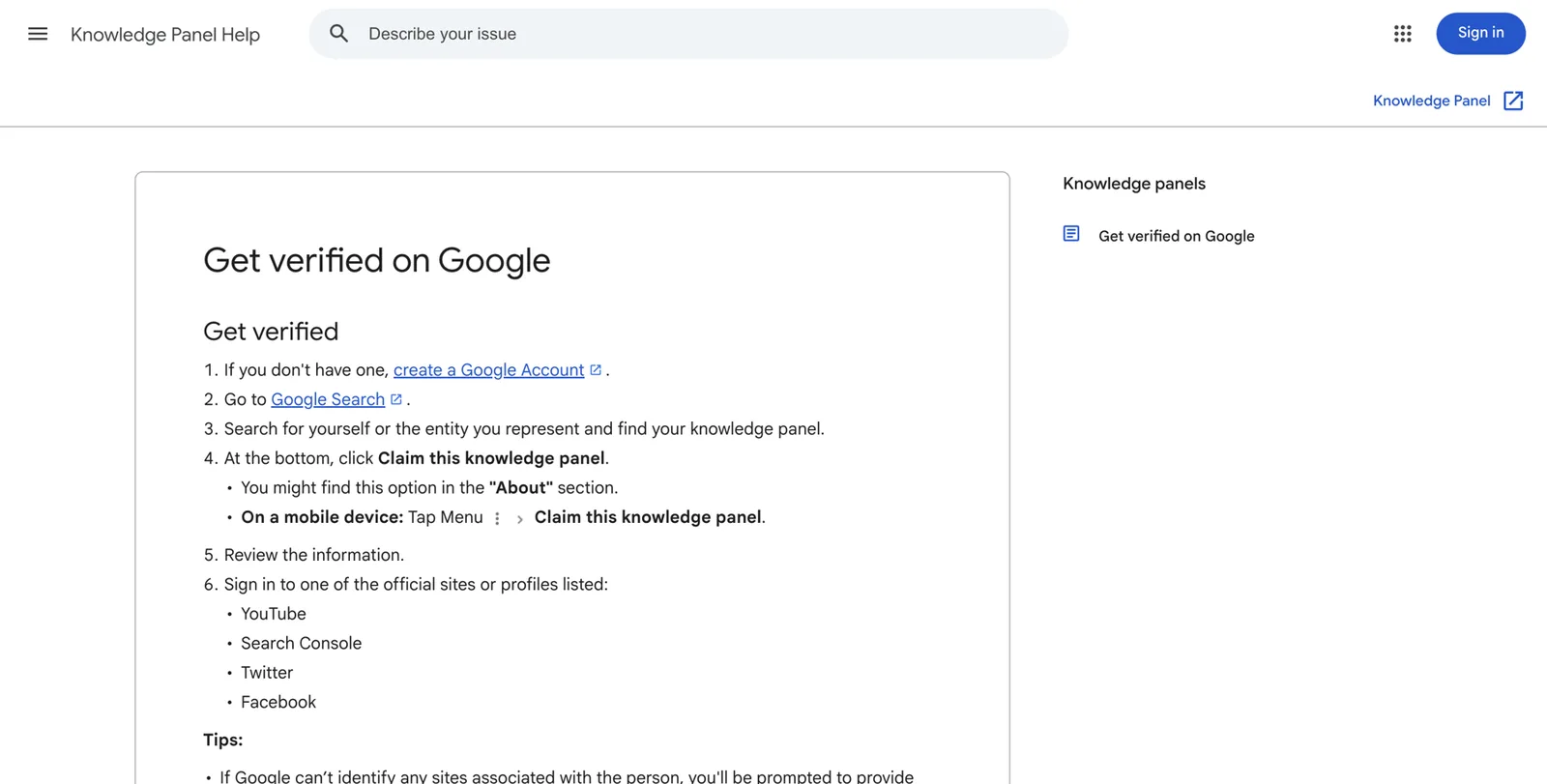
Not every panel can be claimed straight away. If the button doesn’t appear, Google says to check back periodically.2
When to wait before claiming
Experienced practitioners suggest holding off if:
- the panel is very thin (just a name and a photo), or
- it was built on low-trust sources such as a pseudo-wiki.
A human review during a claim can remove a weak panel. Strengthen your sources for a few weeks first.
What claiming gives you, and what it doesn’t
- You get: priority review of suggested changes, and protection against someone else claiming your panel.
- You don’t get: the ability to edit the panel directly. Google still decides what it shows.
Suggesting changes
Once verified, sign in with the same email you used to verify, then use Feedback below the panel, click the flag next to the fact you want to change, describe the change and include links to pages that confirm it.2
A good request:
- The change: “Please update my firm: I now run Delgado Harbor Planning, not Pinnacle Securities.”
- One line of context: “I founded Delgado Harbor Planning in 2016 after leaving Pinnacle Securities.”
- At least two supporting links, one of them independent: your Entity Home and your IAPD record, for example.
Worksheet A13: Suggest-a-change template
Fill one row per change. Don’t resubmit the same request repeatedly.
| Fact to change | What it says now | What it should say | Context (one line) | Link 1 (yours) | Link 2 (independent) | Date sent |
|---|---|---|---|---|---|---|
| Firm (fictional example) | Pinnacle Securities | Delgado Harbor Planning | Founded my firm in 2016 | Entity Home | IAPD record | |
Don’t resubmit the same request again and again. It can push you to the back of the queue. And fix the sources too: Google’s systems can undo a human edit if the web still says something different.
What usually can’t be changed by request
- your name as Google shows it
- the subtitle (it can sometimes be removed, but you can’t choose a new one)
- “People also search for”
You change these by changing your sources, consistently, and waiting.
Grow the panel
Once it’s live, you can enrich it over time: books, the firm you founded, education, more profiles, videos. Each addition follows the same method: put it on your Entity Home, confirm it elsewhere, link them.
Don’t slow down
New panels are fragile. Kalicube’s observations suggest Google removes a meaningful share of Knowledge Graph entries every year (Kalicube’s own figure is about 15%). Treat that as their estimate, but take the point: keep maintaining your sources after the panel appears.
20. Troubleshooting
The panel exists but doesn’t show for my name
Usually confidence, a namesake or location. Try searching your name with your city or firm. If the panel shows for those, Google knows you but isn’t sure you are the one people mean by your plain name. Keep building independent sources, especially local ones.
It shows in my city but not elsewhere
That’s normal. Google considers where the searcher is. A panel that shows across your metro area is doing its job for a local practice.
Wrong or old subtitle
Your subtitle comes from how you’re most consistently described. If it says “Insurance agent” or an old corporate title, change the first sentence of your Entity Home, LinkedIn headline, firm bio and directory listings to your chosen label, all in the same week. Then wait for a refresh cycle. Google appears to choose subtitles from a list of recognised roles, so use a standard label.
Wrong photo
Make your chosen headshot dominant: on your Entity Home near the top, in your structured data, on LinkedIn, your firm bio and every directory. Then suggest the change. Old photos that Google found first can be stubborn.
Old description
Find where the description comes from (the panel usually shows a source link under it). Fix that page, or make your Entity Home’s first paragraph clearer so Google prefers it.
A namesake dominates
Start local: win your city first through local press, local events and local directories. Use a distinguishing name form (middle initial). Strengthen your connection to your firm and city in every source. Over time, confidence can outweigh popularity for searches from your area.
Two or more IDs for you
Google thinks you are two people, often because of a name variant or a firm change. List every ID in your structured data (as sameAs links to the kgmid search address), keep all facts consistent, and expect Google to merge them over time.
My previous firm still appears
Ask the previous firm to remove or redirect your old page, update every directory listing, and make sure your Entity Home states your current firm and your history clearly (“Before founding Delgado Harbor Planning, Marisa was a financial advisor with Pinnacle Securities from 2009 to 2016.”). Clear history reduces confusion. Get compliance approval first for how you describe previous firms.
The panel disappeared
Possible causes:
- a Google update that re-evaluated many entries
- a lost source (a deleted firm page, a closed account, a removed Wikidata entry)
- a manual review that judged the panel weak
What to do: check that your Entity Home is live and unchanged, that your main sources still exist and still link to you, and that nothing new contradicts you. Then keep building. Rebuilding usually takes longer than building the first time, which is one more reason to maintain your sources.
Someone else’s details appear in my panel
Find the source that mixes you up (often a directory or an article that lists two people with similar names), and ask for it to be corrected. Then suggest the edit.
The panel shows the wrong person entirely
This needs specialist help. It’s beyond what this playbook can safely cover.
21. Show up in AI answers
From mention to recommendation
There are three stages, each depending on the one before:
- Described: an AI tool describes you correctly when asked by name.
- Mentioned: it includes you when people ask about your topic and area.
- Recommended: it suggests you as a good fit for a specific person.
Nobody can guarantee the third stage. You can make the first very likely and the second more likely.
Fix “described” first
Re-run your AI baseline monthly (Worksheet A2). When an answer is wrong, look at the sources it cites. Fix those sources, or add a clearer source.
Make your expertise easy to quote
- Put a short summary at the top of your main pages (your Entity Home, your services page).
- Publish clear service pages that say who you serve and how, in plain words.
- Add an FAQ page answering the questions prospects really ask (“What does a fee-only planner do?”, “How do you work with physicians nearing retirement?”). Get compliance approval first.
- Show “last updated” dates.
- Write educational articles on your niche topics. They are communications, so they go through compliance, but they give AI tools something accurate to cite.
Earn mentions in lists, honestly
AI tools often cite lists and directories when asked for recommendations: association directories, local business journal features, “planners who specialise in…” articles with real editorial standards. Earn your way into those through the sources in Chapter 14. Avoid paid lists, for the reasons in Chapter 16.
One message across every interview
If you describe yourself as a retirement specialist on one podcast, a tech-equity specialist on another and a business-owner specialist on a third, machines blend it into mush. Change the angle, keep the identity.
Don’t block the machines
Check that your website doesn’t accidentally block search engines and AI crawlers (ask your web person to check the site’s robots settings), that your main content isn’t hidden behind pop-ups, and that your About page loads without a login.
Track the topic questions
Each month, ask the AI tools your “best [speciality] advisor in [city]” question. Log who gets named and which sources are cited. Those cited sources are your target list.
Why AI says nothing or gets it wrong
- Not enough consistent sources: keep building.
- A namesake is louder: strengthen local and niche sources, use your distinguishing name form.
- Old training data: models learn from older snapshots; live-search tools update faster.
- A wrong source: fix it, then use the AI tool’s feedback option (usually a thumbs-down button) to flag the error.
22. Keep it working
When a fact changes
New firm, new designation, new title, new city, new book, new photo:
- Update your fact sheet and get the change approved.
- Update your Entity Home and structured data the same day.
- Update LinkedIn, your firm bio and every directory listing within the same week.
- Ask third parties to update where it matters.
- Request indexing in Search Console.
If you change firms, this is urgent. A prospect who sees two firms will ask why. Make the transition story clear on your Entity Home, and coordinate every change with both firms’ compliance teams as required.
Monthly (30 minutes)
- Run your name search in a private window.
- Run the AI baseline prompts.
- Add any new coverage to your media page.
- Refresh one profile.
Quarterly
- Check every link on your Entity Home still works.
- Re-run the Schema Markup Validator.
- Sweep for inconsistencies (new directories that copied old data).
- Confirm your archived copies and approvals are filed, as your firm’s recordkeeping requires. SEC-registered advisers must keep copies of advertisements and related records, generally for at least five years.13
Yearly
- Review your positioning: is your niche still right?
- Update your full bio and re-approve it.
- Review designations and memberships (renewals, lapsed memberships).
- Retake your headshot if it’s more than a few years old, and roll it out on one day.
Worksheet A16: Maintenance checklist
- Monthly: private-window name search on computer and phoneNote any change in the panel, first result or namesakes.
- Monthly: AI baseline prompts in four toolsRecord accurate, inaccurate or absent, and cited sources.
- Monthly: add new coverage to the media page (with approval)
- Monthly: refresh one profile
- Quarterly: link check on the Entity Home
- Quarterly: validate structured data
- Quarterly: inconsistency sweep across directories
- Quarterly: confirm approvals and archives are filed
- Yearly: review positioning and re-approve the full bio
- Yearly: check designations, memberships and headshot
Succession: make the next advisor findable too
If you plan to retire, sell or hand clients to a successor, the same method protects the practice. Clients and their families will search your successor’s name too, often at an emotional moment.

- Start your successor’s Entity Home, bio ladder and profiles years before the transition.
- Introduce them on your own Entity Home and in joint seminars, podcasts and articles, so the web connects the two of you.
- Keep your own Entity Home live after you retire, updated to say so and pointing to your successor (with compliance approval). A page that simply vanishes leaves clients searching for answers.
Part 6: Your plan and your next step
23. Your roadmap
Today, 10 minutes
The Quick Check
Five searches, three AI questions, a traffic-light score.
This week
Ask compliance the main questions
Personal website allowed? Who approves bios and profiles? Which disclosures? How are records archived? How long does approval take?
Weekend sprint
Diagnose and define
Name-search audit, AI baseline, footprint inventory, identity, fact sheet and bio ladder. Send the fact sheet and bio ladder to compliance as one package.
Days 1 to 30
Build the foundation
Once approved: Entity Home, structured data, Search Console, LinkedIn, firm bio, CFP Board profile, headshot rollout.
Days 31 to 60
Clean up and corroborate
Fix or remove old listings, claim association directory profiles, ask previous firms and hosts to update bios, close the loop.
Days 61 to 90
Earn independent proof
Pitch two podcasts, one local journalist and one speaking slot. Add each result to your media page. Start monthly tracking.
Months 4 to 12
Grow, claim and maintain
More independent sources, claim the panel when it appears, enrich it, run the AI routine, monthly and quarterly maintenance.
How much time it takes each week
- A light plan, about two hours a week: one task from the roadmap each week. Expect the foundation to take two to three months, plus compliance turnaround.
- A heavier plan, about five hours a week: the foundation in four to six weeks, then steady corroboration.
Either way, the slowest step is often approval. Batch your requests: one package for the fact sheet and bios, one for the Entity Home, one for profile changes.
24. Do it yourself, or have it done for you
An honest tally of the work
Doing all of this yourself involves:
- dozens of searches across Google, Bing and five AI tools, on two devices
- sorting 50 to 200 pages that mention you
- a fact sheet of 25 or more fields, each with evidence
- seven bio lengths, written to the rules of each designation you hold
- an Entity Home built to a blueprint, with structured data you validate
- 20 or more profiles and listings fixed or created by hand, each consistent with your regulator records
- requests to previous firms, hosts and editors
- several rounds of compliance approval
- Wikidata decisions, indexing checks, claiming and troubleshooting
- months of monthly tracking
- judgement calls about what not to do
None of the steps is technically hard. There are simply a lot of them, they need care, and most of the value comes from doing them consistently.
When DIY makes sense
- You enjoy this kind of detail and have a few hours a week.
- Your name is fairly distinctive, and your footprint is small and mostly accurate.
- Your compliance team turns requests around quickly.
When it probably doesn’t
- Your time is worth more with clients and prospects.
- You have a common name, a famous namesake or a long trail from previous firms.
- You have tried before and the panel didn’t appear or didn’t last.
Questions to ask any provider
- Will you build an Entity Home I own, or rely on social profiles?
- Will everything you publish be factual and given to me to approve, so I can run it through compliance first?
- Do you use pseudo-wikis, paid Wikipedia or Wikidata entries, mass profiles or press-release blasts? (The right answer is no.)
- Do I get the logins for every profile you create?
- How do you handle claiming once the panel appears?
- What exactly is guaranteed, and what isn’t?
Red flags: guaranteed panels in days, Wikipedia promises, “hundreds of profiles”, no Entity Home, no mention of compliance, and refusals to hand over logins.
25. How DotVisible helps
DotVisible does this work for experts whose name is their business, including financial advisors. DotVisible is independent and isn’t affiliated with or endorsed by Google.
Start with the free audit
Enter your name, LinkedIn URL and email. Within one business day you receive a report by email showing:
- your name search on Google, as a stranger sees it
- whether Google’s Knowledge Graph already recognises you
- where your profiles disagree with each other
- whether AI tools mention you
It’s free. There’s no call to book and no card to enter. You keep the report and can act on it yourself with this playbook. Get your free audit.
The Authority Magnet: done for you
If you’d rather hand it over, The Authority Magnet is DotVisible’s done-for-you service for a Google Knowledge Panel plus AI visibility. It includes:
- The footprint audit: everything the internet says about you, mapped and checked.
- Search Signature: your Entity Home and profile work, the foundation Google reads.
- The first 90 days of Referred by AI: features and mentions on the sources AI tools draw from.
It takes about 20 minutes of your time. Your part is to return your details and approve content within five business days each, and to make the two link updates we ask for. Because every word comes to you for approval, you can route it through your compliance team before anything goes live; it’s worth asking them in advance how long their review takes. See how it works for the steps.
Price. The launch price is $1,997 for the first 10 clients ($2,997 after launch). You start with a $500 refundable deposit. The $1,497 balance is due only when your Knowledge Panel is live and you can find it yourself. After the first 90 days, Referred by AI continues monthly at $497 if you want it.
Timing. Most clients with a reasonable existing presence see their panel within about 60 days. AI visibility usually shows meaningful change around day 60.
Guarantee. If your Knowledge Panel isn’t live within 150 days of the onboarding call, you choose: a full refund of everything you paid, or continued work at no charge until it appears. “Live” means the panel shows your correct name, photo and profession or role in an ordinary Google search for the agreed name in the agreed country, confirmed with three checks across 14 days. AI recommendations aren’t guaranteed, because no one can guarantee them. The full terms are in the refund and guarantee policy.
Proof. The Knowledge Panel shown in Chapter 3 belongs to DotVisible’s founder, Shobin K Jose. It was earned with the same method this playbook teaches.
Toolkit: worksheets and checklists
Every worksheet appears in the chapter where you use it. Here is the full list, plus the checklists you will come back to.
| No. | Worksheet | Chapter |
|---|---|---|
| A1 | Name-search audit | 6 |
| A2 | AI baseline | 6 |
| A3 | Footprint inventory | 7 |
| A4 | Source-of-truth profile | 9 |
| A5 | Identity picker | 8 |
| A6 | Bio ladder | 10 |
| A7 | Entity Home pre-launch checklist | 11 |
| A10 | Corroboration tracker | 14 |
| A11 | Podcast guest kit | 17 |
| A12 | Headshot plan | 13 |
| A13 | Suggest-a-change template | 19 |
| A14 | Progress ladder | 18 |
| A16 | Maintenance checklist | 22 |
Compliance questions to ask before you start
- Which rules apply to me: the SEC Marketing Rule, FINRA Rule 2210, state rules, or several?
- May I have a personal website or an expanded bio page? On which domain?
- Which of my profiles count as static content that needs pre-approval?
- Which disclosures must appear on my website and profiles?
- May I add structured data that restates the visible facts?
- May I join association directories and advisor networks? Paid ones?
- What is our policy on reviews, testimonials, awards and ratings?
- Do media interviews, podcasts, seminars or a book need approval or count as outside activities?
- How are website pages, profiles and posts archived, and for how long?
- How long does a typical approval take?
Podcast guest kit (Worksheet A11)
- Approved short bio (about 50 words)
- Approved spoken introduction (30 seconds)
- Primary headshot, at least 1200 × 1200 pixels
- One link: your Entity Home
- Three to five topics, phrased as listener questions
- Firm approval for the appearanceAsk whether a recording must be kept.
Claim-day checklist
- Screenshot the panel on computer and phone
- Save the share link and the Knowledge Graph ID
- Sign in to your long-term Google account
- Click Claim this knowledge panel and follow Google’s steps
- Record the date verified
- List any facts to correct, with two supporting links each
Glossary
- AI Overview: an AI-written summary Google shows at the top of some search results.
- AI Mode: a Google search mode that answers in conversation, with links.
- Anchor text: the clickable words of a link.
- BrokerCheck: FINRA’s free public tool for researching brokers, investment adviser representatives and firms.
- Corroboration: other trustworthy sources confirming the same facts about you.
- CRD number: your identification number in the Central Registration Depository, shown on BrokerCheck.
- Entity: a person, organisation or thing that Google can identify as one specific item.
- Entity Home: the page you control that Google treats as your own official account of who you are.
- Form ADV: the registration form investment advisers file with the SEC or states; Part 2 is the brochure clients receive.
- Form U4: the form firms use to register individuals with FINRA and the states.
- IAPD: the SEC’s Investment Adviser Public Disclosure website.
- Index: Google’s library of pages it has read.
- Knowledge Graph: Google’s database of entities and the facts that connect them.
- Knowledge Graph ID (KGMID): the unique ID Google gives an entity, such as
/g/11abc123de. - Knowledge Panel: the information box Google shows when it is confident it knows who or what you searched for.
- Retail communication: under FINRA Rule 2210, a written communication made available to more than 25 retail investors within 30 days.
- sameAs: a structured-data label listing profiles that are about the same person.
- Schema.org / structured data: a shared vocabulary for hidden labels that tell machines the facts on a page.
- SEC Marketing Rule: Rule 206(4)-1 under the Investment Advisers Act, which governs advertisements by SEC-registered advisers.
- Sprout: an informal name for a thin panel that rarely shows.
- subjectOf: a structured-data label listing articles and episodes about a person.
- Subtitle: the short label under your name in a Knowledge Panel.
Frequently asked questions
Do financial advisors really need a Google Knowledge Panel?
Nobody needs one, and Google decides who gets one. But most of your new households arrive through referrals, and referred prospects look you up before they call. A Knowledge Panel is the clearest sign that Google knows who you are. The work that earns one, an accurate personal page and consistent profiles, also makes your regulator record, your firm bio and AI answers line up.
Will my compliance department allow this?
Most of the work is factual biographical information: your name, firm, role, designations, location and who you serve. That is generally the lowest-risk kind of content, but your website, bios and static profiles can still count as advertisements or retail communications, so get compliance approval before you publish or change any of them. This playbook flags every step where that applies. It is not legal or compliance advice.
I work at a broker-dealer and the firm controls my website. Can I still do this?
Often, yes. Ask your firm whether you may have a supervised personal page or an expanded bio page, and whether it must sit on the firm domain. If a personal domain is not allowed, your firm bio page can act as your home base for now, with the risk that it disappears if you move. LinkedIn and the regulator records do a lot of the corroborating work either way.
Can I use client reviews or testimonials to help?
Only inside your firm’s policy. Under the SEC Marketing Rule, testimonials in advertisements need clear and prominent disclosures and oversight, and FINRA Rule 2210 has its own testimonial disclosures. A Knowledge Panel does not need reviews. Accurate facts and independent coverage do far more, so you can leave reviews out entirely if compliance prefers.
Does BrokerCheck or IAPD help me get a Knowledge Panel?
They help Google and prospects confirm facts such as your name, firm, registrations and employment history, because they are official records. You cannot edit them directly. Your firm updates them through regulatory filings, so make sure your firm name, name format and history there match what you publish elsewhere.
How long does it take to get a Knowledge Panel?
Nobody can promise a timeline, because Google decides. Advisors who already have a reasonable presence and fix it carefully sometimes see a panel within a few months; others take much longer, especially with a common name or a famous namesake. Plan in months and keep going after it appears.
Can I write “CFP” in my website address or social handle?
No. CFP Board’s guide says certificants may not use the CFP® or CERTIFIED FINANCIAL PLANNER® marks in domain names, URLs, email addresses or social media hashtags and handles. Put the mark after your name where it is allowed, for example on your bio and LinkedIn, with the ® symbol and CFP Board’s required tagline on your website.
Should I pay for a “Top Advisor” award or a Wikipedia page?
No. Paid awards raise Marketing Rule disclosure questions if you use them, and they carry little weight with Google. Paying for Wikipedia or Wikidata entries breaks those projects’ rules and the pages tend to be deleted, which can set you back. Independent coverage, real speaking slots and accurate profiles are what count.
Will a Knowledge Panel make ChatGPT recommend me?
Not by itself, and nobody can guarantee an AI recommendation. AI tools build their answers from the same web Google reads. When your facts are clear, consistent and repeated by independent sources, AI tools are more likely to describe you correctly, and that is the first step to being named.
What does the free DotVisible audit include?
You enter your name, LinkedIn URL and email. Within one business day you get a report showing your name search as a stranger sees it, whether Google’s Knowledge Graph already recognises you, where your profiles disagree, and whether AI tools mention you. It is free, with no call and no card.
What happens to all this if I change firms or sell my practice?
If your home base is a page you own, it moves with you: you update the firm name the same day and every profile that week. If your home base is a firm bio page, it can vanish when you leave, which is why a personal page you control, where your firm allows it, is the safer long-term choice. For succession, give your successor the same treatment early so clients can find them too.
Sources
- 1About knowledge panelsGoogle Search Help · Accessed Oct 2026↩
- 2Get verified on GoogleGoogle Search Help · Accessed Oct 2026↩
- 3AI features and your websiteGoogle Search Central · Accessed Oct 2026↩
- 4About BrokerCheckFINRA · Accessed Oct 2026↩
- 5Investment Adviser Public DisclosureU.S. Securities and Exchange Commission · Accessed Oct 2026↩
- 6Rule 2210, Communications with the PublicFINRA · Current rule text↩
- 7Regulatory Notice 17-18: Guidance on Social Networking Websites and Business CommunicationsFINRA · 25 Apr 2017↩
- 8Regulatory Notice 10-06: Guidance on Blogs and Social Networking Web SitesFINRA · 25 Jan 2010↩
- 917 CFR 275.206(4)-1, Investment adviser marketingElectronic Code of Federal Regulations · Current rule text↩
- 10Investment Adviser Marketing, adopting release IA-5653U.S. Securities and Exchange Commission · 22 Dec 2020↩
- 11Risk Alert: Additional Observations Regarding Advisers’ Compliance with the Advisers Act Marketing RuleSEC Division of Examinations · 16 Dec 2025↩
- 12SEC Charges Nine Investment Advisers in Ongoing Sweep Into Marketing Rule Violations (2024-121)U.S. Securities and Exchange Commission · 9 Sep 2024↩
- 1317 CFR 275.204-2, Books and records to be maintained by investment advisersElectronic Code of Federal Regulations · Current rule text↩
- 14Regulatory Notice 24-09: Generative Artificial Intelligence and Large Language ModelsFINRA · 27 Jun 2024↩
- 15How to use the CFP® marksCFP Board · Accessed Oct 2026↩
- 16Guide to Use of the CFP Board Certification MarksCFP Board · 2024↩
- 17Your public profileCFP Board · Accessed Oct 2026↩
- 18Let’s Make a Plan: Find a CFP® ProfessionalCFP Board · Accessed Oct 2026↩
- 19CFP certificants in US cross 100,000 markCFP Board (republished from Citywire RIA) · 29 May 2024↩
- 20Find an AdvisorNAPFA · Accessed Oct 2026↩
- 21Find an AdvisorXY Planning Network · Accessed Oct 2026↩
- 22PlannerSearchFinancial Planning Association · Accessed Oct 2026↩
- 23WealthtenderWealthtender · Accessed Oct 2026↩
- 24SmartAsset (advisor services and disclosure)SmartAsset · Accessed Oct 2026↩
- 25Wikidata:NotabilityWikidata · Accessed Oct 2026↩
- 26Wikipedia:Notability (people)Wikipedia · Accessed Oct 2026↩
- 27PersonSchema.org · Accessed Oct 2026↩
- 28Schema Markup ValidatorSchema.org · Accessed Oct 2026↩
- 29Google Search ConsoleGoogle · Accessed Oct 2026↩
- 30Search Quality Rater GuidelinesGoogle · Accessed Oct 2026↩
- 31Regulatory Notice 11-39: Social Networking Websites and Business CommunicationsFINRA · 18 Aug 2011↩
- 32Knowledge Graph Search APIGoogle for Developers · Accessed Oct 2026↩