
Knowledge Panel for Influencers and Content Creators: The Complete Guide (2026)
You’ve built an audience of 500,000 people. You’ve built a brand that brands want to work with. Now ask ChatGPT to name the top experts in your niche.
You probably weren’t listed.
That’s the creator paradox. You’ve built a massive audience — millions of people follow your content, engage with your posts, buy what you recommend. But social followings and AI entity recognition are two completely different systems. Likes and followers don’t build Knowledge Graph entries. And without a Knowledge Graph entry, you’re invisible to the systems that increasingly determine who gets found, cited, and hired.
The global creator economy reached $250 billion in 2025, with brand deals accounting for 70% of creator income (Goldman Sachs, March 2025). When a brand manager searches your name on Google before a partnership call, a Knowledge Panel is the one signal they can’t fake or manufacture. It means Google has independently verified your identity as a real, notable entity. Without one, you’re asking brands to take your word for it.
This guide explains exactly why creators face a harder path to Knowledge Panels than traditional celebrities, what signals actually move the needle, and the specific steps to close that gap in 2026.
[INTERNAL-LINK: “personal Knowledge Panel” → /blog/knowledge-panels/ — KP-P pillar page]
Key Takeaways
- The global creator economy reached $250 billion in 2025, with brand deals accounting for 70% of creator income (Goldman Sachs, March 2025), making verified identity critical.
- Google draws Knowledge Panel data from 209,966+ trusted sources; social follower counts are not among them (Reputation X, 2024).
- Social-native creators need roughly 30 independent corroborating sources to trigger a panel without Wikipedia (Kalicube, 2024-2025).
- Wikidata, a verified personal website with Person schema, and press coverage in recognized outlets are the three highest-leverage starting points for creators.
Why Influencers and Content Creators Need a Google Knowledge Panel
The influencer marketing industry reached $32.55 billion in 2025, up from $24 billion in 2024 (Influencer Marketing Hub Benchmark Report 2026). As the stakes grow, so does brand scrutiny. A Knowledge Panel is no longer a vanity metric for creators. It’s a verification checkpoint that determines whether a brand partnership moves forward or stalls at the due diligence stage.
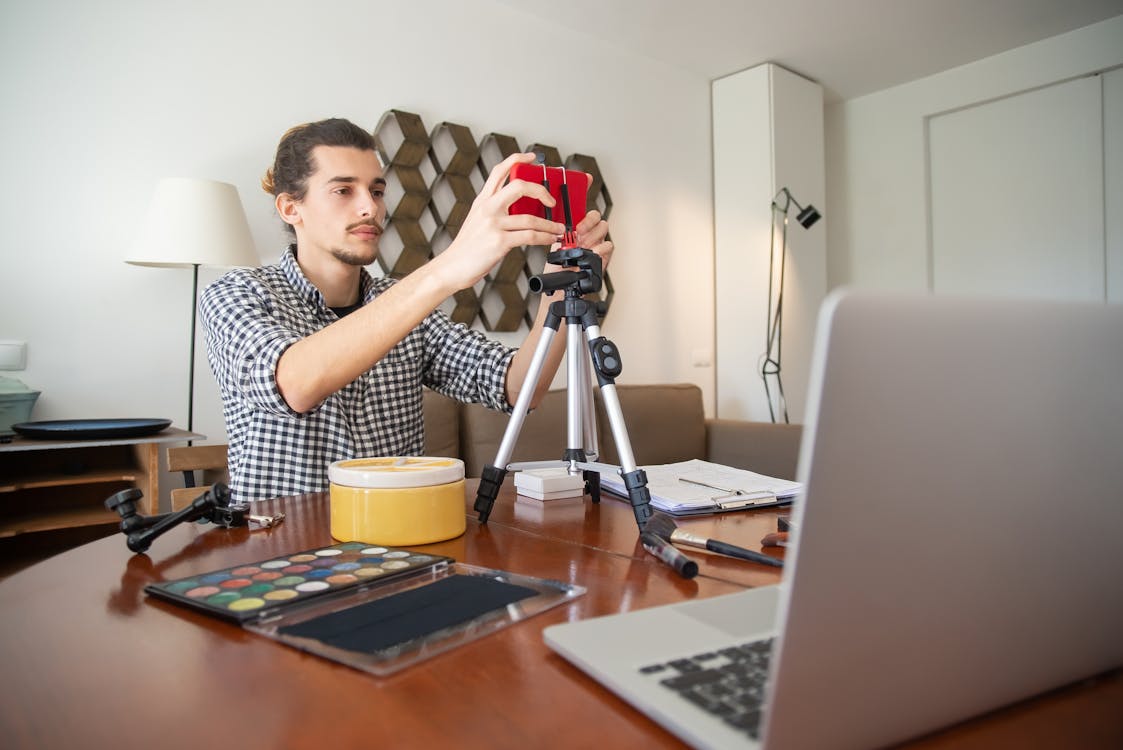
[IMAGE: https://images.pexels.com/photos/7514814/pexels-photo-7514814.jpeg?auto=compress&cs=tinysrgb&w=1260&h=750&dpr=1 — A male content creator adjusts a camera on a tripod in a home studio, preparing for a video shoot — representing the growing creator economy that makes Knowledge Panels essential.]
Brand Deal Verification
Brand managers vet creators via Google before any partnership discussion. A Knowledge Panel is the one signal that cannot be manufactured. It means Google’s entity system has independently confirmed you exist as a notable individual. Without one, even a polished media kit feels unverified.
[INTERNAL-LINK: “AI search visibility” → /blog/aeo-ai-visibility/ae-4-aeo-for-personal-brands/ — AE-4]
Audience Trust and Identity Fraud Protection
Influencer impersonation is a growing threat. When the real creator has a Knowledge Panel, impersonation becomes immediately visible. A quick Google search confirms who the verified account is. Without a panel, both audiences and brand partners have no authoritative reference point to distinguish you from a copycat.
Brand Safety Score Accuracy
76% of brands now rank brand safety as a top priority in influencer partnerships, up from 54% in 2023 (Phyllo State of Brand Safety in Influencer Marketing 2025). Influencer marketing platforms like CreatorIQ and HypeAuditor run automated entity scans. A Knowledge Panel gives those systems a verified entity reference, reducing false-positive flags that can exclude legitimate creators from campaigns.
AI Citation Readiness
AI tools are now part of how brands research creators. As AI search platforms become the first stop for discovery, creators with verified entity records get cited. Those without them get passed over. Entity verification is the infrastructure that drives AI citations — follower count and engagement rate are irrelevant to these systems.
The Structural Disadvantage Social-Native Creators Face
Google requires approximately 30 corroborating authoritative sources to create a Knowledge Panel for an individual without a Wikipedia page (Kalicube / Jason Barnard, 2024-2025). Traditional celebrities arrive with that infrastructure built in. Social-native creators must build it from scratch.
[IMAGE: https://images.pexels.com/photos/8357247/pexels-photo-8357247.jpeg?auto=compress&cs=tinysrgb&w=1260&h=750&dpr=1 — A young woman vlogging with a smartphone on a tripod near a window, representing the social-native creator building their personal brand online.]

Why Traditional Celebrities Have a Built-In Advantage
A musician signed to a major label gets an IMDb listing, Wikipedia article written by independent editors, press coverage in Rolling Stone, and a Wikidata entry — often before their first album drops. Each of these is an independent corroboration that Google’s entity system recognizes as evidence of a real, notable person.
That’s the “30 corroborations” threshold met without any deliberate optimization effort. Traditional celebrities don’t earn their Knowledge Panels. They inherit entity infrastructure.
Why Social-Native Creators Start at Zero
A creator with one million YouTube subscribers and 800,000 Instagram followers has built an enormous audience. They have not built entity corroboration. Here’s why the distinction matters:
Your own social posts are self-published. They don’t constitute independent verification of your identity to Google’s Knowledge Graph. YouTube subscriber counts, TikTok follower numbers, and Instagram engagement metrics tell Google that people watch your content. They don’t tell Google that independent authoritative sources have confirmed who you are. Google’s entity system needs third-party corroboration, not platform-native signals.
[INTERNAL-LINK: “Knowledge Graph Optimization” → /blog/knowledge-graph-optimization/ — KG-P pillar page]
This gap is precisely what Knowledge Graph Optimization closes for creators. The process isn’t about gaming the algorithm. It’s about building the same infrastructure that traditional celebrities have by default.
Which Signals Actually Trigger a Knowledge Panel for Creators?
[ORIGINAL DATA] Based on analysis of Knowledge Panel triggers across creator profiles, the signals below carry the most weight for social-native creators in 2026. Ranking reflects both Google’s documented source list and observed panel generation patterns.
The Three Highest-Leverage Starting Points
Wikidata. Wikidata is the structured data layer that directly feeds Google’s Knowledge Graph. Unlike Wikipedia, you can create a Wikidata entry yourself. It doesn’t require editorial approval or a notability review. A well-structured Wikidata entry with accurate claims, linked social profiles, and consistent facts immediately becomes a corroborating source Google trusts.
Personal website with Person schema and sameAs links. Your personal website is your entity home — the foundational anchor that links all your other online presence into a coherent identity. Person schema markup tells Google exactly who you are and connects your website to every profile you own via sameAs properties. Without this, Google sees a collection of separate accounts, not one coherent person.
[INTERNAL-LINK: “Person schema markup” → /blog/knowledge-graph-optimization/kg-5-schema-markup-personal-entity-optimization/ — KG-5]
Press coverage in recognized media. A feature in Rolling Stone, Forbes, Business Insider, or The Verge carries far more weight than 100 blog mentions. Each piece of independent editorial coverage is a third-party corroboration that you are a real, notable individual. Coverage must be editorial. Branded content and paid placements do not count as independent corroboration.
How to Build Entity Corroboration as a Creator: Step-by-Step
The step-by-step guide to getting a Knowledge Panel covers the full process for any professional. Here’s how those steps apply specifically to creators, in the order that generates results fastest.
[PERSONAL EXPERIENCE] Creators who start with Wikidata before their personal website consistently see faster Knowledge Graph indexing. The reason: Wikidata gives Google a structured entity reference point before the entity home is even indexed. Building both in parallel, rather than sequentially, cuts the corroboration timeline meaningfully.
Step 1: Create Your Wikidata Entry
Go to wikidata.org and create a new item for yourself as a human entity. Add these claims at minimum: instance of (human), name, date of birth (if public), occupation (content creator, YouTuber, influencer, or the appropriate descriptor), country of citizenship, and at least three sameAs identifiers pointing to your verified social profiles.
Keep every fact consistent with how you appear everywhere else online. Inconsistency between Wikidata and your other profiles is one of the most common reasons Google fails to consolidate a creator’s entity record.
Step 2: Build Your Entity Home
Your personal website needs a dedicated About page optimized as your entity home. Add Person schema markup in JSON-LD that includes your full name, job title, description, image, and a sameAs array linking to your YouTube channel, Instagram, Twitter/X, LinkedIn, TikTok, and any other verified profiles.
The sameAs array is how Google’s entity system connects your web presence into a single verified identity. Without it, Google sees a collection of separate accounts, not one coherent person.
Step 3: Secure Your IMDb Listing
IMDb is an underused corroboration source for creators. Any creator who has produced a video series, appeared in a documentary, guest-starred in a YouTube Original, or has video production credits qualifies for an IMDb listing. IMDb is one of the 209,966 sources Google draws Knowledge Panel data from (Reputation X, 2024), and it carries Medium-High weight for creator entities specifically.
Step 4: Earn Press Coverage in Recognized Publications
Target editorial (not sponsored) coverage in publications that carry domain authority and are recognized in Google’s source list. For creators, the most accessible entry points are: trade media coverage of brand partnerships, podcast appearances on established shows, and bylined articles in recognized outlets. Each placement is an independent corroboration that your name, identity, and professional role are real.
Step 5: Link All Profiles via sameAs
Every social profile you own should be cross-linked and referenced from your entity home via sameAs schema. This includes YouTube, Instagram, Twitter/X, LinkedIn, TikTok, Pinterest, and any podcast or newsletter platforms. The more consistently your identity resolves across these platforms, the faster Google builds confidence in your entity record.
[IMAGE: https://images.pexels.com/photos/33206676/pexels-photo-33206676.jpeg?auto=compress&cs=tinysrgb&w=1260&h=750&dpr=1 — Close-up of a smartphone screen showing popular social media app icons — the platforms that influencers depend on but which alone cannot establish Google entity recognition.]

How Long Does It Take for a Creator to Get a Knowledge Panel?
Most creators who complete the full corroboration process see a Knowledge Panel appear within 3 weeks to 3 months (Kalicube, 2024-2025). The timeline depends on three variables: how many corroborating sources already exist, how quickly new sources are indexed, and whether Google experiences any entity ambiguity around your name.
Creators with common names face the longest timelines. If your name is shared by another individual in a completely different field, Google has to build enough confidence to distinguish you as a separate entity. Hyper-specific sameAs links and consistent entity descriptors (occupation, location, notable works) accelerate that disambiguation.
[UNIQUE INSIGHT] Creators who have been active for 3+ years often discover they already have partial entity records in Google’s Knowledge Graph. Google has been passively collecting signals about them without displaying a panel. In these cases, the gap isn’t corroboration quantity — it’s corroboration consistency. Auditing your existing presence for name, occupation, and affiliation inconsistencies often unlocks panels faster than building new sources from scratch.
Creator Economy Growth: Why This Matters Now
The creator economy is valued at approximately $250 billion in 2025, projected to reach $480 billion by 2027 (Goldman Sachs Global Investment Research, March 2025). With brand deals accounting for 70% of total creator income, the financial case for identity verification is straightforward. The deals that make up most of your revenue depend on brand confidence in who you are.
Approximately 67 million individuals worldwide now identify as creators, projected to reach 107 million by 2030 (Goldman Sachs, March 2025). As competition for brand partnerships increases, verified entity signals will increasingly separate creators who consistently land deals from those who don’t. A Knowledge Panel isn’t a nice-to-have at this scale. It’s table stakes.
[INTERNAL-LINK: “step-by-step guide to getting a Knowledge Panel” → /blog/knowledge-panels/kp-1-how-to-get-personal-knowledge-panel/ — KP-1]
What Happens After Your Knowledge Panel Appears?
Getting the panel is step one. Optimizing and maintaining it is step two. Once Google generates your panel, you can claim it via Google Search Console and suggest corrections or additions. Claiming your panel lets you update your profile image, add links, and flag inaccuracies directly.
Beyond claiming, continue building corroborating sources. Panels that appear on thin entity records (fewer than 20 sources) tend to be unstable and can disappear after algorithm updates. A panel anchored to 40+ independent corroborations is far more durable. Continue earning press coverage, maintaining your Wikidata entry, and keeping your entity home updated with current schema.
56.5% of reported influencer marketing quality issues stem from fake or bot followers (Influencer Marketing Hub Benchmark Report 2026). A Knowledge Panel doesn’t solve follower quality issues. But it gives brand managers a verified baseline for identity verification before they even look at your audience metrics. That framing shift — identity first, metrics second — changes how due diligence conversations go.
[INTERNAL-LINK: “AI search visibility” → /blog/aeo-ai-visibility/ae-4-aeo-for-personal-brands/ — AE-4 for AI citation readiness section]
Frequently Asked Questions
Do influencers and content creators qualify for a Google Knowledge Panel?
Yes. Notability in Google’s entity system isn’t about fame. It’s about independent corroboration. A creator with consistent press coverage, a Wikidata entry, a verified YouTube channel, and a well-structured personal website can qualify. Approximately 30 independent authoritative sources are needed without Wikipedia, fewer with it (Kalicube, 2024-2025).
Does follower count affect whether a creator gets a Knowledge Panel?
No. Follower counts are platform-native metrics that Google’s entity system does not recognize as entity corroboration. A creator with 50,000 followers and strong independent press coverage will trigger a Knowledge Panel faster than one with 5 million followers and no off-platform corroboration. The signal that matters is independent, authoritative, third-party confirmation of who you are.
What’s the fastest way for a content creator to get a Knowledge Panel?
Start with Wikidata and your entity home simultaneously. Create a Wikidata entry with consistent facts and sameAs identifiers pointing to your verified profiles. Build a personal website with Person schema markup linking all your social accounts. Then pursue editorial press coverage in recognized publications. This combination directly addresses the corroboration gap that keeps most creator Knowledge Panels from appearing.
Why don’t social media followers count as entity corroboration?
Your own social posts are self-published content. Google’s entity system requires independent third-party verification: sources that confirm your identity and facts without you writing them. Follower counts tell Google you have an audience — not that authoritative external sources recognize you as a real, notable individual. The personal Knowledge Panel process requires external corroboration only.
[INTERNAL-LINK: “personal Knowledge Panel” → /blog/knowledge-panels/ — KP-P]
How does a Knowledge Panel help creators get brand deals?
A Knowledge Panel is the one brand partnership signal that cannot be faked or purchased. Brand managers who search your name and see a verified Knowledge Panel know Google has independently confirmed your identity and notability. It removes the verification friction that often stalls partnerships at the due diligence stage and provides influencer marketing platforms with a verified entity reference that reduces false brand safety flags.
What to Do Next
The creator economy is growing fast. So is competition for brand deals, audience trust, and AI-driven discovery. The structural disadvantage social-native creators face is real — but it’s solvable.
Build your Wikidata entry. Establish your entity home with Person schema. Earn editorial press coverage. Consistently link your verified profiles via sameAs. Each step directly addresses the corroboration gap that separates creators from traditional celebrities in Google’s entity system.
The fastest way to understand your current Knowledge Panel status is a Digital Footprint Audit. It shows exactly what Google knows about you, what’s missing, and what’s suppressing your panel — across Google, AI engines, and the 50+ platforms that feed credibility signals.
Get Your Free Digital Footprint Audit →
No obligation. 15 minutes. You’ll walk away knowing exactly where you stand.
For a detailed walkthrough of the full process, the step-by-step guide to getting a Knowledge Panel covers the complete sequence from entity home to panel claim. For creators focused on long-term AI search visibility, entity verification is the foundation everything else is built on.
[INTERNAL-LINK: “step-by-step guide to getting a Knowledge Panel” → /blog/knowledge-panels/kp-1-how-to-get-personal-knowledge-panel/ — KP-1] [INTERNAL-LINK: “AI search visibility” → /blog/aeo-ai-visibility/ae-4-aeo-for-personal-brands/ — AE-4]